
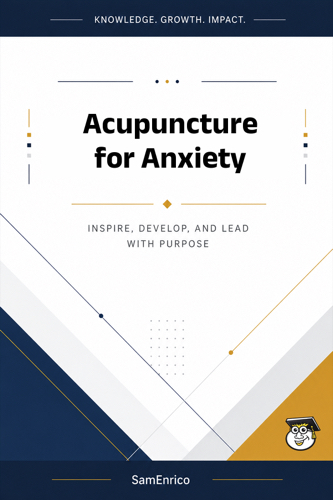
Non-FictionHealth & Wellness / Mental Health
Acupuncture for Anxiety
Calms the nervous system using points that reduce
by Wyman Yang
Calms the nervous system using points that reduce stress and promote relaxation.
Formats
About this book
Free sample
Chapter 1: The Body's False Alarm...--The first thing you need to understand about anxiety is that it is not your enemy. It is your body's alarm system, designed over millions of years of evolution to keep you safe from danger. When a threat appears—a predator, a falling rock, an oncoming car—your body releases a cascade of stress hormones. Your heart rate increases. Your breathing quickens.
Blood flows to your large muscle groups. Your pupils dilate. Your digestion slows or stops. This is the fight-or-flight response, and it has kept humans alive for millennia.The problem is not the alarm system. The problem is that for people with anxiety disorders, the alarm system goes off when there is no real danger.
It goes off too often. It stays on too long. It becomes the background music of your life, and eventually, you forget what silence sounds like. Your nervous system becomes stuck in a state of high alert, constantly scanning for threats that aren't there, exhausting your body and mind in the process. This chapter will help you understand what anxiety is, how it affects your body, why conventional treatments sometimes fall short, and how acupuncture offers a different path to calm.What Anxiety Feels Like: The Three Domains Anxiety is not just mental.
It is physical, emotional, and behavioral. These three domains interact and reinforce each other, creating a cycle that can feel impossible to break.Physically, anxiety manifests as a cluster of symptoms that can mimic serious medical conditions. You may feel your heart pounding, racing, or skipping beats. Your breath may come in shallow gasps. You may sweat, tremble, or feel weak.
You may experience gastrointestinal distress—nausea, diarrhea, or a churning stomach that makes eating difficult. Your muscles may feel tense and achy, particularly in your neck, shoulders, and jaw. You may have trouble falling asleep or staying asleep, or you may wake up feeling exhausted no matter how many hours you slept. You may feel dizzy, lightheaded, or disconnected from your own body—a sensation called derealization or depersonalization.Many people with anxiety make repeated trips to…
This is the end of the free sample. Get the eBook to keep going. Buy now
Contents
- Chapter 1
- Chapter 2
- Chapter 3
- Chapter 4
- Chapter 5
- Chapter 6
- Chapter 7
- Chapter 8
- Chapter 9
- Chapter 10
- Chapter 11
- Chapter 12
Details
- Author
- Wyman Yang
- Publisher
- SamEnrico
- Language
- English
- Genre
- Non-Fiction, Health & Wellness / Mental Health
- Released
- 2026-06-06
- Pages (approx.)
- 133
- Available as
- eBook, Audiobook

Read better in the ZLOADR app
Your eBooks on your phone or tablet. Sign in with your SamEnrico account and start reading.
More by Wyman Yang
 Retirement EQ GuideWyman Yang$11.99
 Group Creative Leadership CourseWyman Yang$11.99
 Melatonin and Jet Lag RecoveryWyman Yang$11.99
 Senior Financial ConfidenceWyman Yang$11.99
 Child Bite Mark CasesWyman Yang$11.99
 Self Hypnosis for EmetophobiaWyman Yang$11.99
 Massage For AnxietyWyman Yang$11.99
 The Olympic Riots of 508 BC: When Athens and Sparta Turned the Games into WarWyman Yang$11.99
 The Unseen Crown: How Lady Bird Johnson Shaped America's LandscapeWyman Yang$11.99
 How to Produce Photo StorageWyman Yang$11.99
 How to Produce Decorative TraysWyman Yang$11.99
 One Page Marketing Playbook for PlumbersWyman Yang$12.99
You may also like
 Hong Kong Handover 1997Dunn Johnnie$11.99
 Zumba For Postnatal Recovery CourseNeal Christian$11.99
 Zumba for BeginnersLadner Nikia$11.99
 YouTube Comment Mining GuideHumes Pandora$12.99
 Worry Box MeditationCarlin Rudy$11.99
 Workplace Stress MeditationNguyen Lynn$11.99
 Workplace Stress and Sleep RepairHawley Ivory$11.99
 Workplace Perfectionism CureDelaney Jeffry$11.99
 Workplace Injustice Anger GuideWallen Isabelle$11.99
 Work Addiction and Burnout LinkGreenwood Ester$11.99
 Women in Yoga and WellnessBeattie Galina$11.99
 Women in Stand Up ComedyChun Evangeline$11.99