
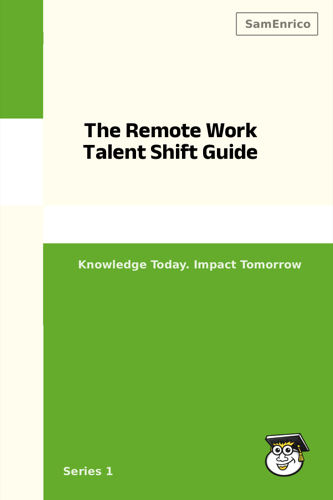
Non-FictionForecast & OutlookRemote Work
The Remote Work Talent Shift Guide eBook
Forecasts geographic dispersion as digital nomads
Forecasts geographic dispersion as digital nomads leave high cost hubs for lifestyle destinations.
Formats
Free sample
Chapter 1: The Proximity Paradox--–- In March 2020, a strange thing happened to global productivity. As millions of knowledge workers packed up their monitors and fled corporate headquarters, economists and business leaders braced for catastrophe. The consensus was clear: without the magic of physical proximity—the impromptu whiteboard sessions, the watercooler insights, the hallway collisions—innovation would stall, trust would erode, and output would crater.None of that happened.Instead, something close to the opposite occurred. Across industries and continents, companies discovered that their employees were not only maintaining productivity from kitchen tables and spare bedrooms but often exceeding it. Microsoft reported that its remote workforce maintained or improved productivity for 90 percent of employees.
A meta-analysis of 1,600 studies conducted before the pandemic had already suggested that remote workers were 13 to 24 percent more productive than their office-bound counterparts. The crisis merely accelerated what the data had been whispering for years: the relationship between physical proximity and knowledge work productivity was not what anyone thought.This revelation sent shockwaves through the corporate world. If a decade of management science suggested that remote work was at least as productive as office work, why had so few companies embraced it before being forced? The answer reveals a profound misunderstanding about how proximity actually functions in modern organizations—a misunderstanding this chapter calls the Proximity Paradox.The Proximity Paradox is the false belief that daily, continuous physical proximity is necessary for productivity, trust, and culture. In reality, daily proximity contributes minimally to knowledge work output while imposing enormous costs—financial, temporal, and psychological.
At the same time, periodic, intentional proximity—gathering for specific purposes at planned intervals—delivers the relationship-building benefits that organizations actually need, at a fraction of the cost.This distinction is the foundation upon which the entire Remote Work Talent Shift Guide is built. Until leaders internalize the difference between daily and periodic proximity, every other strategy—from async systems to compensation models to destination hiring—will rest on shaky ground. Conversely, employees who understand this paradox gain immediate bargaining power, because they can articulate precisely why their physical location does not determine their value.This chapter dismantles the 20th-century assumption that talent must physically cluster in expensive urban hubs to create value. It introduces the concept of agglomeration economics and explains why the internet has broken the geographic monopoly on talent. It presents the data on the High Cost Hub Exodus and explains what it means for the future of work.
And most importantly, it establishes the Proximity Paradox as the organizing principle for everything that follows.The Myth of Agglomeration For most of the past century, economic geography operated under a simple rule: talent clusters. Silicon Valley, Wall Street, London's Square Mile, Singapore's financial district—these agglomerations emerged不是因为 someone designed them, but because proximity conferred real advantages. When information traveled slowly, when collaboration required face-to-face meetings, when trust could only be built through shared meals and after-work drinks, being in the same physical space was not merely helpful—it was essential.Economists call this "agglomeration economics." The basic insight is that when companies and workers crowd together, several positive effects emerge. Knowledge spills over more easily—an engineer at one firm learns from an engineer at another over lunch. Labor markets become more efficient—workers can switch jobs without moving their families.
Specialized suppliers and services emerge to serve the cluster. The result is a virtuous cycle: talent attracts companies, companies attract more talent, and the whole ecosystem generates productivity gains that isolated firms cannot match.For decades, this logic went largely unchallenged. If you wanted to build a serious technology company, you went to Silicon Valley. If you wanted to work in finance, you moved to New York or London. The geography of talent was essentially fixed, and workers who couldn't afford the entry price—or who simply preferred a different lifestyle—were effectively locked out of the most interesting and lucrative careers.But the internet changed everything.
When information can travel at the speed of light, when collaboration can happen through screens, when trust can be built through consistent delivery rather than daily face time, the advantages of agglomeration begin to erode. They do not disappear entirely—clusters still offer some benefits—but they no longer justify the enormous costs that accompany them.The pandemic acted as a forcing function, accelerating a transition that was already underway. Companies that had spent decades insisting that remote work was impossible suddenly discovered that it was not only possible but often preferable. The infrastructure was already there—Slack, Zoom, Asana, Git Hub, Figma—and workers adapted faster than anyone expected.The data on this shift is striking. According to research from Stanford economist Nicholas Bloom and his colleagues, the share of paid full days worked from home in the United States jumped from about 5 percent before the pandemic to over 40 percent by mid-2020.
Even as restrictions eased, that number stabilized at around 25 to 30 percent—a fivefold increase that shows no sign of reversing.Even more telling is the migration data. Between 2020 and 2024, over 5 million workers left major metropolitan areas, and a significant percentage of those were high-earning knowledge workers. San Francisco lost nearly 7 percent of its population. New York City lost over 5 percent. These were not random movements—they were deliberate decisions by workers who realized that their jobs no longer required them to pay San Francisco rents or endure San Francisco commutes.The Hidden Costs of Daily Proximity To understand why the Proximity Paradox matters, we must first quantify what daily proximity actually costs.
These costs fall into three categories: direct financial costs, time poverty costs, and hidden opportunity costs. When added together, they reveal that the traditional office-centric model is not merely inefficient—it is actively destructive to both worker well-being and organizational performance.Direct Financial Costs The most visible cost of daily proximity is the rent premium. In high-cost hubs, housing costs have spiraled to absurd levels. The median one-bedroom apartment in San Francisco rents for over $3,000 per month. In New York, the figure is similar.
In London, a comparable apartment costs over £2,000. These numbers are not merely high—they are punitive, consuming 30 to 50 percent of a typical worker's take-home pay.But rent is only the beginning. Commuters face transportation costs—gas, maintenance, transit fares, parking—that easily exceed $2,000 per year for drivers and $1,000 for transit users. Then there are the softer costs: the professional wardrobe, the convenience meals, the coffee runs, the childcare required to cover the commute. When you add it all up, the premium for living near a hub can easily reach $20,000 to $40,000 per year or more.Here is where the math becomes interesting for employers.
When an employee moves from San Francisco to Medellín, they can reduce their cost of living by $30,000 to $50,000 per year while keeping the same salary. This is geographic arbitrage—a concept we will explore in depth in Chapter 2. The employee effectively receives a massive raise without the employer spending an extra dollar. And because the employee's quality of life improves dramatically, their loyalty to the employer often increases as well.The corporate retention math is straightforward. Replacing a mid-level remote-capable employee costs between $50,000 and $100,000—the cost of recruiting…
This is the end of the free sample. Get the eBook to keep going. Buy now
About this book
Details
- Author
- Casteel Jerrold
- Publisher
- SamEnrico
- Language
- English
- Genre
- Non-Fiction, Forecast & Outlook, Remote Work
- Released
- 2026-06-06
- Pages (approx.)
- 147
- Available as
- eBook, Audiobook

Read better in the ZLOADR app
Your eBooks on your phone or tablet. Sign in with your SamEnrico account and start reading.
More by Casteel Jerrold
 Mindfulness for Test Anxiety WorkbookCasteel Jerrold$11.99
 Mindful Driving Stress ReductionCasteel Jerrold$11.99
 Teen Self Esteem and Chronic IllnessCasteel Jerrold$11.99
 Ayurvedic Lung Health GuideCasteel Jerrold$11.99
 The Forge of the First Sword: Arthur’s Lost Creation MythCasteel Jerrold$11.99
 UltimateCasteel Jerrold$11.99
 Data Cleansing Automation GuideCasteel Jerrold$12.99
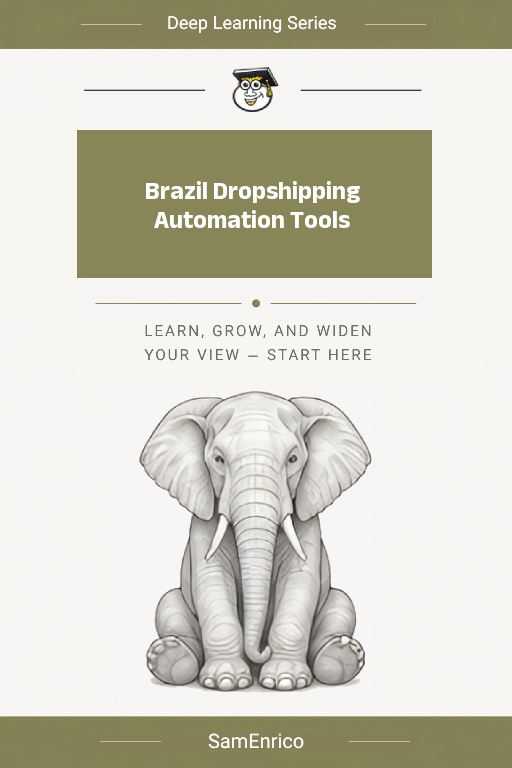 Brazil Dropshipping Automation ToolsCasteel Jerrold$12.99
 Understanding Methylmalonyl-coenzyme a Mutase DeficiencyCasteel Jerrold$17.99
 How to Start a Building Materials Made of Vegetable Substances Business (Beginners Guide)Casteel Jerrold$11.99
You may also like
 Hong Kong Handover 1997Dunn Johnnie$11.99
 Zumba For Postnatal Recovery CourseNeal Christian$11.99
 Zumba for BeginnersLadner Nikia$11.99
 YouTube Comment Mining GuideHumes Pandora$12.99
 Worry Box MeditationCarlin Rudy$11.99
 Workplace Stress MeditationNguyen Lynn$11.99
 Workplace Stress and Sleep RepairHawley Ivory$11.99
 Workplace Perfectionism CureDelaney Jeffry$11.99
 Workplace Injustice Anger GuideWallen Isabelle$11.99
 Work Addiction and Burnout LinkGreenwood Ester$11.99
 Women in Yoga and WellnessBeattie Galina$11.99
 Women in Stand Up ComedyChun Evangeline$11.99