
Non-FictionHealth & WellnessEmergency Medicine
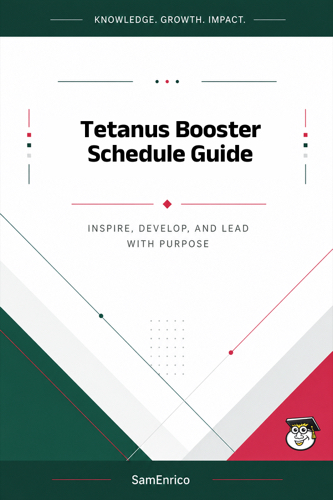
Tetanus Booster Schedule Guide eBook
Wound management and 10-year update protocols.
by Autry Shayla
Wound management and 10-year update protocols.
Formats
Free sample
Chapter 1: The Unnecessary Epidemic...--–- The first thing Mary remembers after waking from the coma was her jaw. It wouldn't open. The nurses called it "lockjaw." Mary called it torture. She had stepped on a rusted nail in her own garden—a garden she had tended for thirty years without incident. Her last tetanus shot was eleven years ago, and she had declined the booster at her physical because, as she told her doctor, "I'm healthy.
I don't need any more shots." Eleven days later, she was intubated in the intensive care unit, her body arched backward in a spasm so violent that it fractured two vertebrae. Mary survived. Forty-seven days in the hospital, twenty-three of them on a ventilator. Three hundred thousand dollars in medical bills. And a permanent tremor in her left hand from hypoxic brain injury suffered during a prolonged spasm that compromised her breathing.
All from a nail. All from a disease that is nearly 100 percent preventable.Mary's story is not rare. It is not exceptional. It is, tragically, typical.Tetanus is often described as a "forgotten disease" because it has become uncommon in wealthy nations with robust vaccination programs. But forgetting a disease is not the same as eradicating it.
Tetanus spores are everywhere—in soil, in dust, in manure, and even in the dust of your own living room floor. The bacterium that causes tetanus, Clostridium tetani, is one of the most resilient organisms on the planet. Its spores can survive for decades in the environment, waiting for the right opportunity to enter a human body. That opportunity can be a deep puncture wound from a nail, but it can also be a superficial scratch from a rose thorn, a burn from a kitchen accident, a surgical incision, an injection site, a dental extraction, or even a paper cut. If the wound contains devitalized tissue or foreign material, creating an anaerobic environment, the spores germinate.
And once they germinate, the clock starts ticking toward one of the most painful and terrifying illnesses known to medicine.The Bacterium That Refuses to Die Clostridium tetani is a gram-positive, spore-forming, anaerobic bacillus. In plain English: it is a bacterium that forms highly resistant spores and thrives in environments without oxygen. The spores are everywhere. Studies have found C. tetani spores in soil samples from every continent, including Antarctica.
They are present in agricultural soil, garden soil, forest soil, desert sand, and even indoor dust. They are routinely found in the intestines of horses, cows, sheep, and humans, which is why manure and sewage are particularly high-risk contaminants. The spores are remarkably hardy. They resist boiling for up to twenty minutes, survive exposure to most disinfectants, and can remain viable in dry soil for over forty years.When a spore enters a wound, it does not immediately cause disease. The spore must first germinate into the vegetative form of the bacterium, a process that requires specific conditions: low oxygen tension (anaerobiosis), a favorable temperature (around 37°C or 98.6°F), and the presence of necrotic tissue or foreign bodies that create microenvironments devoid of oxygen.
This is why deep puncture wounds are classic tetanus vectors—the narrow channel collapses, sealing oxygen out. Crush injuries are equally dangerous because devitalized tissue lacks blood flow and therefore lacks oxygen. Burns, frostbite, and surgical wounds with compromised blood supply create similar anaerobic niches. Even a seemingly trivial wound, if contaminated with soil or manure, can harbor spores in the small pockets of devitalized tissue that are invisible to the naked eye.Once germination occurs, the vegetative bacteria begin to multiply and produce the exotoxin that gives tetanus its name: tetanospasmin.The Most Potent Toxin Known to Humankind Tetanospasmin is second only to botulinum toxin in its potency as a neurotoxin. The lethal dose for a human is estimated to be less than 2.5 nanograms per kilogram of body weight.
To put that number in perspective: a single gram of tetanospasmin—about the weight of a paperclip—contains enough toxin to kill approximately ten million people. The toxin is produced as a single polypeptide chain that is then cleaved into two fragments: a heavy chain and a light chain. The heavy chain is responsible for binding to nerve cells and transporting the toxin into the cell. The light chain is the active enzyme that destroys the machinery of neurotransmitter release.The journey of tetanospasmin from the wound to the central nervous system is a master class in biological warfare. The toxin enters the peripheral nervous system by binding to receptors on the presynaptic membrane of motor neurons at the neuromuscular junction.
It is then internalized into the neuron and transported retrograde—that is, backward along the axon toward the cell body in the spinal cord. This retrograde transport is slow, which explains the typical incubation period of three to twenty-one days (average, seven to ten days). The farther the wound is from the central nervous system, the longer the incubation period. A wound on the foot may take ten to fourteen days to produce symptoms, while a wound on the face or neck may produce symptoms in as little as three to five days.Once the toxin reaches the cell body of the motor neuron in the spinal cord, it migrates transynaptically into the inhibitory interneurons that normally release gamma-aminobutyric acid (GABA) and glycine. These neurotransmitters are the brakes of the central nervous system.
They inhibit the firing of motor neurons, allowing smooth, coordinated muscle movement and preventing excessive contraction. The light chain of tetanospasmin is a zinc-dependent protease that specifically cleaves synaptobrevin II, a protein essential for the fusion of neurotransmitter-containing vesicles with the presynaptic membrane. When synaptobrevin II is destroyed, the inhibitory interneurons can no longer release GABA or glycine. The brakes are removed. The motor neurons fire uncontrollably.The result is tetanus.The Four Faces of Tetanus Tetanus presents in four clinical forms, each with distinct features but all united by the same underlying pathophysiology of uncontrolled muscle contraction.Generalized tetanus is the most common form, accounting for approximately 80 percent of cases.
The first symptom is usually trismus—lockjaw. The masseter muscles (jaw muscles) are exquisitely sensitive to the loss of inhibition, and they go into sustained contraction, making it impossible to open the mouth. This is followed by risus sardonicus, the sardonic grin, caused by sustained contraction of the facial muscles. The forehead is wrinkled, the eyes are narrowed, the corners of the mouth are pulled back, and the patient appears to be grimacing or sneering. Within 24 to 48 hours, the spasms spread to the neck (causing stiffness and difficulty swallowing), the back (causing opisthotonos—a dramatic arching of the back such that the patient rests on their heels and the back of their head), the abdomen (causing board-like rigidity), and the limbs (causing fixed flexion at the elbows and extension at the legs).
The spasms are exquisitely painful. They can be triggered by any sensory stimulus: a loud noise, a light touch, a draft of air, or an attempt to move. In severe cases, laryngeal or respiratory muscle spasms cause airway obstruction, apnea, and death.Neonatal tetanus is a form of generalized tetanus occurring in newborns, typically between days 3 and…
This is the end of the free sample. Get the eBook to keep going. Buy now
About this book
Details
- Author
- Autry Shayla
- Publisher
- SamEnrico
- Language
- English
- Genre
- Non-Fiction, Health & Wellness, Emergency Medicine
- Released
- 2026-06-05
- Pages (approx.)
- 159
- Available as
- eBook, Audiobook

Read better in the ZLOADR app
Your eBooks on your phone or tablet. Sign in with your SamEnrico account and start reading.
More by Autry Shayla
 Transcendental Meditation for IBSAutry Shayla$11.99
 Pineapple EvidenceAutry Shayla$11.99
 Personal Branding Without EgoAutry Shayla$11.99
 Self Hypnosis for Fear of InjuryAutry Shayla$11.99
 James Madison Father ConstitutionAutry Shayla$11.99
 Hearing Protection GuideAutry Shayla$11.99
 Divorce and Children GuideAutry Shayla$11.99
 The Silk Road's African Gold: The Rise of the Swahili Merchant PrincesAutry Shayla$11.99
 The Hidden Wisdom of the Troll GrandmotherAutry Shayla$11.99
 Yorkshire Terrier: Tiny & FeistyAutry Shayla$11.99
 How to Start a Aerospace Equipment Business (Beginners Guide)Autry Shayla$11.99
 A Collector's Handbook to the Berkeley FoursomeAutry Shayla$11.99
You may also like
 Hong Kong Handover 1997Dunn Johnnie$11.99
 Zumba For Postnatal Recovery CourseNeal Christian$11.99
 Zumba for BeginnersLadner Nikia$11.99
 YouTube Comment Mining GuideHumes Pandora$12.99
 Worry Box MeditationCarlin Rudy$11.99
 Workplace Stress MeditationNguyen Lynn$11.99
 Workplace Stress and Sleep RepairHawley Ivory$11.99
 Workplace Perfectionism CureDelaney Jeffry$11.99
 Workplace Injustice Anger GuideWallen Isabelle$11.99
 Work Addiction and Burnout LinkGreenwood Ester$11.99
 Women in Yoga and WellnessBeattie Galina$11.99
 Women in Stand Up ComedyChun Evangeline$11.99