
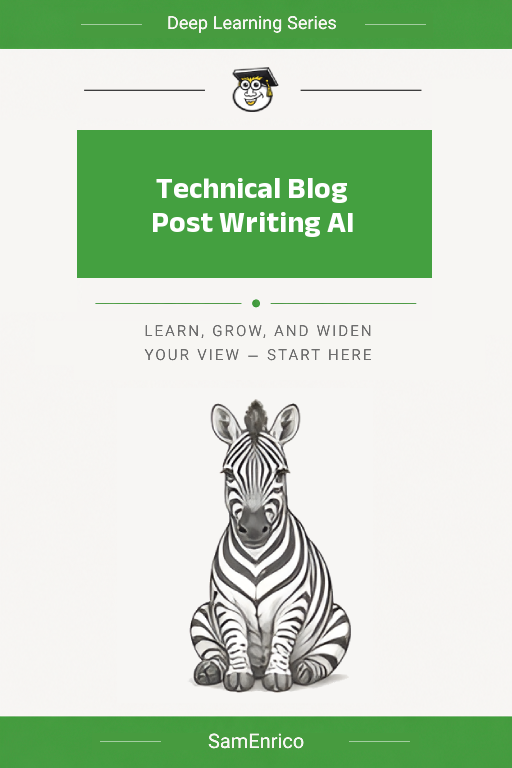
Non-FictionAI OperatorTech Blogging
Technical Blog Post Writing AI
Generate technical blog posts and tutorials from i
Generate technical blog posts and tutorials from internal documentation using AI prompts.
Formats
About this book
Free sample
Chapter 1: The Documentation Graveyard--–- Every engineering organization has one. It might live in a dusty Confluence wiki, a sprawling Notion database, a Git Hub wiki that hasn't been updated since the last decade, or a Google Drive folder with a name like "Archive — Do Not Delete." It is the place where internal documentation goes to die. And ironically, it is also where some of the most valuable technical knowledge ever written by your team sits, untouched, unread, and unloved, slowly rotting in digital silence.This is the Documentation Graveyard.Walk through it with me for a moment. You will find README files written by engineers who have long since left the company. You will find API specifications that are technically accurate but completely impenetrable to anyone who wasn't in the room when they were drafted.
You will find Jira post-mortems that contain brilliant debugging narratives buried under layers of corporate jargon and ticket numbers. You will find design documents that explain, in excruciating detail, why a system was built a certain way, but offer zero guidance on how to actually use it. You will find wikis that explain what functions do, but not why anyone would ever call them.This documentation is not bad. That is the tragedy. It is often excellent.
It is thorough. It is correct. It is written by smart people who care deeply about their craft. And it is completely, utterly useless to anyone outside the immediate circle of its creators.The Great Paradox of Internal Documentation Let me state the problem as simply as possible: Internal documentation is written by engineers for engineers, and that is precisely why it fails when published externally as a blog post, a tutorial, or any form of public-facing content.This is not a failure of effort. It is a failure of translation.When an engineer writes internal documentation, they are operating under a specific set of unspoken rules.
They assume the reader has access to the same codebase. They assume the reader understands the team's internal jargon, the names of their microservices, the idiosyncrasies of their deployment pipeline.…
This is the end of the free sample. Get the eBook to keep going. Buy now
Contents
- Chapter 1
- Chapter 2
- Chapter 3
- Chapter 4
- Chapter 5
- Chapter 6
- Chapter 7
- Chapter 8
- Chapter 9
- Chapter 10
- Chapter 11
- Chapter 12
Details
- Author
- Frederick Lurline
- Publisher
- SamEnrico
- Language
- English
- Genre
- Non-Fiction, AI Operator, Tech Blogging
- Released
- 2026-05-30
- Pages (approx.)
- 129
- Available as
- eBook, Audiobook

Read better in the ZLOADR app
Your eBooks on your phone or tablet. Sign in with your SamEnrico account and start reading.
More by Frederick Lurline
 Swedish American Return To Småland GuideFrederick Lurline$11.99
 Morning Breath Ritual PrimerFrederick Lurline$11.99
 Self Compassion Metta WorkbookFrederick Lurline$11.99
 The Body Language for TSA AgentsFrederick Lurline$11.99
 The Disaster Drill Evaluation FormFrederick Lurline$11.99
 The Calculus of the Cosmos: The Forgotten Mathematicians of the Swahili CoastFrederick Lurline$11.99
 Understanding Möbius Axonal Neuropathy HypogonadismFrederick Lurline$17.99
 How to Become a Nitrator OperatorFrederick Lurline$11.99
 Energy Conservation TechnicianFrederick Lurline$11.99
 UAE VAT Bad Debt AdjustmentFrederick Lurline$12.99
You may also like
 Hong Kong Handover 1997Dunn Johnnie$11.99
 Zumba For Postnatal Recovery CourseNeal Christian$11.99
 Zumba for BeginnersLadner Nikia$11.99
 YouTube Comment Mining GuideHumes Pandora$12.99
 Worry Box MeditationCarlin Rudy$11.99
 Workplace Stress MeditationNguyen Lynn$11.99
 Workplace Stress and Sleep RepairHawley Ivory$11.99
 Workplace Perfectionism CureDelaney Jeffry$11.99
 Workplace Injustice Anger GuideWallen Isabelle$11.99
 Work Addiction and Burnout LinkGreenwood Ester$11.99
 Women in Yoga and WellnessBeattie Galina$11.99
 Women in Stand Up ComedyChun Evangeline$11.99