
Scripting Research Audiobook
undefined
by Stowe Junior
undefined
Formats
Free sample
Chapter 1: Beyond Point-and-Click--–- In the winter of 2014, a graduate student named Bethany watched her thesis advisor perform a statistical analysis that would determine whether she would graduate on time. The advisor, a distinguished professor with three decades of experience, opened a spreadsheet containing six months of laboratory measurements. He sorted a column. He deleted several rows that contained outliers—by his own visual inspection. He clicked through a series of dropdown menus to run a t-test.
He copied the p-value into a Power Point slide. The entire process took ninety seconds. "See?" he said, gesturing at the screen. "Simple."Bethany nodded. But something troubled her.
She had been the one who collected that data. She knew that the "outliers" he had deleted were not measurement errors; they represented a real biological phenomenon that her entire project was designed to investigate. When she politely mentioned this, the advisor shrugged. "We can run it both ways and see what happens," he said. He reopened the original spreadsheet.
He did not delete the rows this time. He ran the t-test again. The p-value changed from 0.03 to 0.09. "Hmm," he said. "Well, we'll go with the first one.
It's cleaner."This story—which Bethany told me years later, after she had left academia for a job in data science—illustrates something profound about the way research is actually conducted. Not the fraud, though that is worth naming: the advisor was not trying to deceive anyone. He genuinely believed that removing "outliers" made the analysis "cleaner." The problem was not his intent. The problem was his method. Every step he performed—the sorting, the deleting, the menu-clicking, the p-value copying—was ephemeral.
There was no record of which rows he deleted. There was no record of why he deleted them. There was no record of the fact that he had run the analysis two different ways and chosen the one that supported his preferred conclusion. All of that vanished the moment he closed the spreadsheet. All that remained was the Power Point slide and the published paper that would eventually cite it.This is the hidden crisis of modern research.
It is not a crisis of fraud or incompetence. It is a crisis of method. The tools that most researchers use to analyze data—spreadsheets, point-and-click statistical software, manual file organization—were not designed for the kinds of questions we now ask, the volumes of data we…
This is the end of the free sample. Get the Audiobook to keep going. Buy now
About this book
Details
- Author
- Stowe Junior
- Publisher
- SamEnrico
- Language
- English
- Genre
- research, Self-Help / Science
- Released
- 2026-06-06
- Pages (approx.)
- 156
- Available as
- eBook, Audiobook

Listen in the VoxFlicks app
Audiobooks and audio dramas wherever you go. Sign in with your SamEnrico account and press play.
More by Stowe Junior
 Interruption Scripts for Introverts GuideStowe Junior$11.99
 IBS Dietitian Consultation GuideStowe Junior$11.99
 Aggressive Communication Awareness GuideStowe Junior$11.99
 The Freelance Tax Quarter GuideStowe Junior$11.99
 Scheduling for Night OwlsStowe Junior$11.99
 The Endowment EffectStowe Junior$11.99
 Iliotibial Band Syndrome Stretch GuideStowe Junior$11.99
 Alice Walton ArtStowe Junior$11.99
 The Silent Codebreakers: How Women Cracked the Nazis' EnigmaStowe Junior$11.99
 The Moon Shot That Changed Everything: Apollo 11's Hidden TriumphsStowe Junior$11.99
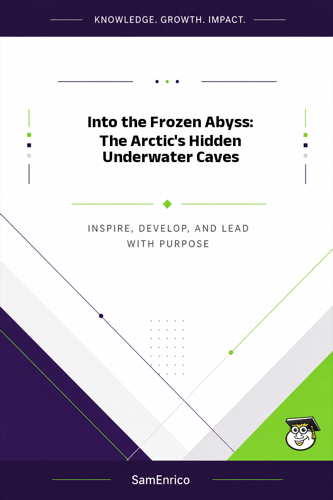 Into the Frozen Abyss: The Arctic's Hidden Underwater CavesStowe Junior$11.99
 The Complete Guide to the New Me Diet: Hormone BalancingStowe Junior$11.99
You may also like
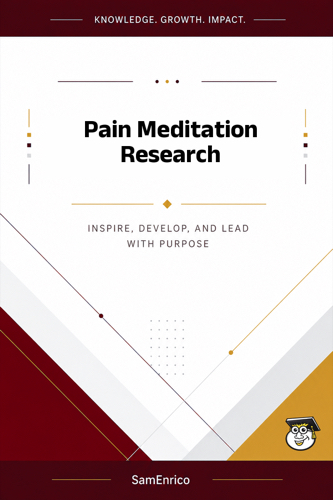 Pain Meditation ResearchGiron Nelida$11.99
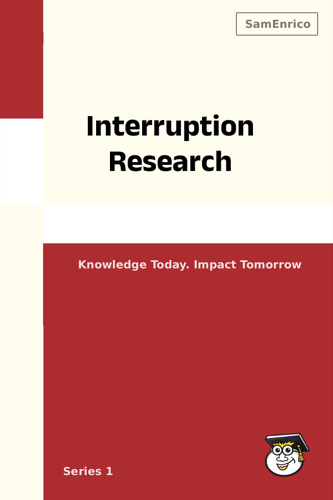 Interruption ResearchMcintire Raylene$11.99
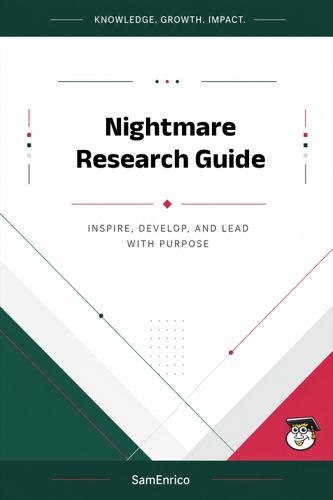 Nightmare Research GuideOrellana Tamika$11.99
 Pattern Recognition ResearchMuller Ceola$11.99
 Goal Setting ResearchLopez Todd$11.99
 Chunking Research ReviewCostello Yuri$11.99
 Morning Routine ResearchHammett Corie$11.99
 Remote Work ResearchGordon Vera$11.99
 Memory Palace ResearchFox Heidi$11.99
 Habit Research GuideKoenig Margrett$11.99
 Grit Research GuideGardner Tabitha$11.99
 Anticipatory Grief ResearchSelby Ela$11.99