
Non-FictionHealth & Wellness / Running
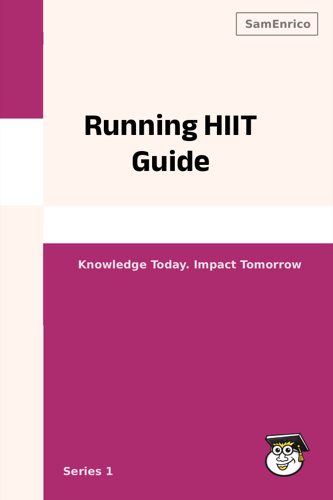
Running HIIT Guide Audiobook
Applies interval principles to running with track
by Acosta Yetta
Applies interval principles to running with track and treadmill workouts.
Formats
Free sample
Chapter 1: The Mileage Lie--–- The first time my knee gave out, I was exactly 3.2 miles from home, it was raining, and my watch said I had burned 487 calories—none of which mattered because I couldn’t walk. I was forty-three years old, reasonably fit by any external measure, and I had just completed what every running expert told me to do: more miles. More steady, consistent, moderate-paced miles. The kind of miles that build character, they said. The kind of miles that separate real runners from hobby joggers.
I had logged forty to fifty miles per week for eighteen months. My marathon time had dropped from 4:12 to 3:58—a respectable improvement, but nothing close to what the mileage charts promised. And now, kneeling on a wet sidewalk with my right knee throbbing, I realized something that would take me another three years and thousands of dollars in physiotherapy to fully understand: I had been running wrong. Not a little wrong. Fundamentally, structurally, mathematically wrong.This chapter dismantles the single most destructive belief in running culture: the assumption that more steady-state mileage equals better fitness, faster times, and improved health.
It does not. For a significant portion of runners—perhaps the majority—excessive steady-state running produces diminishing returns, injury, and boredom long before it produces peak performance. But the solution is not to abandon running entirely, nor is it to jump blindly into the world of high-intensity interval training (HIIT) without understanding its own pitfalls. The solution is something else entirely: a structured, oscillating system called The Pendulum Effect, which this book will teach you to master across treadmills, tracks, and real-world conditions.The Invention of "Junk Miles" and Why It Hurts to Say The term "junk miles" first appeared in competitive running circles in the late 1970s, coined by coaches who noticed that elite runners often ran their slow miles too slowly and their fast miles too fast, with nothing in between that produced meaningful adaptation. But over the past four decades, the concept has been distorted beyond recognition.
Today, "junk miles" is often used to dismiss any running that isn't race-pace or faster—a definition that throws the baby out with the bathwater.Let me be precise about what I mean by excessive steady-state running. Steady-state running is any continuous running at a moderate intensity—typically 60-75% of maximum heart rate, or what feels like a 4-6 on the 1-10 Rate of…
This is the end of the free sample. Get the Audiobook to keep going. Buy now
About this book
Details
- Author
- Acosta Yetta
- Publisher
- SamEnrico
- Language
- English
- Genre
- Non-Fiction, Health & Wellness / Running
- Released
- 2026-06-06
- Pages (approx.)
- 152
- Available as
- eBook, Audiobook

Listen in the VoxFlicks app
Audiobooks and audio dramas wherever you go. Sign in with your SamEnrico account and press play.
More by Acosta Yetta
 Presentation Contingency PlanningAcosta Yetta$11.99
 Competition Comparison HealingAcosta Yetta$11.99
 Warrant Cashless ExerciseAcosta Yetta$11.99
 The Green Conquest: Cyrus the Great and the Achaemenid Empire's RiseAcosta Yetta$11.99
 Personnel Security SpecialistAcosta Yetta$11.99
 How to Produce Ceramic ValvesAcosta Yetta$11.99
 Factoring in Nigeria HandbookAcosta Yetta$12.99
 How to Start a Lock for Motor Vehicle Business (Beginners Guide)Acosta Yetta$11.99
You may also like
 Hong Kong Handover 1997Dunn Johnnie$11.99
 Zumba For Postnatal Recovery CourseNeal Christian$11.99
 Zumba for BeginnersLadner Nikia$11.99
 YouTube Comment Mining GuideHumes Pandora$12.99
 Worry Box MeditationCarlin Rudy$11.99
 Workplace Stress MeditationNguyen Lynn$11.99
 Workplace Stress and Sleep RepairHawley Ivory$11.99
 Workplace Perfectionism CureDelaney Jeffry$11.99
 Workplace Injustice Anger GuideWallen Isabelle$11.99
 Work Addiction and Burnout LinkGreenwood Ester$11.99
 Women in Yoga and WellnessBeattie Galina$11.99
 Women in Stand Up ComedyChun Evangeline$11.99