
Non-FictionStudent's ShortcutTest EnvironmentCompliance Prep
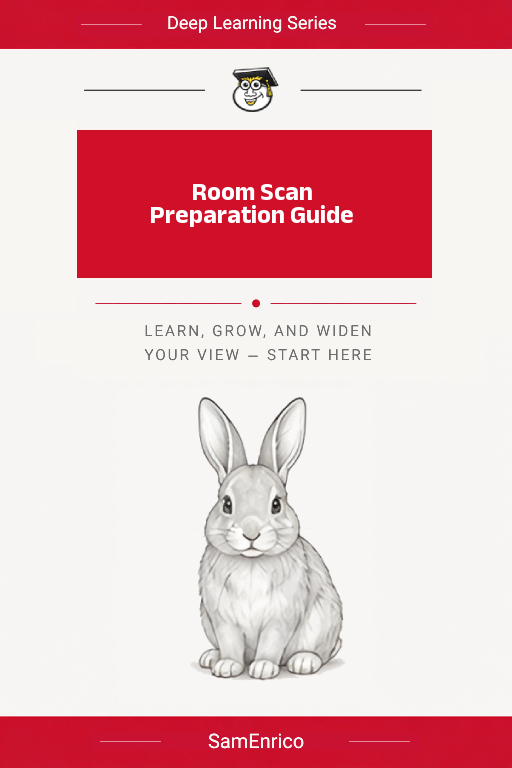
Room Scan Preparation Guide eBook
Clear your desk, hide monitors, and remove prohibi
Clear your desk, hide monitors, and remove prohibited items before the automated 360-degree room scan flags violations.
Formats
Free sample
Chapter 1: The Algorithmic Witness...--–- The first thing you need to understand about an automated room scan is that it is not a proctor. It is not a security guard, not a supervisor, not even a particularly intelligent piece of software. It is, at its core, a pattern-matching engine—a digital witness that never blinks, never gets distracted, and never forgives. Unlike a human being, who might glance at a cluttered desk and assume innocence, the algorithmic eye sees only geometry, reflectivity, and contrast. A sticky note on your monitor is not a reminder to buy milk; it is a rectangle containing high-contrast glyphs that match the optical character recognition (OCR) library for “unauthorized written materials.” A phone face-down on a chair is not an oversight; it is a rectangular prism with a known reflective signature matching the device database.
This chapter dismantles the myth that automated scans “understand” your environment. They do not. They classify, compare, and convict based on probabilities trained on millions of previous scans. Your job is not to convince a human of your honesty. Your job is to disappear—to present a room so geometrically boring, so optically inert, that the algorithm scrolls past you in 0.3 seconds and stamps “PASS” without a second thought.To achieve this, you must first understand how the algorithmic witness perceives the world.
Human vision is contextual. When you look at a cluttered desk, you see a coffee mug (safe), a stack of sticky notes (probably harmless), and a smartwatch (maybe forgotten). You apply intent, habit, and social norms. The algorithm applies none of these. It receives a 360-degree panoramic image, often captured via structured light or infrared depth sensors, and then processes that image through several layers of computer vision.
The first layer is edge detection: the system identifies every sharp boundary between light and dark, every corner, every straight line. To the algorithm, a monitor bezel and a picture frame are initially indistinguishable—both are rectangles with four right angles. The second layer is classification: the system compares each detected shape against a library of prohibited object profiles. This library is not a simple list of “phones” and “monitors”; it includes thousands of variants—phone silhouettes with and without cases, smartwatches on wrists vs. on tables, earbuds in charging cases vs.
loose. The third layer is anomaly scoring: each object receives a probability score (e.g., “89% likelihood this is a secondary display”). If the score exceeds the platform’s threshold, the scan flags for immediate failure or human review. The fourth layer, increasingly common in high-stakes exams (medical boards, FINRA, CISSP), is temporal analysis: the system compares your scan to the previous five seconds of video to detect motion—a hand reaching for a hidden phone, a blanket shifting to cover a tablet.The key insight, and the one that will guide every subsequent chapter of this guide, is that the algorithm does not infer intent. It does not know that your second monitor is unplugged and covered with a blanket.
It only knows that a rectangular shape matching the profile of “display” exists in the forbidden zone. It does not know that your smartwatch fell out of your bag during the scan. It only knows that a device matching the signature of “wearable electronics” is present. This is why the most common failure modes in automated room scans are not elaborate cheating attempts but honest mistakes—a forgotten phone on a nightstand, a smart speaker that was muted but not unplugged, a glossy water bottle that reflected a ceiling light in a way that mimicked a screen. The algorithm does not care about your explanation.
There is no appeals process during the scan. There is only pass or fail.The Architecture of Automated Surveillance To defeat the algorithmic witness, you must understand its hardware. Most remote proctoring platforms use one of three scanning technologies, sometimes in combination. The first and most common is standard RGB camera scanning, where your computer’s built-in or external webcam captures a series of panoramic images as you slowly rotate the laptop or phone. This method is cheapest for proctoring companies but also the most vulnerable to optical tricks—specifically, lighting and reflection management (covered in depth in Chapter 6).
The second is structured light scanning, where the camera projects a grid of infrared dots onto your room and measures how those dots deform across surfaces. This creates a crude 3D map of your environment, allowing the algorithm to detect objects hidden under thin covers (a tablet under a blanket creates a different depth signature than a blanket alone). Structured light is why “just throw a towel over it” fails—the towel still has a rectangular bump, and the depth sensor sees it. The third and most advanced technology is Li DAR, available on newer i Phones and i Pads. Li DAR (Light Detection and Ranging) fires thousands of laser pulses per second to create a millimeter-accurate 3D model of the room.
With Li DAR, the algorithm can detect a phone hidden under a stack of papers or inside a drawer left slightly ajar. If your testing platform requires a Li DAR-equipped device, the margin for error drops to near zero—you must physically remove every prohibited item from the room, not just hide them.Understanding which technology your exam uses is critical. Check the proctoring platform’s system requirements before your first practice scan. Some platforms explicitly state “Li DAR recommended” or “structured light compatible.” Others rely on basic RGB cameras. The strategies in this guide are tiered: basic optical techniques work for RGB scans; depth-resistant methods (e.g., removing items entirely, not covering them) are required for structured light or Li DAR.
When in doubt, assume the worst. Treat every scan as if the algorithm can see through fabric, because the newer ones can.Pattern Libraries: What the Algorithm Is Looking For The prohibited object library is the algorithm’s rulebook. These libraries are not public—proctoring companies treat them as trade secrets—but independent testing and leaked documents have revealed the most common profiles. The following categories appear in virtually every major platform’s library:Rectangular displays. Any shape with a 16:9, 4:3, or 16:10 aspect ratio, especially if it has a bezel (a frame around the screen).
This includes monitors, TVs, tablets, e-readers (Kindles), and even some smart displays (Echo Show, Nest Hub). The algorithm does not distinguish between a 32-inch gaming monitor and a 7-inch photo frame with a digital display—both are rectangular and have bezels.Circular or rectangular wearables. Smartwatches, fitness trackers (Fitbit, Garmin, Oura ring), and smart rings. The algorithm identifies these by size (watch faces are typically 30–50mm in diameter), band attachment points, and typical placement (on a wrist, on a desk near a keyboard, or inside a shoe—see Chapter 5 for the Unified Shoe Rule).Acoustic devices. Headphones, earbuds, and headsets (both wired and wireless).
The algorithm recognizes the characteristic shape of over-ear cups, in-ear stems (Air Pods), and charging cases. Even unplugged headsets are flagged because their silhouette is identical to active ones.Text-bearing surfaces. Sticky notes, index cards, book spines, whiteboards, posters with more than a few words, and even some brand logos on…
This is the end of the free sample. Get the eBook to keep going. Buy now
About this book
Details
- Author
- Cummings Heather
- Publisher
- SamEnrico
- Language
- English
- Genre
- Non-Fiction, Student's Shortcut, Test Environment, Compliance Prep
- Released
- 2026-06-01
- Pages (approx.)
- 152
- Available as
- eBook, Audiobook

Read better in the ZLOADR app
Your eBooks on your phone or tablet. Sign in with your SamEnrico account and start reading.
More by Cummings Heather
 Listening In Coaching GuideCummings Heather$11.99
 The Quiet Stress HandbookCummings Heather$11.99
 The Farmer's DaughterCummings Heather$11.99
 Gamer Distraction Management GuideCummings Heather$11.99
 The Quit Smoking Life InsuranceCummings Heather$11.99
 Bipolar Advance DirectiveCummings Heather$11.99
 Metacognition GuideCummings Heather$11.99
 Mental Health in Refugee CampsCummings Heather$11.99
 EQ for Retirement AdjustmentCummings Heather$11.99
 Caesar vs. Pompey: The Clash of Titans That Shattered RomeCummings Heather$11.99
 Silk and Splendor: The Byzantine Fashion RevolutionCummings Heather$11.99
 The Ghost of Flight 447: The Black Box ConspiracyCummings Heather$11.99
You may also like
 Hong Kong Handover 1997Dunn Johnnie$11.99
 Zumba For Postnatal Recovery CourseNeal Christian$11.99
 Zumba for BeginnersLadner Nikia$11.99
 YouTube Comment Mining GuideHumes Pandora$12.99
 Worry Box MeditationCarlin Rudy$11.99
 Workplace Stress MeditationNguyen Lynn$11.99
 Workplace Stress and Sleep RepairHawley Ivory$11.99
 Workplace Perfectionism CureDelaney Jeffry$11.99
 Workplace Injustice Anger GuideWallen Isabelle$11.99
 Work Addiction and Burnout LinkGreenwood Ester$11.99
 Women in Yoga and WellnessBeattie Galina$11.99
 Women in Stand Up ComedyChun Evangeline$11.99