
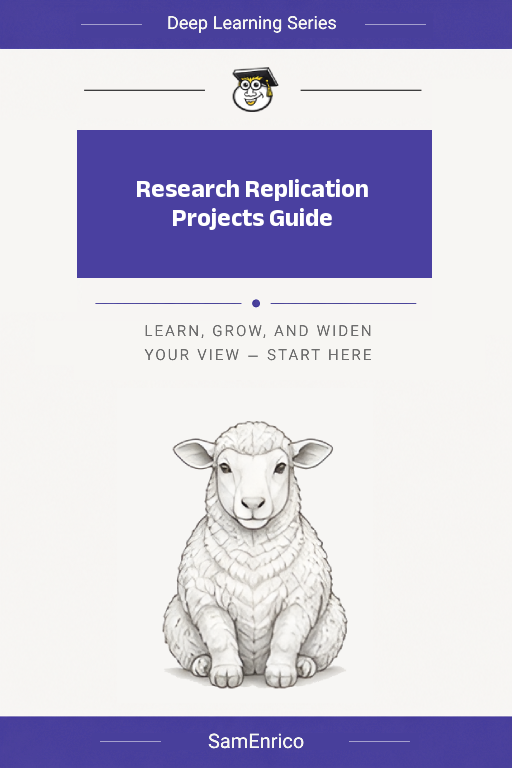
researchStudent's ShortcutReplication
Research Replication Projects Guide Audiobook
Replicate existing studies and document your findi
by Jobe Marlin
Replicate existing studies and document your findings as evidence of research skills.
Formats
Free sample
Chapter 1: The Hidden Crisis...--–- On a quiet morning in 2011, a third-year graduate student named Diederik Stapel sat in his office at Tilburg University, unaware that within weeks his career would collapse and, in doing so, shake the foundations of social psychology to its core. Stapel was a star. He had published dozens of papers in the field's most prestigious journals. He had won awards, trained successful students, and secured substantial grants. His research was elegant, surprising, and highly cited – the kind of work that made other researchers nod in admiration and whisper, "Why didn't I think of that?" One study showed that messy environments increased racial stereotyping.
Another found that exposure to meat made people more selfish. A third demonstrated that merely thinking about money reduced emotional distress. Each finding was a perfect little gem – clean, counterintuitive, and ready for a press release.–- Then came the investigation. Junior researchers had tried and failed to replicate Stapel's effects. Suspicious patterns emerged in his data.
When a whistleblower came forward and the university launched an inquiry, what they found was staggering. For more than a decade, Stapel had simply fabricated data. He had invented participants, created spreadsheets from scratch, and published results that had no empirical basis whatsoever. In total, 58 published papers were identified as fraudulent. The case was not an isolated lapse but a systematic campaign of deception spanning fifteen years.
Stapel later admitted that he had stopped conducting real experiments altogether – it was simply easier to type numbers into a spreadsheet that would produce the desired result.–- The Stapel case was shocking, but it was also, in one crucial sense, a distraction. It was easy to condemn a fraudster. It was comfortable to believe that the problem with science was a few bad apples. But as the 2010s unfolded, a more uncomfortable truth emerged. The problem was not just fraud.
The problem was that even honest, well-intentioned researchers – following standard practices, publishing in top journals, winning prestigious awards – might be producing findings that were false. Not because they lied, but because the normal incentives and methods of science had, quietly and systematically, broken down.–- This chapter is the story of that breakdown. Before you learn how to replicate, you must understand why replication became an urgent scientific priority. The skills you will develop in this book – the careful verification of code, the systematic…
This is the end of the free sample. Get the Audiobook to keep going. Buy now
About this book
Details
- Author
- Jobe Marlin
- Publisher
- SamEnrico
- Language
- English
- Genre
- research, Student's Shortcut, Replication
- Released
- 2026-06-01
- Pages (approx.)
- 158
- Available as
- eBook, Audiobook

Listen in the VoxFlicks app
Audiobooks and audio dramas wherever you go. Sign in with your SamEnrico account and press play.
More by Jobe Marlin
 Nobel Laureates Who Changed WorldJobe Marlin$11.99
 Drug Dependency and Hepatitis CJobe Marlin$11.99
 Self Talk for Single ParentsJobe Marlin$11.99
 Side Torso Exposure GuideJobe Marlin$11.99
 The Nobel Laureate ImmigrantsJobe Marlin$11.99
 Yellowstone Disappearance CasesJobe Marlin$11.99
 Mindful Eating First BiteJobe Marlin$11.99
 Howard Marks MemoJobe Marlin$11.99
 The Arctic Highway: The Great Alaska BirdwayJobe Marlin$11.99
 The Dacian Revolt: Trajan's Bloody March to SarmizegetusaJobe Marlin$11.99
 Growing ConospermumJobe Marlin$11.99
 BOI Update RequirementsJobe Marlin$12.99
You may also like
 Scientific Research On TM GuideMartens Nathanial$11.99
 Research Proposal Methodology Section MasteryPauley Debroah$11.99
 Research Proposal Appendix CompilationRaines Tyisha$11.99
 Academic Researcher Distraction GuideFord Virgil$11.99
 TM Research and ScienceCovert Nicki$11.99
 Social Anxiety Research ReviewRoberge Cole$11.99
 Research Proposal Significance Section GuideBock Tory$12.99
 Research Proposal Reviewer PsychologyLugo Tawanda$11.99
 Research Proposal Research Questions DesignLara Robbi$11.99
 Research Proposal References and CitationsPatten Shanice$11.99
 Research Proposal Mixed Methods DesignCameron Omega$11.99
 Research Proposal Data Management PlanAnderson Roberto$12.99