
researchAnnual CheckupResearch Law
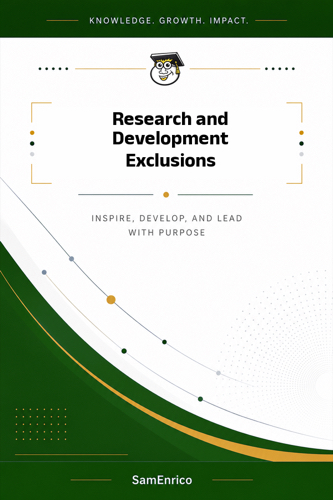
Research and Development Exclusions eBook
Apply non-commercial R&D exemptions under the EU A
by Vitale Oscar
Apply non-commercial R&D exemptions under the EU AI Act.
Formats
Free sample
Chapter 1: The Legislative Bargain...--The European Union does not do accidents. When the AI Act emerged from trilogue negotiations in December 2023, every comma, every recital, and every exemption had been fought over by three institutions—the Commission, the Parliament, and the Council—each with competing mandates. The R&D exemptions in Articles 2(6) and 2(8) were not gifts to the research community. They were weapons in a much larger political war.To understand what these exemptions actually permit, you must first understand what they were designed to prevent. This chapter tells the story of that legislative bargain: why the exemptions exist, what they were meant to protect, and—most importantly—where the drafters deliberately left ambiguity that now traps the unwary researcher.The Two Warring Camps The European Parliament began 2023 with a clear mandate from its Committee on Internal Market and Consumer Protection (IMCO): regulate high-risk AI strictly, but do not kill European innovation.
By mid-year, however, two irreconcilable visions had emerged.The Safety Caucus , led by MEPs from Germany and France with backgrounds in consumer protection, argued that any AI system that touches real people in real environments should be fully regulated from day one. Their logic was brutal but coherent: if an AI can affect a person's health, employment, or fundamental rights, it should meet safety standards before it ever runs on real data. They pointed to the Vioxx scandal (a marketed drug later withdrawn) and the Boeing 737 MAX disasters as evidence that pre-market testing exemptions kill people. Their proposed text would have eliminated R&D exemptions entirely for any AI system intended for high-risk use cases.The Science Caucus , led by MEPs from smaller member states with powerful research universities (the Netherlands, Sweden, Finland), countered that imposing full conformity assessment on every research AI would end European AI leadership. They argued that most AI research is iterative: you build, you test, you fail, you rebuild.
Requiring a 12-month conformity assessment before each iteration would make research impossible. Their nightmare scenario was a Ph D student who cannot test her diagnostic algorithm on retrospective patient data because the hospital's legal department fears €15 million fines. They won.The compromise was a set of exemptions so narrowly drafted that both sides claimed victory—and both were right. The exemptions exist, but they are booby-trapped with conditions that most researchers never see coming.Recitals 22 and 25: The Legislative Smoke Signals Before diving into the operative articles of the AI Act, every lawyer and regulator reads the recitals. Recitals are not legally binding on their own, but they are the authoritative interpretation of what the binding articles mean.
For R&D exemptions, two recitals matter above all others.Recital 22 addresses the Scientific Use Exemption (Article 2(6)). It states that AI systems "specifically developed and put into service for the sole purpose of scientific research and development" should not be subject to the Act's requirements for providers. But the recital adds a killer clause: "provided that such systems are not placed on the market or put into service for any other purpose." The phrase "any other purpose" is the trap. If your research AI helps a hospital administrator schedule shifts—even as a side function, even experimentally, even for free—you have lost the exemption.Recital 25 addresses the Development Phase Exemption (Article 2(8)). It clarifies that "placing on the market" does not include activities "carried out in the context of research and development" before the system is made available to users other than the developer.
But again, a proviso follows: real-world testing of high-risk AI systems requires compliance with Article 57's sandbox provisions. In plain language: you can test in your lab all day. The moment you test in a real hospital, even with dummy data, you need regulatory permission.Together, these recitals tell a consistent story: the EU wants you to innovate, but it wants you to innovate in a cage. The cage has walls—the lab, the sandbox, the documented intended purpose. Step outside, and the exemption vanishes.A Tale of Two Exemptions: Article 2(6) vs.
Article 2(8)The AI Act contains not one but two distinct R&D exemptions, and confusing them is the first mistake many researchers make. They serve different purposes, cover different activities, and have different conditions.Article 2(6) – The Scientific Use Exemption covers AI systems that are already "put into service" (defined in Chapter 3) but for the sole purpose of scientific research. Think of a university researcher who has built a diagnostic AI and is now testing it on retrospective patient data in a controlled environment. The system is "in service" in the sense that it is running and producing outputs, but those outputs are not being used to make real decisions. This exemption is narrow.
It requires that the system was "specifically developed" for research—not repurposed from a commercial product—and that its "sole purpose" is research. Any other use, even incidental, voids the exemption immediately (a concept called exemption termination , which we will distinguish from Chapter 6's retroactive nullification later).Article 2(8) – The Development Phase Exemption covers AI systems that have not yet been "placed on the market" or "put into service." This is the exemption for the pre-market phase: building, training, testing on synthetic data, running internal validations. Think of a startup that has built a prototype and is testing it on its own servers with no external users. This exemption is broader than Article 2(6) because the system is not yet in any sense "live." But it has a hard boundary: once you involve a human test subject outside your organization without a sandbox, you lose the exemption.The relationship between these two exemptions is often misunderstood. They are not mutually exclusive; a project can move from 2(8) (development) to 2(6) (scientific use) and back, as long as the conditions of each are met at each stage.
However, if at any point the system is used for a commercial or operational purpose, the exemption terminates immediately, and no amount of later reclassification can revive it. This is the "one strike and you're out" rule that most researchers discover only after their legal department issues a cease-and-desist.The GDPR Comparison: Why Past Exemptions Don't Apply Many researchers come to the AI Act expecting R&D exemptions that mirror the General Data Protection Regulation (GDPR). Article 89 of the GDPR allows research uses of personal data without full compliance with data subject rights, provided that "appropriate safeguards" are in place. This has led to a culture in European research institutions where "research exemption" is a magic phrase that excuses a wide range of activities.The AI Act is not the GDPR. The differences are fundamental and dangerous to ignore.First, the GDPR's research exemption applies to data processing, not to system deployment.
Under the GDPR, you can process health data for research purposes without getting explicit consent from every patient, as long as you have ethical approval and data protection safeguards. Under the AI Act, processing the same data through an AI system for research purposes may still be exempt under Article 2(6), but the moment that system's outputs are used to influence patient care—even silently, as we will see in Chapter 4—the exemption terminates. The GDPR protects your data processing; the AI Act regulates your…
This is the end of the free sample. Get the eBook to keep going. Buy now
About this book
Details
- Author
- Vitale Oscar
- Publisher
- SamEnrico
- Language
- English
- Genre
- research, Annual Checkup, Research Law
- Released
- 2026-06-06
- Pages (approx.)
- 142
- Available as
- eBook, Audiobook

Read better in the ZLOADR app
Your eBooks on your phone or tablet. Sign in with your SamEnrico account and start reading.
More by Vitale Oscar
 Burnout Prevention for First Responders CourseVitale Oscar$11.99
 Mindful Tech Use MBSR ApproachVitale Oscar$11.99
 Earle's Deep Sea Oil Drilling OppositionVitale Oscar$11.99
 Restless Leg Syndrome and ChemotherapyVitale Oscar$11.99
 The Day the Beatles Never Broke Up: A Multiverse MysteryVitale Oscar$11.99
 Xenotime MiningVitale Oscar$11.99
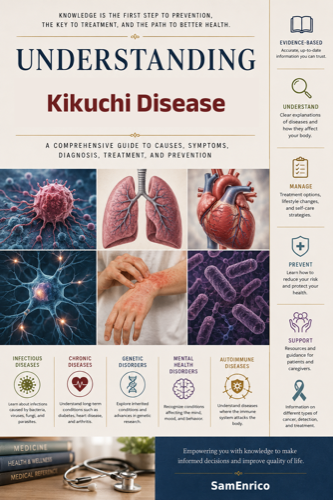 Understanding Kikuchi DiseaseVitale Oscar$17.99
 SME SaaS Penetration ForecastVitale Oscar$12.99
 Knowledge Base Auto Builder ManualVitale Oscar$12.99
 A Beginners Guide to Down Hill Skiing (Volume 1)Vitale Oscar$11.99
You may also like
 Scientific Research On TM GuideMartens Nathanial$11.99
 Research Proposal Methodology Section MasteryPauley Debroah$11.99
 Research Proposal Appendix CompilationRaines Tyisha$11.99
 Academic Researcher Distraction GuideFord Virgil$11.99
 TM Research and ScienceCovert Nicki$11.99
 Social Anxiety Research ReviewRoberge Cole$11.99
 Research Proposal Significance Section GuideBock Tory$12.99
 Research Proposal Reviewer PsychologyLugo Tawanda$11.99
 Research Proposal Research Questions DesignLara Robbi$11.99
 Research Proposal References and CitationsPatten Shanice$11.99
 Research Proposal Mixed Methods DesignCameron Omega$11.99
 Research Proposal Data Management PlanAnderson Roberto$12.99