
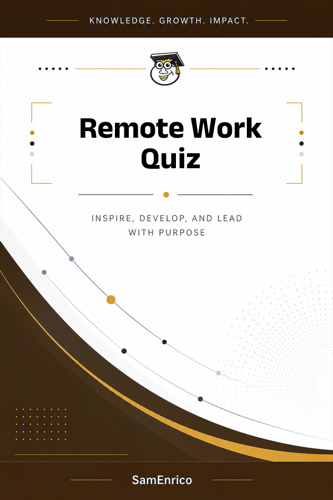
About this book
Free sample
Chapter 1: The Social Energy Budget--–- Emma had been a top performer at her marketing agency for six years. Her desk was strategically positioned near the coffee machine, not because she loved caffeine, but because she loved the collisions—the spontaneous chats, the overheard problems she could solve, the casual “hey, quick question” that turned into a campaign-saving idea. When her company announced a permanent remote work policy, her colleagues celebrated. Emma felt a sinking sensation she couldn't name.Three months later, she sat alone in her home office—a converted closet she had decorated with the same plants and framed prints that once adorned her cubicle. The plants were dying.
The prints seemed sad. And Emma had stopped volunteering ideas in team meetings because, she realized, the act of speaking into a void of black rectangles felt like performing for an empty theater. Her productivity hadn't dropped. But her motivation had evaporated.Then there was David, a software engineer on the same team. David had always positioned his desk in the quietest corner of the office, facing the wall, with noise-canceling headphones permanently affixed.
He ate lunch at his desk to avoid the cafeteria. When the remote work announcement came, David felt something he hadn't expected: relief. Finally, he could work without the constant drain of “how was your weekend” and “what are you working on” and the exhausting performance of office sociability.But six months in, David realized no one had asked for his opinion in weeks. He had completed three major projects, all on time, all under budget. Yet during the last promotion cycle, his name wasn't even discussed.
When he quietly mentioned this to his manager, she said, “I just don't hear from you much. I assumed you were fine with staying where you are.”Emma and David worked on the same team, for the same company, with the same remote policy. They failed for opposite reasons. Emma failed because she was drowning in isolation anxiety—the terror of being forgotten, yes, but more fundamentally, the loss of the social fuel that powered her work. David failed because…
This is the end of the free sample. Get the eBook to keep going. Buy now
Contents
- Chapter 1
- Chapter 2
- Chapter 3
- Chapter 4
- Chapter 5
- Chapter 6
- Chapter 7
- Chapter 8
- Chapter 9
- Chapter 10
- Chapter 11
- Chapter 12
Details
- Author
- Cyndy Henke
- Publisher
- SamEnrico
- Language
- English
- Genre
- Non-Fiction, Self-Help / Assessment
- Released
- 2026-06-09
- Pages (approx.)
- 145
- Available as
- eBook, Audiobook

Read better in the ZLOADR app
Your eBooks on your phone or tablet. Sign in with your SamEnrico account and start reading.
More by Cyndy Henke
 PC Gaming Upgrade AddictionCyndy Henke$11.99
 Insurance PayoutsCyndy Henke$11.99
 Deaf Nonverbal CommunicationCyndy Henke$11.99
 The Promotion Self Advocacy GuideCyndy Henke$11.99
 Rotating Shift GuideCyndy Henke$11.99
 NamUs Unclaimed PersonsCyndy Henke$11.99
 The Quantum Quill: Dante's Divine CosmosCyndy Henke$11.99
 The Clockwork Dreamer: Da Vinci’s Lost AutomatonCyndy Henke$11.99
 How to Start a Abrasive Soap Business (Beginners Guide)Cyndy Henke$11.99
 Growing CabombaCyndy Henke$11.99
 How to Produce AbsCyndy Henke$11.99
 State Selection for Foreign LLCsCyndy Henke$12.99
You may also like
 Grit QuizReed Darrin$11.99
 Pain Meditation QuizCanty Waylon$11.99
 Scripting QuizBlanchette Daron$11.99
 Interruption QuizMcelroy Jessi$11.99
 EQ Assessment GuideFerry Keith$11.99
 Stress and Relationship CheckupsHook Corrine$11.99
 Morning Routine QuizPritchett Carlena$11.99
 Memory Palace QuizPina Danille$11.99
 Parent Time QuizHolloway Violet$11.99
 Nightmare QuizSauer Pa$11.99
 Habit QuizBedford Ofelia$11.99
 Difficult Conversation QuizPrichard Palma$11.99