
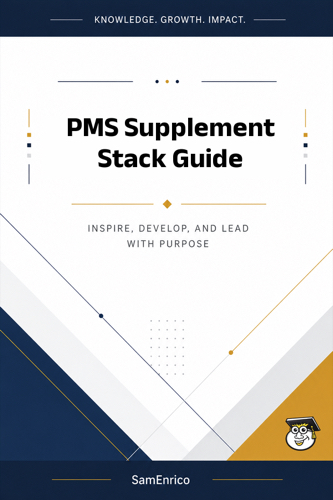
PMS Supplement Stack Guide eBook
Combine magnesium, B6, calcium, and evening primro
Combine magnesium, B6, calcium, and evening primrose oil to reduce mood swings, cramps, and bloating.
Formats
Free sample
Chapter 1: The Calendar Betrayal--–- On the morning of day 22 of her cycle, my friend Claire woke up, looked at her husband of eleven years, and thought: I don't know if I love you anymore. By dinner time, she had cried over a dog food commercial, eaten an entire sleeve of Oreos standing over the kitchen sink, and canceled plans with her best friend because the thought of putting on real pants felt like a personal violation. Twenty-four hours later, her period started. The fog lifted. She looked at her husband and felt confused about the confusion.
What was that? She asked me. Why does this keep happening?This chapter answers Claire's question. It names the enemy. It reveals why roughly half of all menstruating women spend between three and fourteen days every month feeling like a stranger in their own body.
And it lays the foundation for everything that follows: if you want to stop losing days of your life to mood swings, cramps, and bloating, you must first understand what the luteal phase actually does to your brain and body.The Three Domains of PMS: A Diagnostic Map Premenstrual syndrome is not one thing. It is a constellation of symptoms that cluster into three distinct domains, and one of the most common mistakes women make is trying to treat "PMS" as a monolith. You cannot treat a monolith. You must identify your specific pattern.The Emotional Domain This is the domain that destroys relationships. Irritability is the hallmark—that short-fused, don't-talk-to-me, why-is-everyone-breathing-so-loud feeling.
But depression also lives here: the heaviness, the tearfulness, the sense that nothing matters. Anxiety shows up as racing thoughts, chest tightness, and the inability to fall asleep because your brain is rehearsing worst-case scenarios. Anger, rage, and sudden outbursts—often followed by shame—are so common that researchers have a specific term for it: premenstrual dysphoria, which exists on a spectrum from mild to disabling.Claire's near-divorce moment was an emotional domain symptom. So is the woman who snaps at her children and then cries in the bathroom, the executive who cancels important meetings, the teenager who tells her mother she hates her and means it for approximately six hours.The Physical Domain This is the domain that disrupts daily function. Cramps range from a dull ache to pain that sends women to the emergency room.
Bloating is so common that "period pants" (the jeans with the elastic waistband) have become a commercial category. Breast tenderness can make hugging painful and sleeping on your stomach impossible. Headaches, back pain, joint aches, fatigue, and nausea all fall under this domain.The physical domain is not imaginary. Prostaglandins—inflammatory compounds released by the uterus—cause cramping by triggering excessive muscle contractions. These same prostaglandins can cause diarrhea, nausea, and systemic inflammation.
The bloating is driven by the aldosterone pathway, a hormonal mechanism that tells your kidneys to hold onto sodium and water. It is measurable. Women regularly gain two to five pounds of fluid during the luteal phase, and it is not "in their heads."The Behavioral Domain This is the domain that shows up in your daily choices. Food cravings—particularly for chocolate, sugar, and simple carbohydrates—are nearly universal. Sleep disturbances range from insomnia to hypersomnia (sleeping twelve hours and still feeling exhausted).
Reduced concentration makes work feel impossible. Social withdrawal is common: the desire to cancel plans, avoid phone calls, and hide from the world.What is happening neurobiologically? The behavioral domain is driven largely by serotonin. In the luteal phase, serotonin levels drop, and the brain responds by craving carbohydrates, which temporarily boost serotonin through the tryptophan transport pathway. The fatigue and concentration problems are driven by the same neurosteroid changes that affect GABA, the brain's primary inhibitory neurotransmitter.Why You Need to Map Your Symptoms Before you take a single supplement, you need to know which domains affect you most.
A woman whose primary problem is emotional symptoms (irritability, depression, anxiety) needs a different protocol focus than a woman whose primary problem is physical (cramps, bloating, breast pain). The behavioral domain often accompanies the emotional domain, but not always.Here is your first homework assignment: over the course of your next menstrual cycle, keep a simple log. Each day, rate your symptoms on a 0-10 scale for each domain. Use the Symptom Diary Template in the Appendix of this book. By the time you finish this chapter, you will understand why this tracking is not optional—it is the single most important thing you can do.The Luteal Phase: Your Body's Hostile Takeover The menstrual cycle has four phases, but only two matter for PMS: the follicular phase (days 1-14, from the first day of your period to ovulation) and the luteal phase (days 15-28, from ovulation to your next period).The follicular phase is your friend.
Estrogen rises slowly, then spikes at ovulation. You feel energetic, social, clear-headed, and optimistic. Your pain tolerance is higher. Your mood is stable. This is the version of yourself that you recognize as "you."Then ovulation happens.
The egg is released. The empty follicle transforms into the corpus luteum, a temporary endocrine gland that pumps out progesterone. And everything changes.What Progesterone Does to Your Brain Progesterone is not inherently bad. It is essential for preparing the uterine lining for a potential pregnancy. But progesterone's metabolites—particularly allopregnanolone—have powerful effects on the brain.
Allopregnanolone binds to GABA-A receptors, the same receptors targeted by benzodiazepines like Valium and Xanax.Here is the paradox: in most people, allopregnanolone is calming. It reduces anxiety. It promotes sleep. But in women with PMS, something goes wrong. The leading theory is that repeated exposure to allopregnanolone causes the GABA-A receptors to become desensitized or downregulated.
Instead of calming you, allopregnanolone triggers a paradoxical reaction: anxiety, irritability, and depression.This is why PMS is not a "hormone imbalance" in the simple sense. Most women with PMS have perfectly normal levels of estrogen and progesterone. The problem is not the amount of hormones—it is the brain's sensitivity to the normal hormonal changes of the luteal phase.What Progesterone Does to Your Body Progesterone also affects your body directly. It relaxes smooth muscle, which sounds good but means your intestines slow down (hello, constipation). It increases body temperature (those night sweats have a cause).
It stimulates the aldosterone pathway, causing your kidneys to retain sodium and water (hello, bloating and swollen fingers). And it increases the production of prostaglandins, which trigger uterine cramping, headaches, and systemic inflammation.One woman described the luteal phase to me as "a hostile takeover of my own body." That description is not dramatic. It is biologically accurate.Prostaglandins: The Inflammatory Culprits Prostaglandins deserve their own section because they explain so much of the physical suffering associated with PMS. These lipid compounds are produced at the site of tissue damage or inflammation. In the uterus, prostaglandins cause the smooth muscle to contract, which helps shed the uterine lining during menstruation.
But when prostaglandin levels are too high, those contractions become painful, excessive, and prolonged.High prostaglandin levels also cause:Nausea and vomiting (by affecting the gut)Diarrhea (by increasing intestinal motility)Headaches (by dilating blood vessels in the brain)Systemic inflammation…
This is the end of the free sample. Get the eBook to keep going. Buy now
About this book
Details
- Author
- Laughlin Santina
- Publisher
- SamEnrico
- Language
- English
- Genre
- Non-Fiction, Health & Wellness, Supplementation
- Released
- 2026-06-07
- Pages (approx.)
- 141
- Available as
- eBook, Audiobook

Read better in the ZLOADR app
Your eBooks on your phone or tablet. Sign in with your SamEnrico account and start reading.
More by Laughlin Santina
 The MBSR for Heart DiseaseLaughlin Santina$11.99
 Sex Addiction Sober Dating Boundaries WorkbookLaughlin Santina$11.99
 Dreams in Bulimia Nervosa RecoveryLaughlin Santina$11.99
 The Balinese Healers: Ancient Wisdom and the Birth of Mindful MedicineLaughlin Santina$11.99
 Galahad's Last Lesson: The Knight Who Chose the GrailLaughlin Santina$11.99
 UK US Australia University HandbookLaughlin Santina$12.99
 Renewable Energy Development Permitting OutlookLaughlin Santina$12.99
 Growth EngineerLaughlin Santina$11.99
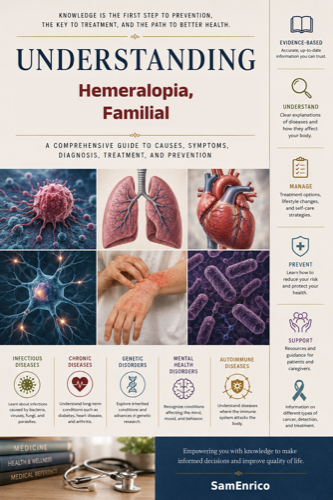 Understanding Hemeralopia, FamilialLaughlin Santina$17.99
 How to Become a Kettle WorkerLaughlin Santina$11.99
You may also like
 Vegan B12 Supplement GuideHardy Gina$11.99
 Vegan Supplement Stacking CourseBeyer Jeffie$11.99
 Multivitamin Selection CourseHoppe Larisa$11.99
 Micronutrient Supplement TimingBerrios Ehtel$11.99
 Melatonin Timing GuideCoe Michelina$11.99
 Inositol Supplement PCOSPino Josefa$11.99
 Vitamin B12 VeganStarkey Kittie$11.99
 Multivitamin Necessity SeniorsSomers Arden$11.99
 Multivitamin Selection GuideMahaffey Efren$11.99