
Non-FictionSelf-HelpSomatic Practices
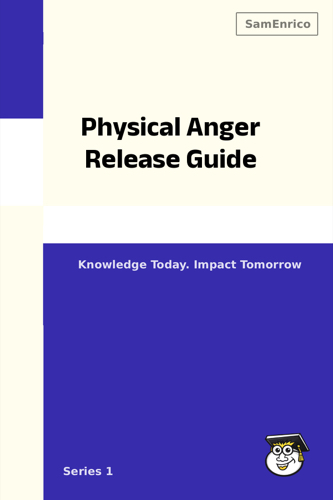
Physical Anger Release Guide eBook
Channel angry energy into safe physical activity w
Channel angry energy into safe physical activity without directing it at your partner.
Formats
Free sample
Chapter 1: The Pressure Cooker Lie--–- The first time Marcus put his fist through a wall, he was twenty-three years old and certain he was a monster. The second time, he was twenty-six, and the wall was beside his partner’s head. He didn’t hit her. He tells himself that still, even now, a decade later. He hit the wall.
But she flinched. And in that flinch, he saw something worse than his own rage. He saw her fear of him.This book is not for people who have already crossed the line into physical abuse. If you have hit, shoved, choked, or thrown objects at your partner in the last thirty days, close this book and call the National Domestic Violence Hotline. That is not a rhetorical suggestion.
That is the first and only instruction you need right now. This book is for people who feel the pressure building, who have not yet acted on it in ways that cause harm, who want to keep it that way. This book is for people who love someone and are terrified of what lives inside them.Anger is the most misunderstood human emotion. We are taught that anger is bad, that good people don’t get angry, that any expression of rage is a moral failure. Then we are handed platitudes: count to ten, take a walk, breathe deeply.
These strategies work for mild irritation. They fail catastrophically for the kind of anger that turns your vision red and makes your hands shake. That kind of anger is not a personality flaw. It is a biological event. And like any biological event, it has rules, mechanisms, and predictable pathways.
Once you understand those pathways, you can redirect them. That is what this book teaches. Not suppression. Not shame. Redirection.This chapter dismantles the single most damaging belief about anger: that feeling rage makes you a bad person.
It does not. What makes you a bad person is what you do with that rage. And right now, without realizing it, you have been given a set of tools that guarantee failure. The pressure cooker model of anger management—bottle it up until it explodes—is not just unhelpful. It is dangerous.
This chapter will show you why, and more importantly, it will give you the first concrete framework for doing something different.The Shame Trap: Why Hating Your Anger Makes It Stronger Most people who struggle with partner-directed anger share a common secret: they are deeply ashamed of what they feel. They wake up after a night of seething resentment or a flash of hot rage and tell themselves, “I’m a terrible partner. I don’t deserve them. Something is wrong with me.” That shame feels like accountability. It feels like the appropriate response to unacceptable feelings.
But shame is not accountability. Shame is fuel.Here is what the research on emotion regulation shows: when you judge an emotion as “bad” or “wrong,” your brain activates the same threat response that the original trigger did. You feel angry. Then you feel ashamed of feeling angry. That shame creates additional cortisol and adrenaline.
Now you are not just angry. You are angry and humiliated. The pressure has doubled. And because you believe anger is unacceptable, you try to push it down. You repress it.
You tell yourself to be nice, to let it go, to focus on the positive. And for a few hours, maybe a day, it works. The anger sinks below the surface. But it does not dissolve. It accumulates.This is the pressure cooker model.
You seal the lid. You apply heat. And eventually, the smallest trigger—a dish left in the sink, a tone of voice, a perceived slight—blows the whole thing open. And then the shame returns, worse than before, because you have proof now that you really are a monster. The cycle repeats.
Each time, the pressure builds faster. Each time, the explosion is worse. Each time, the shame deepens.Breaking this cycle requires a radical reframe: anger is not the enemy. Anger is a signal. It is your nervous system saying, “A boundary has been crossed.
A need is not being met. Energy must be discharged.” The problem is not the signal. The problem is what you do with it. If your smoke alarm goes off, you do not curse the alarm or try to rip it from the ceiling. You look for the fire.
Anger is your smoke alarm. This chapter teaches you to read it, not hate it.The Neurochemistry of Rage: What Happens Inside Your Body To redirect anger effectively, you must understand what it actually is. Anger is not a ghost in your soul or a demon in your blood. It is a neurochemical cascade that evolved over millions of years to keep you alive. When your brain perceives a threat—and emotional threats like disrespect, dismissal, or abandonment register the same way physical threats do—the amygdala activates the hypothalamus.
The hypothalamus signals the pituitary gland. The pituitary gland tells the adrenal glands to release two hormones: adrenaline and cortisol.Adrenaline primes your body for action. Your heart rate spikes. Blood flows away from your digestive system and into your large muscles. Your pupils dilate.
Your hearing sharpens. Your hands may clench into fists. Your jaw may lock. This is not a choice. It is a reflex.
Your body is preparing to fight. Cortisol sustains that state of alertness, keeping you on edge for hours after the initial trigger. Together, these hormones create the experience we call anger: tunnel vision, heat in the chest, a sense of urgency, and an overwhelming urge to do something.Here is what no one tells you: the urge to do something is correct. Your body is demanding action because action is the only way to complete the stress response. In the wild, when an animal experiences a threat, it either fights, flees, or freezes.
Afterward, it shakes off the excess energy and returns to baseline. Humans rarely complete this cycle. We suppress the urge to act because acting out is dangerous. We cannot punch our boss. We cannot scream at our children.
We cannot flee our own homes. So the energy stays trapped. The adrenaline and cortisol remain in our bloodstream. The pressure cooker lid stays sealed.The solution is not to stop the neurochemical cascade. You cannot.
It happens in milliseconds, below conscious awareness. The solution is to complete it safely. Your body needs to discharge that energy through physical action. The type of action matters enormously. Punching a wall reinforces aggression.
Screaming at your partner trains your brain to associate them with threat. But punching a heavy bag, sprinting for fifteen seconds, or pushing against a wall until your muscles shake—these actions complete the stress response without harming anyone. They tell your nervous system, “The threat is handled. We can calm down now.”By the end of this chapter, you will understand why repression fails and why physical redirection works. But first, you must learn the single most important distinction this book makes: the difference between constructive anger and destructive rage.Constructive Anger vs.
Destructive Rage: The Red Line Not all anger is the same. This is not a semantic distinction. It is a…
This is the end of the free sample. Get the eBook to keep going. Buy now
About this book
Details
- Author
- Mcewen Anibal
- Publisher
- SamEnrico
- Language
- English
- Genre
- Non-Fiction, Self-Help, Somatic Practices
- Released
- 2026-06-08
- Pages (approx.)
- 143
- Available as
- eBook, Audiobook

Read better in the ZLOADR app
Your eBooks on your phone or tablet. Sign in with your SamEnrico account and start reading.
More by Mcewen Anibal
 Body Image For DancersMcewen Anibal$11.99
 Commercial Real Estate Water RightsMcewen Anibal$11.99
 Reign Of Terror History HandbookMcewen Anibal$11.99
 Pattern Recognition for MindfulnessMcewen Anibal$11.99
 Pelvic Floor for MenMcewen Anibal$11.99
 Living Abroad in Spain ArbitrageMcewen Anibal$11.99
 Breaking the Cycle ManualMcewen Anibal$11.99
 Meth Recovery Social Reconnection CourseMcewen Anibal$11.99
 The Vanishing of Flight 19: Lost in the Bermuda TriangleMcewen Anibal$11.99
 The Tides of Infinity: How Calculus Charted the Atlantic’s UnknownMcewen Anibal$11.99
 The Hollow Echo of the Vanishing IslandMcewen Anibal$11.99
 Understanding AmelogenesisMcewen Anibal$17.99
You may also like
 Hong Kong Handover 1997Dunn Johnnie$11.99
 Zumba For Postnatal Recovery CourseNeal Christian$11.99
 Zumba for BeginnersLadner Nikia$11.99
 YouTube Comment Mining GuideHumes Pandora$12.99
 Worry Box MeditationCarlin Rudy$11.99
 Workplace Stress MeditationNguyen Lynn$11.99
 Workplace Stress and Sleep RepairHawley Ivory$11.99
 Workplace Perfectionism CureDelaney Jeffry$11.99
 Workplace Injustice Anger GuideWallen Isabelle$11.99
 Work Addiction and Burnout LinkGreenwood Ester$11.99
 Women in Yoga and WellnessBeattie Galina$11.99
 Women in Stand Up ComedyChun Evangeline$11.99