
Non-FictionHealth & WellnessSupplement Dosing
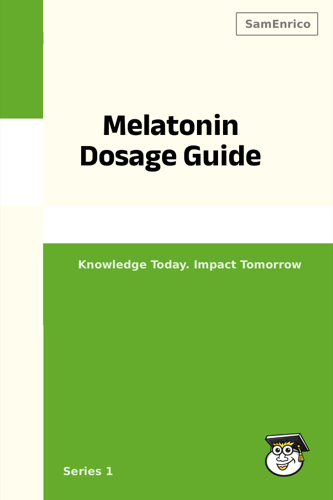
Melatonin Dosage Guide eBook
Start low 0.3 to 1 mg, avoid high doses that overs
Start low 0.3 to 1 mg, avoid high doses that overshoot.
Formats
Free sample
Chapter 1: The Bigger Lie--–- Walk down the supplement aisle of any pharmacy, grocery store, or big‑box retailer, and you will see them. Gummies, tablets, liquids, dissolvable strips, even melatonin‑infused sleep sprays. The bottles shout promises in bold letters: “5 mg,” “10 mg,” “12 mg,” “Extra Strength Nighttime Sleep Support.” Some brands now sell 20 mg gummies packaged like candy. The implicit message is impossible to miss: more melatonin, better sleep. It seems logical, almost intuitive.
If 5 mg is good, 10 mg must be twice as good. If 10 mg works, why not take 20 mg and really knock yourself out?That logic is wrong. Not just slightly off—dangerously, physiologically backward. The widespread belief that higher melatonin doses produce superior sleep is the single greatest misunderstanding in the history of supplement marketing. It has no basis in clinical science, contradicts decades of circadian biology, and has likely harmed more sleep than it has helped.
This chapter will dismantle that myth completely, but first, we need to understand how the supplement industry sold us on a lie that feels so believable.The Strange History of a Hormone Gone Wild Melatonin was discovered in 1958 by dermatologist Aaron Lerner at Yale University. He isolated the compound from bovine pineal glands and named it after the melanocyte‑stimulating hormone that made amphibian skin lighten. For decades, melatonin remained an obscure molecule studied by a small group of circadian rhythm researchers. They made a critical discovery early on: the human pineal gland produces melatonin in tiny, exquisitely precise amounts. The total overnight production in a healthy young adult is roughly 0.1 to 0.3 milligrams—not 3 mg, not 5 mg, not 10 mg.
That is the full night’s output, from dusk until dawn.So how did we go from 0.3 mg of natural production to store shelves stocked with 10 mg gummies? The answer involves a perfect storm of regulatory loopholes, marketing opportunism, and a fundamental misunderstanding of how hormones work.In the United States, the Dietary Supplement Health and Education Act of 1994 classified melatonin as a dietary supplement rather than a drug. This meant manufacturers could sell it without proving safety or efficacy to the Food and Drug Administration. Unlike a pharmaceutical company developing a new sleeping pill—which must invest hundreds of millions of dollars in clinical trials—a supplement company could simply put melatonin in a bottle and start selling it.The first commercial melatonin supplements appeared in the mid‑1990s at doses of 0.3 mg and 1 mg. These were loosely based on the physiological data.
But something unexpected happened. Consumers tried 0.3 mg and reported that it didn’t “feel” like anything. They expected a sedative effect—a heavy, drugged sensation that would force sleep. When they didn’t get that, they assumed the product was weak or ineffective. In response, supplement companies did what any market‑driven industry would do: they increased the dose.
First to 3 mg, then to 5 mg, then to 10 mg, and now to 20 mg and beyond. Each increase was marketed as an “extra strength” improvement, creating a feedback loop where higher doses signaled better quality to uninformed consumers.No clinical trial ever demonstrated that 10 mg works better than 0.3 mg for routine insomnia. No sleep specialist ever recommended that the general public take 20 mg gummies. The dose escalation was purely commercial, driven by consumer expectation rather than biological reality.The Overshoot Effect: Why Flooding the System Backfires To understand why high doses fail, you need to meet the MT1 and MT2 melatonin receptors. These are proteins embedded in the cell membranes of the suprachiasmatic nucleus—the brain’s master clock—and throughout other tissues.
Think of them as locks that require a specific key. Melatonin is the key. When melatonin binds to these receptors, it triggers a cascade of signals that tell the body, “Night has arrived. Prepare for sleep.”Here is the critical fact that changes everything: there are only so many receptor locks. A dose of 0.5 mg occupies roughly the same number of MT1 and MT2 receptors as 5 mg.
The extra 4.5 mg does not increase the therapeutic signal. It cannot. The receptors are already saturated. Instead, that excess melatonin floats freely in the bloodstream, waiting for the liver to break it down. While it circulates, it continues to bind to other sites—including receptors in the retina, the immune system, and the gastrointestinal tract—where it was never intended to linger.
This is the overshoot effect : taking more melatonin than the receptors can use, resulting in prolonged exposure, side effects, and no additional sleep benefit.Clinical research confirms this. A landmark study published in the journal Sleep compared 0.3 mg, 1 mg, and 3 mg doses in adults with insomnia. The 0.3 mg dose significantly advanced the timing of the body clock and improved sleep onset. The 1 mg dose worked almost as well but with slightly more next‑day grogginess. The 3 mg dose produced no greater sleep improvement than 0.3 mg—but it did produce significantly more morning drowsiness, headache, and vivid dreaming.
Other studies have extended these findings to even higher doses. A 2018 review in Current Neuropharmacology concluded that doses above 1 mg for circadian rhythm disorders offer no additional efficacy and increase the risk of adverse effects.In other words, taking 10 mg does not give you ten times the sleep benefit. It gives you the same sleep benefit—or worse, disrupted sleep—plus a morning hangover. That is the law of diminishing returns applied to neurohormones.The Three Predictable Consequences of High Doses When you consistently take melatonin doses that exceed the physiological range, three problems emerge. They are not random side effects.
They are predictable, dose‑dependent consequences of receptor oversaturation.Tolerance. The brain is remarkably adaptive. When it detects persistently high levels of any signaling molecule—whether dopamine, serotonin, or melatonin—it adjusts. In the case of melatonin, chronic high doses can lead to downregulation of MT1 and MT2 receptors. The brain essentially says, “There is too much melatonin here all the time.
We need to become less sensitive to it.” Over weeks or months, you may find that 5 mg no longer works the way it used to, so you increase to 10 mg. Then 10 mg stops working. This is the classic tolerance spiral, and it is driven entirely by supraphysiological dosing. Physiological doses (0.3–1 mg) rarely produce meaningful tolerance because they mimic the natural rhythm rather than overwhelming it.Morning Grogginess. Melatonin has a half‑life of approximately 45 minutes for immediate‑release formulations.
This means that after 45 minutes, half the dose is gone; after 90 minutes, three‑quarters is gone; after 4–5 hours, it is essentially cleared from the blood. That timing is deliberate. Natural melatonin peaks in the middle of the night and falls to near‑zero by morning, allowing you to wake with alertness. When you take a high dose—say, 10 mg at 10 p.m.—you still have significant residual melatonin in your blood at 7 a.m. Blood levels above 10 picograms per milliliter are associated with impaired reaction time, reduced memory consolidation, and subjective feelings of “brain fog.” This is the melatonin hangover.
It is not a hangover in the alcoholic sense, but the functional impairment is real. High‑dose users often describe feeling drugged, slow, and irritable for the first two to four hours of their day. They reach for coffee…
This is the end of the free sample. Get the eBook to keep going. Buy now
About this book
Details
- Author
- Greenfield Janean
- Publisher
- SamEnrico
- Language
- English
- Genre
- Non-Fiction, Health & Wellness, Supplement Dosing
- Released
- 2026-06-08
- Pages (approx.)
- 152
- Available as
- eBook, Audiobook

Read better in the ZLOADR app
Your eBooks on your phone or tablet. Sign in with your SamEnrico account and start reading.
More by Greenfield Janean
 SCAMPER Group Technique CourseGreenfield Janean$11.99
 Skill Challenge Balance GuideGreenfield Janean$11.99
 Senior Grief and Self WorthGreenfield Janean$11.99
 Acupuncture for Digestive HealthGreenfield Janean$11.99
 Geriatric MassageGreenfield Janean$11.99
 Self Hypnosis for Financial AnxietyGreenfield Janean$11.99
 Bite Mark on ObjectsGreenfield Janean$11.99
 The Battle of the Bulge: Hitler's Last Roll of the Dice (1944-45)Greenfield Janean$11.99
 The Codebreaker and the Machine: Alan Turing’s Forgotten WarGreenfield Janean$11.99
 Sea Urchins: Spiky EchinodermGreenfield Janean$11.99
 How to Produce Deep FryersGreenfield Janean$11.99
 A Collector's Handbook to the Volvo 123gtGreenfield Janean$11.99
You may also like
 Hong Kong Handover 1997Dunn Johnnie$11.99
 Zumba For Postnatal Recovery CourseNeal Christian$11.99
 Zumba for BeginnersLadner Nikia$11.99
 YouTube Comment Mining GuideHumes Pandora$12.99
 Worry Box MeditationCarlin Rudy$11.99
 Workplace Stress MeditationNguyen Lynn$11.99
 Workplace Stress and Sleep RepairHawley Ivory$11.99
 Workplace Perfectionism CureDelaney Jeffry$11.99
 Workplace Injustice Anger GuideWallen Isabelle$11.99
 Work Addiction and Burnout LinkGreenwood Ester$11.99
 Women in Yoga and WellnessBeattie Galina$11.99
 Women in Stand Up ComedyChun Evangeline$11.99