
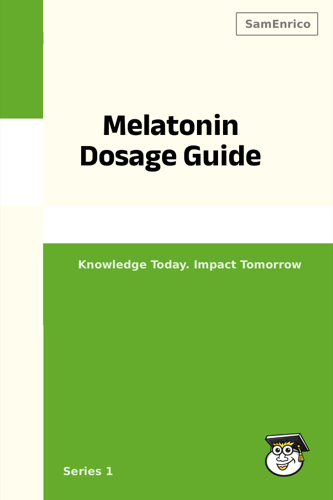
Non-FictionHealth & WellnessSupplement Dosing
Melatonin Dosage Guide Audiobook
Start low 0.3 to 1 mg, avoid high doses that overs
Start low 0.3 to 1 mg, avoid high doses that overshoot.
Formats
Free sample
Chapter 1: The Bigger Lie--–- Walk down the supplement aisle of any pharmacy, grocery store, or big‑box retailer, and you will see them. Gummies, tablets, liquids, dissolvable strips, even melatonin‑infused sleep sprays. The bottles shout promises in bold letters: “5 mg,” “10 mg,” “12 mg,” “Extra Strength Nighttime Sleep Support.” Some brands now sell 20 mg gummies packaged like candy. The implicit message is impossible to miss: more melatonin, better sleep. It seems logical, almost intuitive.
If 5 mg is good, 10 mg must be twice as good. If 10 mg works, why not take 20 mg and really knock yourself out?That logic is wrong. Not just slightly off—dangerously, physiologically backward. The widespread belief that higher melatonin doses produce superior sleep is the single greatest misunderstanding in the history of supplement marketing. It has no basis in clinical science, contradicts decades of circadian biology, and has likely harmed more sleep than it has helped.
This chapter will dismantle that myth completely, but first, we need to understand how the supplement industry sold us on a lie that feels so believable.The Strange History of a Hormone Gone Wild Melatonin was discovered in 1958 by dermatologist Aaron Lerner at Yale University. He isolated the compound from bovine pineal glands and named it after the melanocyte‑stimulating hormone that made amphibian skin lighten. For decades, melatonin remained an obscure molecule studied by a small group of circadian rhythm researchers. They made a critical discovery early on: the human pineal gland produces melatonin in tiny, exquisitely precise amounts. The total overnight production in a healthy young adult is roughly 0.1 to 0.3 milligrams—not 3 mg, not 5 mg, not 10 mg.
That is the full night’s output, from dusk until dawn.So how did we go from 0.3 mg of natural production to store shelves stocked with 10 mg gummies? The answer involves a perfect storm of regulatory loopholes, marketing opportunism, and a fundamental misunderstanding of how hormones work.In the United States, the Dietary Supplement Health and Education Act of 1994 classified melatonin as a dietary supplement rather than a drug. This meant manufacturers could sell it without proving safety or efficacy to the Food and Drug Administration. Unlike a pharmaceutical company developing a new sleeping pill—which must invest hundreds of millions of dollars in clinical trials—a supplement company could simply put melatonin in a bottle and start selling it.The first commercial melatonin supplements appeared in the mid‑1990s at doses of 0.3 mg…
This is the end of the free sample. Get the Audiobook to keep going. Buy now
About this book
Details
- Author
- Greenfield Janean
- Publisher
- SamEnrico
- Language
- English
- Genre
- Non-Fiction, Health & Wellness, Supplement Dosing
- Released
- 2026-06-08
- Pages (approx.)
- 152
- Available as
- eBook, Audiobook

Listen in the VoxFlicks app
Audiobooks and audio dramas wherever you go. Sign in with your SamEnrico account and press play.
More by Greenfield Janean
 SCAMPER Group Technique CourseGreenfield Janean$11.99
 Skill Challenge Balance GuideGreenfield Janean$11.99
 Senior Grief and Self WorthGreenfield Janean$11.99
 Acupuncture for Digestive HealthGreenfield Janean$11.99
 Geriatric MassageGreenfield Janean$11.99
 Self Hypnosis for Financial AnxietyGreenfield Janean$11.99
 Bite Mark on ObjectsGreenfield Janean$11.99
 The Battle of the Bulge: Hitler's Last Roll of the Dice (1944-45)Greenfield Janean$11.99
 The Codebreaker and the Machine: Alan Turing’s Forgotten WarGreenfield Janean$11.99
 Sea Urchins: Spiky EchinodermGreenfield Janean$11.99
 How to Produce Deep FryersGreenfield Janean$11.99
 A Collector's Handbook to the Volvo 123gtGreenfield Janean$11.99
You may also like
 Hong Kong Handover 1997Dunn Johnnie$11.99
 Zumba For Postnatal Recovery CourseNeal Christian$11.99
 Zumba for BeginnersLadner Nikia$11.99
 YouTube Comment Mining GuideHumes Pandora$12.99
 Worry Box MeditationCarlin Rudy$11.99
 Workplace Stress MeditationNguyen Lynn$11.99
 Workplace Stress and Sleep RepairHawley Ivory$11.99
 Workplace Perfectionism CureDelaney Jeffry$11.99
 Workplace Injustice Anger GuideWallen Isabelle$11.99
 Work Addiction and Burnout LinkGreenwood Ester$11.99
 Women in Yoga and WellnessBeattie Galina$11.99
 Women in Stand Up ComedyChun Evangeline$11.99