
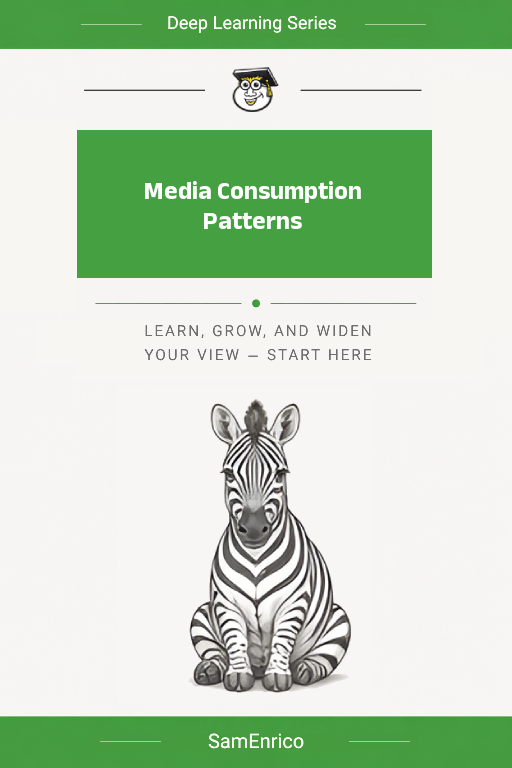
Non-FictionConsumer Mind ReportMedia Strategy
Media Consumption Patterns
Examines TV, streaming, podcast, radio, and news c
by Wills Micah
Examines TV, streaming, podcast, radio, and news consumption differences for media planning strategies.
Formats
About this book
Free sample
Chapter 1: The Vanished Audience...–- At exactly 8:47 PM on May 23, 2009, something died. You probably didn't notice. Most people didn't. But if you had been watching the Nielsen ratings scroll across a media executive's screen that night, you would have seen the exact moment when the last truly mass audience blinked out of existence.The show was the American Idol season eight finale. Nearly 29 million Americans watched Adam Lambert lose to Kris Allen.
It was the last time any single broadcast would capture more than 25 million viewers for a non-sports event. Within five years, the Idol finale would drop to 10 million. Within ten, the show would be canceled. And in its place? Not another show.
Not another network. Nothing that could be pointed to as the "replacement."That's the first thing you need to understand about the fragmentation of media: it wasn't a war with a winner. It was an explosion with no single shrapnel piece large enough to matter.The Great Unwinding For most of the twentieth century, media consumption followed a predictable pattern. Three television networks (ABC, CBS, NBC) divided the primetime spoils. A handful of radio formats (Top 40, News/Talk, Country) dominated the airwaves.
Daily newspapers, often one per city, set the morning agenda. The math was simple: limited channels, limited hours, limited choices. Audiences were captive not because they lacked curiosity but because they lacked alternatives.The 1980s brought cable television, and the first cracks appeared. MTV, CNN, ESPN, Nickelodeon—these were not just new channels but new categories of content. You could now watch music videos all day (why wouldn't you?), or news all day (why would you?), or cartoons designed specifically for children rather than repurposed prime-time leftovers.
By 1990, the average American household received 33 channels. By 2000, that number had climbed to 89. By 2010, with the rise of digital streaming, the very concept of "channels" began to dissolve.But here's what the obituaries get wrong: the fragmentation didn't happen because technology forced it upon unwilling consumers. It happened because consumers wanted it. Desperately.
The three-network era was not a golden age of shared cultural experience; it was a monopoly disguised as tradition. When…
This is the end of the free sample. Get the eBook to keep going. Buy now
Contents
- Chapter 1
- Chapter 2
- Chapter 3
- Chapter 4
- Chapter 5
- Chapter 6
- Chapter 7
- Chapter 8
- Chapter 9
- Chapter 10
- Chapter 11
- Chapter 12
Details
- Author
- Wills Micah
- Publisher
- SamEnrico
- Language
- English
- Genre
- Non-Fiction, Consumer Mind Report, Media Strategy
- Released
- 2026-06-01
- Pages (approx.)
- 141
- Available as
- eBook, Audiobook

Read better in the ZLOADR app
Your eBooks on your phone or tablet. Sign in with your SamEnrico account and start reading.
More by Wills Micah
 Child Stars Who Killed ThemselvesWills Micah$11.99
 Posture And Breath ConnectionWills Micah$11.99
 Stress and Relationship Apology RepairWills Micah$11.99
 Active Listening for Anger ManagementWills Micah$11.99
 The Still Breath PointWills Micah$11.99
 Barley & Blood: The Viking Brewer Who Conquered RomeWills Micah$11.99
 How to Start a Technical Schools BusinessWills Micah$11.99
 Understanding LoiasisWills Micah$17.99
 Feature LeadWills Micah$11.99
 Real Estate LLC For Foreign InvestorsWills Micah$12.99
You may also like
 Hong Kong Handover 1997Dunn Johnnie$11.99
 Zumba For Postnatal Recovery CourseNeal Christian$11.99
 Zumba for BeginnersLadner Nikia$11.99
 YouTube Comment Mining GuideHumes Pandora$12.99
 Worry Box MeditationCarlin Rudy$11.99
 Workplace Stress MeditationNguyen Lynn$11.99
 Workplace Stress and Sleep RepairHawley Ivory$11.99
 Workplace Perfectionism CureDelaney Jeffry$11.99
 Workplace Injustice Anger GuideWallen Isabelle$11.99
 Work Addiction and Burnout LinkGreenwood Ester$11.99
 Women in Yoga and WellnessBeattie Galina$11.99
 Women in Stand Up ComedyChun Evangeline$11.99