
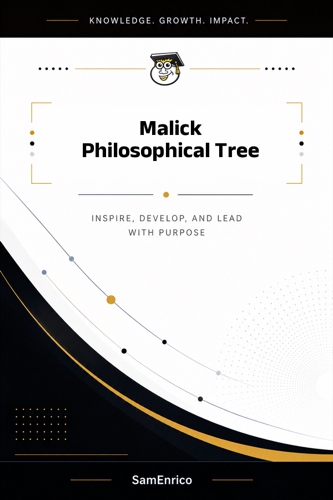
Malick Philosophical Tree Audiobook
Analyze the voiceover, nature footage, and spiritu
Analyze the voiceover, nature footage, and spiritual drift of the recluse.
Formats
Free sample
Chapter 1: The Man Who Disappeared--–- In 1978, Terrence Malick was one of the most promising directors in Hollywood. He had made two films—Badlands (1973) and Days of Heaven (1978)—that had won the Palme d'Or at Cannes, earned an Academy Award for cinematography, and drawn comparisons to Stanley Kubrick and Orson Welles. He was thirty-five years old. He had money, fame, and the full attention of a studio system that wanted to know: what next? The answer came as a shock to everyone.
Malick sold his house in Los Angeles, packed a suitcase, and moved to Paris. He did not announce a new project. He did not give interviews. He simply vanished. For the next twenty years, he would release exactly one film—The Thin Red Line (1998)—and even that appeared only after a decade of rumors, false starts, and near-mythological silence.
In an industry built on publicity, branding, and the relentless production of content, Malick became the anti-Hollywood figure: the recluse who refused to play the game.This chapter dismantles the popular myth that Malick’s withdrawal was merely eccentricity or shyness. It argues, instead, that his disappearance was a philosophical method—a deliberate strategy for stripping away the noise of authorship so that the work could speak for itself. To understand this method, we must first understand the intellectual journey that preceded it. Malick was not a filmmaker who happened to read philosophy. He was a philosopher who became a filmmaker.
His undergraduate degree from Harvard was in philosophy. He studied under Stanley Cavell, one of the most important American philosophers of the twentieth century. He won a Rhodes Scholarship to Oxford, then transferred to the American Film Institute Conservatory after a dispute with his advisor. Between Oxford and the AFI, he translated Martin Heidegger’s Vom Wesen des Grundes (On the Essence of Ground)—a dense, untranslated text that most professional philosophers avoid. By the time he made Badlands, Malick had spent nearly a decade immersed in phenomenology, existentialism, and the question that would define his cinema: how can we attend to the world without distorting it with our concepts, our desires, or our egos?The Philosopher’s Formation To understand Malick’s silence, we must first understand his education.
Harvard in the 1960s was a crucible of philosophical debate. The analytic tradition, imported from Cambridge and Oxford, dominated the department: logical positivism, ordinary language philosophy, and the…
This is the end of the free sample. Get the Audiobook to keep going. Buy now
About this book
Details
- Author
- Kinsey Charles
- Publisher
- SamEnrico
- Language
- English
- Genre
- Non-Fiction, Biography, Art House
- Released
- 2026-06-10
- Pages (approx.)
- 103
- Available as
- eBook, Audiobook

Listen in the VoxFlicks app
Audiobooks and audio dramas wherever you go. Sign in with your SamEnrico account and press play.
More by Kinsey Charles
 The Ageist Stereotype Shield GuideKinsey Charles$11.99
 Real Estate Networking GuideKinsey Charles$11.99
 Parent Chronically Ill Child GuideKinsey Charles$11.99
 Cuphead Rage Cycle GuideKinsey Charles$11.99
 Understanding Mental Retardation Microcephaly Unusual FaciesKinsey Charles$17.99
 Promotion Business Case ChecklistKinsey Charles$12.99
 UN Statistics and Data Science JobsKinsey Charles$12.99
 How to Start a Municipal Bus Service Business (Beginners Guide)Kinsey Charles$11.99
 Security Operations EngineerKinsey Charles$11.99
You may also like
 Hong Kong Handover 1997Dunn Johnnie$11.99
 Zumba For Postnatal Recovery CourseNeal Christian$11.99
 Zumba for BeginnersLadner Nikia$11.99
 YouTube Comment Mining GuideHumes Pandora$12.99
 Worry Box MeditationCarlin Rudy$11.99
 Workplace Stress MeditationNguyen Lynn$11.99
 Workplace Stress and Sleep RepairHawley Ivory$11.99
 Workplace Perfectionism CureDelaney Jeffry$11.99
 Workplace Injustice Anger GuideWallen Isabelle$11.99
 Work Addiction and Burnout LinkGreenwood Ester$11.99
 Women in Yoga and WellnessBeattie Galina$11.99
 Women in Stand Up ComedyChun Evangeline$11.99