
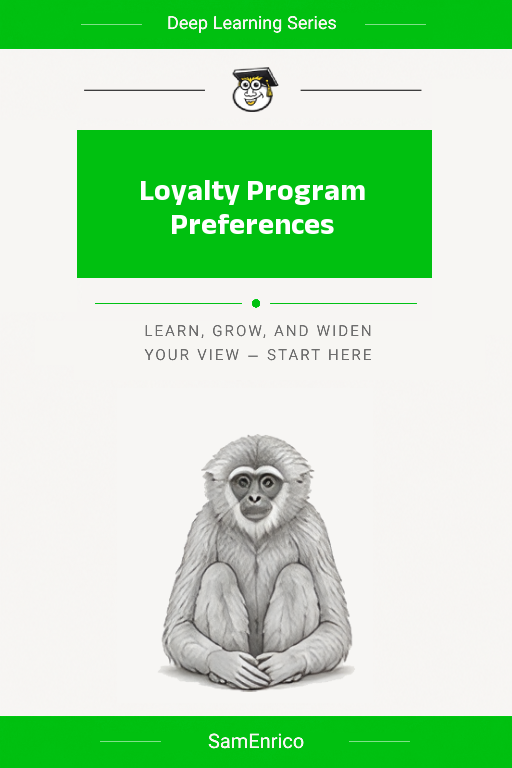
Non-FictionConsumer Mind ReportLoyalty Marketing
Loyalty Program Preferences
Examines points vs cash back vs tiered rewards and
Examines points vs cash back vs tiered rewards and redemption behavior for CRM strategy.
Formats
About this book
Free sample
Chapter 1: The Irrational Asset--–- Every morning at 7:43 AM, without exception, a man named David Chen in Chicago, Illinois, opens his Starbucks app to check his star balance. He does not need coffee at 7:43. He does not leave for work until 8:15. He has no practical reason to open the app. Yet he does it, compulsively, because he is currently at 147 stars and needs 150 for a free drink.
The gap of three stars gnaws at him. Three stars represent approximately six dollars in spending, or roughly two medium drip coffees, or one overpriced muffin that he does not actually want. But the number 147 feels incomplete. It feels like almost. And almost, for the human brain, is a torture device disguised as a motivational tool.David Chen is not unusual.
He is not particularly loyal to Starbucks as a brand. He will buy coffee at Dunkin' if he is running late and it is closer. He has no emotional attachment to the green siren logo. What he has is an attachment to the number 150. That number has become a cognitive anchor around which his morning behavior now orbits.
He will choose the Starbucks that is three blocks out of his way because it closes the gap faster. He will buy the muffin he does not want because it yields more stars per dollar than coffee alone. He has been manipulated, exquisitely and precisely, by one of the most powerful psychological forces in consumer behavior: the endowed progress effect.This chapter reveals the hidden architecture of irrational loyalty. We will dismantle the myth that loyalty programs work because they reward customers for their business. They do not.
They work because they exploit predictable cognitive biases that evolution left in the human brain like open backdoors. Once you understand these biases—the endowment effect, the goal gradient, loss aversion, status signaling, and the sunk cost fallacy—you will see loyalty programs not as marketing tools but as behavioral engineering platforms. And you will never look at your own points balance the same way again.The Velvet Rope: Why Status Costs Nothing and Changes Everything Of the three…
This is the end of the free sample. Get the eBook to keep going. Buy now
Contents
- Chapter 1
- Chapter 2
- Chapter 3
- Chapter 4
- Chapter 5
- Chapter 6
- Chapter 7
- Chapter 8
- Chapter 9
- Chapter 10
- Chapter 11
- Chapter 12
Details
- Author
- Ladner Eneida
- Publisher
- SamEnrico
- Language
- English
- Genre
- Non-Fiction, Consumer Mind Report, Loyalty Marketing
- Released
- 2026-05-29
- Pages (approx.)
- 141
- Available as
- eBook, Audiobook

Read better in the ZLOADR app
Your eBooks on your phone or tablet. Sign in with your SamEnrico account and start reading.
More by Ladner Eneida
 Forgiveness Breath PracticeLadner Eneida$11.99
 DoorDash Dasher RatingsLadner Eneida$11.99
 The Breath Anchor for PanicLadner Eneida$11.99
 Non threatening Posture GuideLadner Eneida$11.99
 The Remote Work Health Insurance GuideLadner Eneida$11.99
 The Gold Rush Heist: How a Gang Outwitted the Wild WestLadner Eneida$11.99
 Genetic EngineeringLadner Eneida$11.99
 Non Resident LLC Formation AgentsLadner Eneida$12.99
 Understanding LsaLadner Eneida$17.99
 How to Become a Draw-bench-operator HelperLadner Eneida$11.99
You may also like
 Hong Kong Handover 1997Dunn Johnnie$11.99
 Zumba For Postnatal Recovery CourseNeal Christian$11.99
 Zumba for BeginnersLadner Nikia$11.99
 YouTube Comment Mining GuideHumes Pandora$12.99
 Worry Box MeditationCarlin Rudy$11.99
 Workplace Stress MeditationNguyen Lynn$11.99
 Workplace Stress and Sleep RepairHawley Ivory$11.99
 Workplace Perfectionism CureDelaney Jeffry$11.99
 Workplace Injustice Anger GuideWallen Isabelle$11.99
 Work Addiction and Burnout LinkGreenwood Ester$11.99
 Women in Yoga and WellnessBeattie Galina$11.99
 Women in Stand Up ComedyChun Evangeline$11.99