
JEE Modern Physics Shortcuts
Master photoelectric effect and nuclear physics wi
Master photoelectric effect and nuclear physics with quick formula applications.
Formats
About this book
Free sample
Chapter 1: The Quantum Toolkit...--–- Most JEE aspirants lose precious minutes hunting for formulas. They flip pages, scratch their heads, and eventually write down the wrong constant—using 6.63×10−346.63 \times 10^{-34}6.63×10⁻³⁴ when they needed 4.14×10−154.14 \times 10^{-15}4.14×10⁻¹⁵, or forgetting that hchchc can be 1240 e V·nm instead of wrestling with joules. This chapter is your weapon against that chaos. It is not a theory chapter. You will find no derivations here, no historical anecdotes, no philosophical debates about wave-particle duality.
Instead, this is a living reference—a toolkit you will bookmark, tab, and return to before every practice session. By the time you finish this chapter, you will have memorized exactly seven formulas and four constants. That is all you need to solve 80% of JEE Modern Physics problems. The remaining 20% are combinations of these seven. Let us begin.1.1 The Seven Sacred Formulas Every photoelectric effect or nuclear physics problem in JEE Main and Advanced reduces to one or more of these seven equations.
Learn them not as symbols on a page but as mental reflexes.Formula 1: Photon Energy E=hν=hcλE = h\nu = \frac{hc}{\lambda}E=hν=λhcHere, EEE is the energy of a single photon, hhh is Planck’s constant (6.63×10−346.63 \times 10^{-34}6.63×10⁻³⁴ J·s or 4.14×10−154.14 \times 10^{-15}4.14×10⁻¹⁵ e V·s), ν\nuν (nu) is the frequency in hertz, ccc is the speed of light (3×1083 \times 10^83×108 m/s), and λ\lambdaλ (lambda) is the wavelength in meters. This formula appears in every photoelectric effect problem, every atomic transition question, and even in some nuclear decay gamma emission problems. Memorize it now.Formula 2: de Broglie Wavelengthλ=hp=hmv\lambda = \frac{h}{p} = \frac{h}{mv}λ=ph=mvhFor any moving particle—electron, proton, neutron, even a cricket ball in theory—this gives the associated matter wave wavelength. ppp is momentum, mmm is mass, vvv is velocity. JEE loves asking: “An electron and a proton have the same kinetic energy.
Which has a longer de Broglie wavelength?” The answer: the lighter electron. You will derive that using this formula.Formula 3: Einstein’s Photoelectric Equatione V0=hν−ϕe V_0 = h\nu - \phie V0=hν−ϕHere, V0V_0V0 is…
This is the end of the free sample. Get the eBook to keep going. Buy now
Contents
- Chapter 1
- Chapter 2
- Chapter 3
- Chapter 4
- Chapter 5
- Chapter 6
- Chapter 7
- Chapter 8
- Chapter 9
- Chapter 10
- Chapter 11
- Chapter 12
Details
- Author
- Steward Dwana
- Publisher
- SamEnrico
- Language
- English
- Genre
- Non-Fiction, Student's Shortcut
- Released
- 2026-06-01
- Pages (approx.)
- 135
- Available as
- eBook, Audiobook

Read better in the ZLOADR app
Your eBooks on your phone or tablet. Sign in with your SamEnrico account and start reading.
More by Steward Dwana
 Mindful Healthcare Professional GuideSteward Dwana$11.99
 Calf Strain Recovery ProtocolSteward Dwana$11.99
 UK CMA Merger BlocksSteward Dwana$11.99
 Metta For Evening Wind DownSteward Dwana$11.99
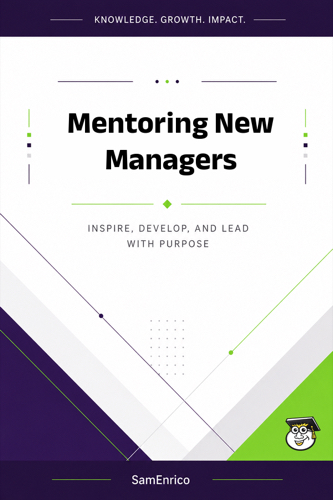 Mentoring New ManagersSteward Dwana$11.99
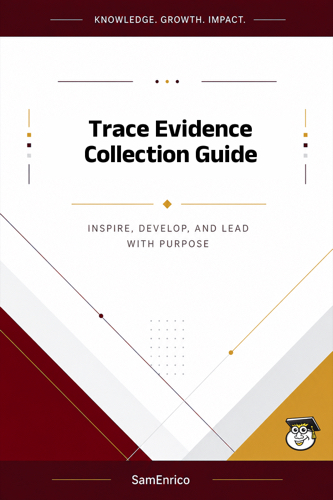 Trace Evidence Collection GuideSteward Dwana$11.99
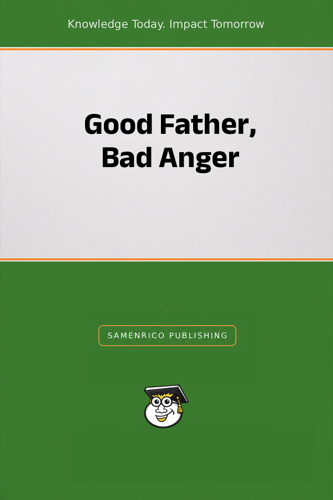 Good Father, Bad AngerSteward Dwana$11.99
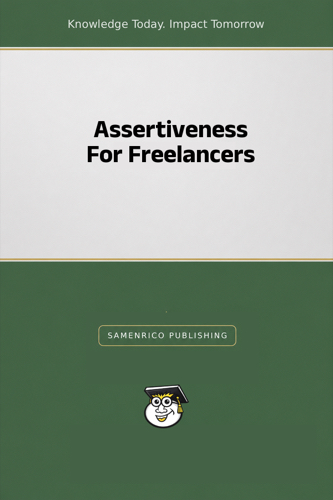 Assertiveness For FreelancersSteward Dwana$11.99
 A B Testing BiasesSteward Dwana$11.99
 The Clockwork Dreamer: How a 19th-Century Engineer Built the First Practical Steam-Powered CarSteward Dwana$11.99
 The Codebreaker of Southeast Asia: Hoang Tuan's Mathematical RevolutionSteward Dwana$11.99
 The Last Charge of the Qing: The Fall of the Boxer Rebellion (1900)Steward Dwana$11.99
You may also like
 LSE Online Program LengthAgee Letisha$11.99
 Harvard Extension School for Working AdultsRoush Yer$11.99
 LSE Online Reading ListAshford Ludivina$11.99
 LSE Online Language RequirementsWhitten Daphine$11.99
 LSE Online Class SizeHughey Garret$11.99
 LSE Online Alumni MentorshipWild Lyla$11.99
 London School of Economics Alumni NetworkDutton Chantal$11.99
 Harvard Extension School Student SupportCantrell Christene$11.99
 Harvard Extension School Library AccessSantana Adah$11.99
 Harvard Extension School Degree CompletionBray Wyatt$11.99
 Harvard Extension School Course AuditingAbbott Craig$11.99
 Harvard Extension School Extension DiplomaNew Joane$11.99