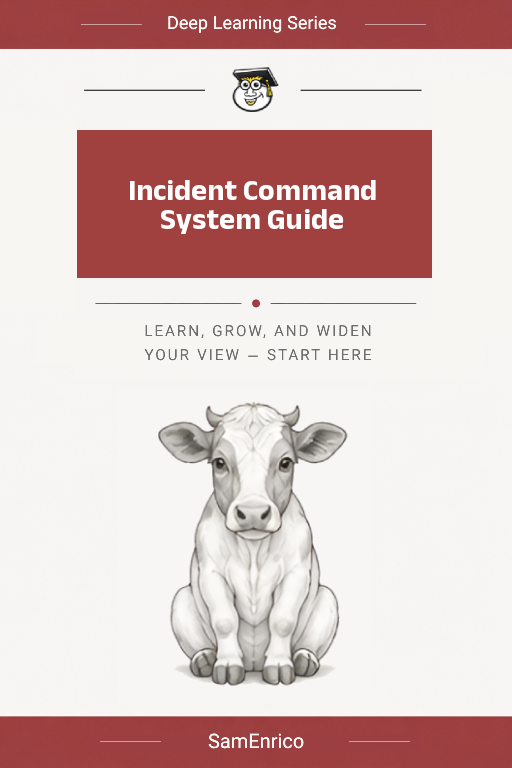
Incident Command System Guide Audiobook
Implement Incident Command System during terrorist
by Nobles Laine
Implement Incident Command System during terrorist attacks. Assign commander, operations, logistics, planning, and finance sections for coordinated response.
Formats
Free sample
Chapter 1: The First Sixty Seconds--–- The explosion came without warning. One moment, Sergeant Elena Vasquez was finishing her morning coffee at the firehouse kitchen table, reviewing the previous night's run reports. The next moment, the floor trembled, the windows bowed inward, and the station's automated dispatch system screamed to life with three words that every first responder dreads: "Mass casualty incident." The clock on the wall read 08:47. Within sixty seconds, she would make decisions that would determine whether dozens of people lived or died, whether evidence would convict the attackers or be trampled into dust, and whether her own crews would walk off the scene or be carried out.This chapter addresses the most dangerous window in any terrorist attack: the first minute. It is a window so narrow, so chaotic, and so information-poor that most standard Incident Command System training simply assumes it away.
Standard ICS doctrine, as taught in academies and field manuals across the country, is built for a rational world – a world where someone calls 911, a dispatcher asks the right questions, and responders arrive with at least a rough sketch of what they will face. Terrorism destroys that assumption. Terrorist attacks are designed to be ambiguous, to look like accidents until suddenly they do not, and to trap responders inside a kill zone while they are still trying to figure out what kind of incident they have walked into.The core argument of this chapter – and indeed of this entire book – is that the first sixty seconds of a suspected terrorist attack are fundamentally different from any other emergency response. In a house fire, you size up the structure and commit resources. In a car accident, you triage patients and call for extrication.
In a terrorist attack, you must simultaneously do three things that are normally sequential: rescue the living, secure the scene, and begin the criminal investigation. And you must do all three while operating under the genuine threat of a secondary attack designed specifically to kill the responders who have just arrived.This chapter provides a systematic method for navigating those first sixty seconds. It introduces the Ambiguity Protocol, a decision matrix that helps first arriving units determine whether an event is accidental or intentional before confirmation arrives. It establishes the Step-Up Protocol, the precise moment when incident command formally shifts from disaster response to counter-terrorism operation. It defines the Unified Hazard Zone Matrix…
This is the end of the free sample. Get the Audiobook to keep going. Buy now
About this book
Details
- Author
- Nobles Laine
- Publisher
- SamEnrico
- Language
- English
- Genre
- Non-Fiction, Crisis Management, ICS
- Released
- 2026-05-30
- Pages (approx.)
- 156
- Available as
- eBook, Audiobook

Listen in the VoxFlicks app
Audiobooks and audio dramas wherever you go. Sign in with your SamEnrico account and press play.
More by Nobles Laine
 The Wrong Train StationNobles Laine$11.99
 Chef Kitchen Pressure GuideNobles Laine$11.99
 NVC For Suicidal ThoughtsNobles Laine$11.99
 Emergency Dispatcher Stress ReliefNobles Laine$11.99
 Love and Gunpowder in the Pyrenees: The Secret Affair of the Peninsular WarNobles Laine$11.99
 Web AdministratorNobles Laine$11.99
 How to Produce Billiard Cue RacksNobles Laine$11.99
 How to Become a PainterNobles Laine$11.99