

Hydrogen And Its Compounds Guide eBook
Master hydrides water hardness and hydrogen peroxi
by Brown Jerome
Master hydrides water hardness and hydrogen peroxide reactions for JEE advanced inorganic.
Formats
Free sample
Chapter 1: The Orphan Element--–- The periodic table is a masterful arrangement of order and predictability. Every element has a designated home, a group where it shares chemical kinship with its neighbors. Lithium, sodium, and potassium cheerfully surrender electrons to form +1 ions. Fluorine, chlorine, and bromine aggressively accept electrons to form -1 ions. Each group tells a coherent story.
And then there is hydrogen. Positioned awkwardly at the very top of the table, floating above Group 1 yet not truly belonging there, hydrogen refuses to fit neatly into any category. It is the orphan of the periodic table – an element so unique that it defies classification.This chapter confronts the most fundamental question in hydrogen chemistry: Where does hydrogen belong? The answer is not found in memorizing a list of resemblances. Rather, understanding hydrogen's dual nature – its frustrating ability to mimic both alkali metals and halogens while remaining distinct from both – is the key that unlocks every subsequent topic in this book.
Without mastering the paradox of hydrogen, you cannot understand hydrides, you cannot understand water, and you certainly cannot understand hydrogen peroxide. Let us begin with a problem that encapsulates the entire chapter.Opening Problem (JEE Advanced Style)"Hydrogen is placed separately at the top of the periodic table, not in Group 1 or Group 17. Justify with two resemblances to alkali metals and two to halogens, and give one reason why hydrogen cannot be assigned to either group."As you read this chapter, keep this problem in mind. By the end, you will not only answer it but also understand why JEE Advanced considers this question worthy of examination year after year.1.1 The Historical Confusion: Where to Place Hydrogen?When Dmitri Mendeleev published his first periodic table in 1869, he faced an immediate dilemma. He had left empty spaces for undiscovered elements, predicting their properties with remarkable accuracy.
But hydrogen – the lightest and simplest element – refused to settle into any of his groups.Mendeleev initially placed hydrogen in Group 1, above lithium. After all, hydrogen has one valence electron, forms a +1 ion (H⁺), and combines with halogens to form compounds like HCl. But the resemblance quickly broke down. Unlike lithium, hydrogen is not a metal. It does not conduct electricity in its elemental form.
Its ionization enthalpy is nearly three times that of lithium. Something was wrong.Later chemists suggested placing hydrogen in Group 17, above fluorine. Hydrogen, like fluorine, needs one electron to complete its valence shell (to become like helium). It forms the H⁻ ion in ionic hydrides, analogous to Cl⁻ in Na Cl. It exists as a diatomic molecule, H₂, just as chlorine exists as Cl₂.
But again, the resemblance failed. The electron gain enthalpy of hydrogen is positive (unfavorable), while halogens have highly negative (favorable) electron gain enthalpies. Hydrogen does not exhibit the same oxidizing power as fluorine or chlorine.The resolution came gradually: hydrogen is sui generis – of its own kind. It is placed separately not as a compromise but as an acknowledgment of its unique chemistry. Let us examine the two faces of hydrogen in detail.1.2 Resemblance with Alkali Metals (Group 1)The case for placing hydrogen in Group 1 rests on four pillars, each of which reveals a genuine chemical similarity while also highlighting important differences.Electronic Configuration and Valence Electron Hydrogen has the electronic configuration 1s¹ – a single electron in its outermost shell.
Alkali metals (Li, Na, K, Rb, Cs, Fr) all have the general configuration ns¹. This is the most fundamental similarity. In chemical reactions, both hydrogen and alkali metals tend to lose this single electron to achieve a stable noble gas configuration – hydrogen becomes H⁺ (which is a bare proton, configuration 1s⁰), while alkali metals become M⁺ (with a full octet).However, the energy required to remove this electron tells a different story. The ionization enthalpy of hydrogen is 1312 k J/mol. For lithium, it is 520 k J/mol.
For sodium, it is 496 k J/mol. Hydrogen requires more than twice the energy of sodium to lose its electron. This means hydrogen does not easily form H⁺ in the gas phase. In fact, a free proton is so reactive that it never exists alone – it instantly hydrates to form H₃O⁺ (hydronium ion) in water. Alkali metal ions, by contrast, are relatively stable and exist freely in aqueous solution.Formation of Halides and Oxides Hydrogen reacts with halogens to form hydrogen halides: H₂ + Cl₂ → 2HCl.
Alkali metals react similarly: 2Na + Cl₂ → 2Na Cl. Both hydrogen and alkali metals form compounds with halogens in a 1:1 stoichiometry (relative to the halogen atom). The analogy extends to oxides: hydrogen forms H₂O (water), while alkali metals form M₂O (e.g., Na₂O, Li₂O). In both cases, the element donates electrons to the more electronegative oxygen or halogen.But the nature of these compounds is fundamentally different. Na Cl is an ionic crystal held together by electrostatic forces between Na⁺ and Cl⁻ ions.
HCl is a covalent molecule with a polar bond. Water (H₂O) is also covalent. The difference arises from electronegativity: the electronegativity of hydrogen (2.20 on the Pauling scale) is much higher than that of sodium (0.93). Hydrogen does not transfer its electron completely; it shares it.Oxidation States In its compounds with non-metals (like HCl, H₂O, NH₃, CH₄), hydrogen exhibits an oxidation state of +1, just as alkali metals do in all their compounds. This is a genuine similarity.
In HCl, hydrogen is +1 and chlorine is -1. In Na Cl, sodium is +1 and chlorine is -1. The analogy is clean and useful.However, there is a crucial difference. Alkali metals are always +1 in their compounds – they have no other oxidation states. Hydrogen, as we shall see, also exhibits an oxidation state of -1 in metal hydrides (like Na H, Ca H₂).
Alkali metals never exhibit negative oxidation states. This is the first hint that hydrogen's chemistry extends beyond the Group 1 analogy.Metallic Character Alkali metals are soft, shiny, excellent conductors of electricity, and have metallic luster. Hydrogen, under normal conditions, is a colorless, odorless gas that is an electrical insulator. Under extreme pressures (millions of atmospheres), hydrogen is predicted to become a metallic solid, possibly even a superconductor. But at room temperature and pressure, hydrogen is resolutely non-metallic.
This alone disqualifies it from true membership in Group 1.1.3 Resemblance with Halogens (Group 17)The case for placing hydrogen in Group 17 is equally compelling – and equally flawed.Electron Deficiency and Anion Formation Hydrogen has one electron in its valence shell but needs one more to achieve the stable configuration of helium (1s²). Halogens all have the general configuration ns²np⁵ and need one more electron to achieve a full octet (ns²np⁶). This is a profound electronic similarity. In the presence of highly electropositive metals, hydrogen accepts an electron to form the hydride ion H⁻: 2Na + H₂ → 2Na⁺H⁻. This is directly analogous to the formation of chloride: 2Na + Cl₂ → 2Na⁺Cl⁻.The hydride ion H⁻ has a radius of approximately 140 pm, which is actually larger than F⁻ (133 pm) and comparable to Cl⁻ (181 pm).
In ionic hydrides like Na H and Ca H₂, the H⁻ ion occupies lattice positions just as halide ions do. This is perhaps the strongest argument for the halogen analogy.But the electron gain enthalpy tells…
This is the end of the free sample. Get the eBook to keep going. Buy now
About this book
Details
- Author
- Brown Jerome
- Publisher
- SamEnrico
- Language
- English
- Genre
- Non-Fiction, Student's Shortcut
- Released
- 2026-06-01
- Pages (approx.)
- 142
- Available as
- eBook, Audiobook

Read better in the ZLOADR app
Your eBooks on your phone or tablet. Sign in with your SamEnrico account and start reading.
More by Brown Jerome
 LGBTQ Body Image Affirmation CourseBrown Jerome$11.99
 ICU Doctor Burnout WorkbookBrown Jerome$11.99
 Wincing as Anticipatory PainBrown Jerome$11.99
 Canyonlands DisappearancesBrown Jerome$11.99
 Beginner Meditation ChallengesBrown Jerome$11.99
 Canadian Arctic Expedition LeaderBrown Jerome$11.99
 Cohabitation Aging GuideBrown Jerome$11.99
 Freelancer Work Life BalanceBrown Jerome$11.99
 Whitney Houston: Voice and VulnerabilityBrown Jerome$11.99
 Bach: The Divine Mathematician of MusicBrown Jerome$11.99
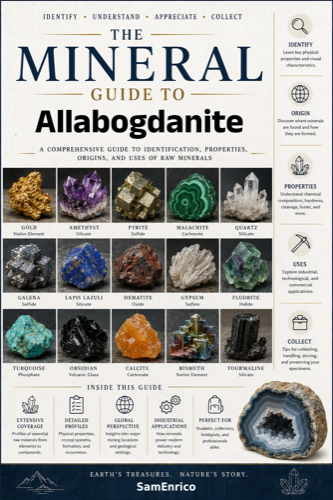 The Mineral Guide to AllabogdaniteBrown Jerome$11.99
 Agile Testing PracticesBrown Jerome$11.99
You may also like
 Hong Kong Handover 1997Dunn Johnnie$11.99
 Zumba For Postnatal Recovery CourseNeal Christian$11.99
 Zumba for BeginnersLadner Nikia$11.99
 YouTube Comment Mining GuideHumes Pandora$12.99
 Worry Box MeditationCarlin Rudy$11.99
 Workplace Stress MeditationNguyen Lynn$11.99
 Workplace Stress and Sleep RepairHawley Ivory$11.99
 Workplace Perfectionism CureDelaney Jeffry$11.99
 Workplace Injustice Anger GuideWallen Isabelle$11.99
 Work Addiction and Burnout LinkGreenwood Ester$11.99
 Women in Yoga and WellnessBeattie Galina$11.99
 Women in Stand Up ComedyChun Evangeline$11.99