
Hydrogen And Its Compounds Guide
Master hydrides water hardness and hydrogen peroxi
by Brown Jerome
Master hydrides water hardness and hydrogen peroxide reactions for JEE advanced inorganic.
Formats
About this book
Free sample
Chapter 1: The Orphan Element--–- The periodic table is a masterful arrangement of order and predictability. Every element has a designated home, a group where it shares chemical kinship with its neighbors. Lithium, sodium, and potassium cheerfully surrender electrons to form +1 ions. Fluorine, chlorine, and bromine aggressively accept electrons to form -1 ions. Each group tells a coherent story.
And then there is hydrogen. Positioned awkwardly at the very top of the table, floating above Group 1 yet not truly belonging there, hydrogen refuses to fit neatly into any category. It is the orphan of the periodic table – an element so unique that it defies classification.This chapter confronts the most fundamental question in hydrogen chemistry: Where does hydrogen belong? The answer is not found in memorizing a list of resemblances. Rather, understanding hydrogen's dual nature – its frustrating ability to mimic both alkali metals and halogens while remaining distinct from both – is the key that unlocks every subsequent topic in this book.
Without mastering the paradox of hydrogen, you cannot understand hydrides, you cannot understand water, and you certainly cannot understand hydrogen peroxide. Let us begin with a problem that encapsulates the entire chapter.Opening Problem (JEE Advanced Style)"Hydrogen is placed separately at the top of the periodic table, not in Group 1 or Group 17. Justify with two resemblances to alkali metals and two to halogens, and give one reason why hydrogen cannot be assigned to either group."As you read this chapter, keep this problem in mind. By the end, you will not only answer it but also understand why JEE Advanced considers this question worthy of examination year after year.1.1 The Historical Confusion: Where to Place Hydrogen?When Dmitri Mendeleev published his first periodic table in 1869, he faced an immediate dilemma. He had left empty spaces for undiscovered elements, predicting their properties with remarkable accuracy.
But hydrogen – the lightest and simplest element – refused to settle into any of his groups.Mendeleev initially placed hydrogen in Group 1, above lithium. After all, hydrogen has one valence electron, forms a +1 ion (H⁺), and combines with halogens to form compounds…
This is the end of the free sample. Get the eBook to keep going. Buy now
Contents
- Chapter 1
- Chapter 2
- Chapter 3
- Chapter 4
- Chapter 5
- Chapter 6
- Chapter 7
- Chapter 8
- Chapter 9
- Chapter 10
- Chapter 11
- Chapter 12
Details
- Author
- Brown Jerome
- Publisher
- SamEnrico
- Language
- English
- Genre
- Non-Fiction, Student's Shortcut
- Released
- 2026-06-01
- Pages (approx.)
- 142
- Available as
- eBook, Audiobook

Read better in the ZLOADR app
Your eBooks on your phone or tablet. Sign in with your SamEnrico account and start reading.
More by Brown Jerome
 LGBTQ Body Image Affirmation CourseBrown Jerome$11.99
 ICU Doctor Burnout WorkbookBrown Jerome$11.99
 Wincing as Anticipatory PainBrown Jerome$11.99
 Canyonlands DisappearancesBrown Jerome$11.99
 Beginner Meditation ChallengesBrown Jerome$11.99
 Canadian Arctic Expedition LeaderBrown Jerome$11.99
 Cohabitation Aging GuideBrown Jerome$11.99
 Freelancer Work Life BalanceBrown Jerome$11.99
 Whitney Houston: Voice and VulnerabilityBrown Jerome$11.99
 Bach: The Divine Mathematician of MusicBrown Jerome$11.99
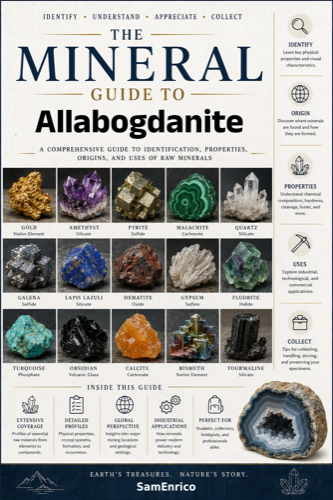 The Mineral Guide to AllabogdaniteBrown Jerome$11.99
 Agile Testing PracticesBrown Jerome$11.99
You may also like
 Hong Kong Handover 1997Dunn Johnnie$11.99
 Zumba For Postnatal Recovery CourseNeal Christian$11.99
 Zumba for BeginnersLadner Nikia$11.99
 YouTube Comment Mining GuideHumes Pandora$12.99
 Worry Box MeditationCarlin Rudy$11.99
 Workplace Stress MeditationNguyen Lynn$11.99
 Workplace Stress and Sleep RepairHawley Ivory$11.99
 Workplace Perfectionism CureDelaney Jeffry$11.99
 Workplace Injustice Anger GuideWallen Isabelle$11.99
 Work Addiction and Burnout LinkGreenwood Ester$11.99
 Women in Yoga and WellnessBeattie Galina$11.99
 Women in Stand Up ComedyChun Evangeline$11.99