
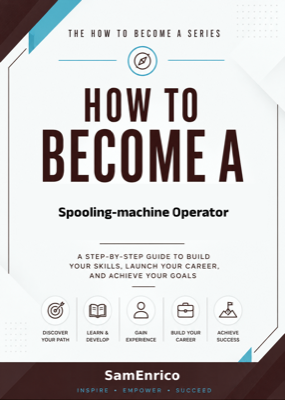
Non-FictionInformativeEducational
How to Become a Spooling-machine Operator
How to Become a Spooling-machine Operator
How to Become a Spooling-machine Operator
Formats
About this book
Free sample
Chapter 1: The Invisible Backbone--–- Every mile of wire in your car, every thread in the shirt on your back, every fiber optic cable carrying this sentence from a server to your screen—all of it was wound onto a spool by someone who mastered a craft most people do not even know exists. Spooling-machine operators are the invisible backbone of modern manufacturing, yet they work in the shadows of more glamorous trades like welding or CNC machining. This invisibility is strange, because without these precision technicians, assembly lines would stop, construction projects would freeze, and the global supply chain would snap like an over-tensioned thread. You have probably walked past spooled products thousands of times without ever considering the human skill that made them usable.This chapter exists to pull back the curtain. You are about to learn what a spooling-machine operator actually does, why the role demands more intelligence and dexterity than most college graduates possess, and how entering this trade can transform your financial future without requiring a single student loan payment.
By the time you finish reading, you will understand not just the mechanics of winding, but the economic and industrial forces that make this job one of the most secure blue-collar careers available today.The Unspoken Definition Let me start with a precise definition that cuts through corporate jargon. A spooling-machine operator is a manufacturing professional who sets up, monitors, adjusts, and maintains machines that wind flexible linear material onto cores, reels, bobbins, or spools according to exact customer specifications. That material can be textile thread, copper wire, aluminum wire, fiber optic filament, plastic tubing, rubber cord, or industrial strapping. The machine pulls material from a larger supply spool—called the pay-off—passes it through tensioners and guides, and winds it onto a smaller or differently configured take-up spool.But definitions are dry. Let me give you an image instead.
Imagine you have a giant roll of wrapping paper that weighs fifty pounds. You need to rewind that entire roll onto a cardboard tube the size of a toilet paper core, without any wrinkles, tears…
This is the end of the free sample. Get the eBook to keep going. Buy now
Contents
- Chapter 1
- Chapter 2
- Chapter 3
- Chapter 4
- Chapter 5
- Chapter 6
- Chapter 7
- Chapter 8
- Chapter 9
- Chapter 10
- Chapter 11
- Chapter 12
Details
- Author
- Beckham Camelia
- Publisher
- SamEnrico
- Language
- English
- ISBN
- 9781506057804
- Genre
- Non-Fiction, Informative, Educational
- Released
- 2026-05-04
- Pages (approx.)
- 128
- Available as
- eBook, Paperback, Audiobook

Read better in the ZLOADR app
Your eBooks on your phone or tablet. Sign in with your SamEnrico account and start reading.
More by Beckham Camelia
 TM For Caregivers Burnout GuideBeckham Camelia$11.99
 The Joy of RoutineBeckham Camelia$11.99
 Utility Shutoff SeasonsBeckham Camelia$11.99
 Self Esteem for Partners in RecoveryBeckham Camelia$11.99
 EQ for First RespondersBeckham Camelia$11.99
 The Klondike Code: How a Forgotten Gold Rush Math Formula Made MillionsBeckham Camelia$11.99
 Ads ManagerBeckham Camelia$11.99
 Understanding Myelofibrosis-osteosclerosisBeckham Camelia$17.99
 Financial Statement Formula WorkbookBeckham Camelia$12.99
 Micron SWOT GuideBeckham Camelia$12.99
You may also like
 Hong Kong Handover 1997Dunn Johnnie$11.99
 Zumba For Postnatal Recovery CourseNeal Christian$11.99
 Zumba for BeginnersLadner Nikia$11.99
 YouTube Comment Mining GuideHumes Pandora$12.99
 Worry Box MeditationCarlin Rudy$11.99
 Workplace Stress MeditationNguyen Lynn$11.99
 Workplace Stress and Sleep RepairHawley Ivory$11.99
 Workplace Perfectionism CureDelaney Jeffry$11.99
 Workplace Injustice Anger GuideWallen Isabelle$11.99
 Work Addiction and Burnout LinkGreenwood Ester$11.99
 Women in Yoga and WellnessBeattie Galina$11.99
 Women in Stand Up ComedyChun Evangeline$11.99