
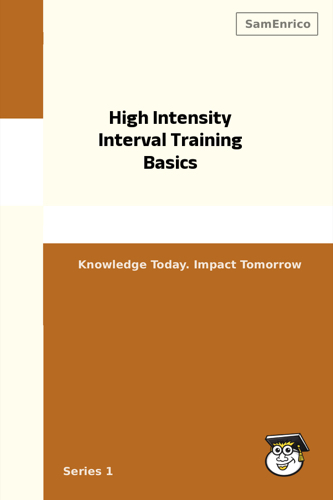
High Intensity Interval Training Basics eBook
Master the fundamental work to rest ratios for eff
by Broome Wes
Master the fundamental work to rest ratios for effective HIIT workouts.
Formats
Free sample
Chapter 1: The Efficiency Paradox--–- Every day, millions of people walk into gyms, lace up their shoes, and spend forty-five minutes on a treadmill or elliptical machine. They sweat. They check their heart rate. They watch the calorie counter tick upward. And then they go home, exhausted but satisfied, believing they have done something good for their bodies.
The fitness industry has sold this script for decades, and it works—not because the script is correct, but because it feels right. Effort equals results. Time equals progress. More equals better.There is only one problem. The science says otherwise.Over the past twenty years, a quiet revolution has been taking place in exercise physiology laboratories around the world.
Researchers at Mc Master University in Canada, the University of Copenhagen in Denmark, and the Norwegian School of Sport Sciences have been systematically dismantling the assumption that longer workouts produce better results. Their findings are counterintuitive, inconvenient for the fitness industry, and potentially life-changing for anyone willing to listen. The conclusion, stated as simply as possible, is this: when it comes to exercise, intensity matters far more than duration.This is the Efficiency Paradox. The harder you work, the less time you need to spend working. But there is a catch—a paradox within the paradox.
Most people who try to work harder fail because they do not understand the fundamental relationship between work and rest. They push too hard for too long, or they rest too little, or they fall into a no-man’s-land of moderate effort that produces neither the benefits of high-intensity training nor the benefits of steady-state cardio. They end up discouraged, convinced that HIIT “doesn’t work for them,” when in reality they were never doing HIIT at all.This chapter will solve that problem. By the time you finish reading, you will understand why a twenty-minute HIIT session can produce superior results to an hour of moderate jogging, what actually happens inside your body during and after intense exercise, and why the relationship between work and rest is the single most important variable in your training. You will also learn why the popular understanding of the “afterburn effect” is mostly wrong—and why that does not matter.The Study That Changed Everything In 2005, a research team led by Martin Gibala at Mc Master University published a study that should have rewritten fitness guidelines overnight.
They took a group of healthy but sedentary college students and put them through a brutal workout protocol: four to seven thirty-second all-out sprints on a stationary bike, each followed by four minutes of rest. The total exercise time per session was less than four minutes. The total time commitment, including warm-up and cool-down, was about twenty minutes. The students did this three times per week for six weeks.The results were astonishing. Despite doing less than ten percent of the total work (measured in kilojoules) compared to a traditional endurance training group, the interval group showed nearly identical improvements in aerobic fitness, measured by VO₂max—the maximum amount of oxygen the body can use during exercise and the gold-standard metric for cardiovascular health.
They also showed significant improvements in muscle oxidative capacity, meaning their muscles became more efficient at using oxygen for energy.Gibala replicated these findings over the following decade in different populations: overweight adults, older adults, people with type 2 diabetes, and even patients with heart failure. The pattern was consistent every time. Short, intense intervals produced adaptations that were equal or superior to much longer periods of moderate exercise.The mechanism behind this phenomenon is what exercise physiologists call metabolic disturbance. When you exercise at moderate intensity—say, a jog where you can still hold a conversation—your body is in a steady state. Oxygen supply meets oxygen demand.
Waste products are cleared as quickly as they are produced. Your heart rate plateaus. Your breathing stabilizes. From a metabolic perspective, nothing is really being disrupted.When you exercise at high intensity, everything changes. Oxygen demand exceeds supply.
Your muscles switch to anaerobic metabolism, producing energy without oxygen but generating lactate and hydrogen ions as byproducts. Your heart rate climbs toward its maximum. Your breathing becomes ragged. Your body is thrown out of homeostasis—that carefully balanced internal state—and has to work hard afterward to restore order.That post-exercise restoration process is the key to everything.The Afterburn Effect: What It Actually Is and Is Not You have probably heard of the “afterburn effect”—the idea that intense exercise keeps your metabolism elevated for hours after you finish. This is real.
It is called Excess Post-Exercise Oxygen Consumption, or EPOC (pronounced “EE-pock”). But the popular understanding of EPOC is wildly exaggerated, and clearing up this misconception is essential for setting realistic expectations.Here is what EPOC actually is. After intense exercise, your body has several tasks to complete. It must replenish the oxygen stored in your blood and muscles. It must clear lactate and hydrogen ions.
It must restore depleted glycogen stores. It must repair microscopic damage to muscle tissue. It must lower body temperature. It must return heart rate and breathing to resting levels. All of these tasks require energy, and that energy comes from burning calories at an elevated rate.Here is what EPOC is not.
It is not a magic switch that turns your body into a calorie-burning furnace for the rest of the day. The magnitude of EPOC has been carefully measured in laboratory studies, and the results are clear. A typical HIIT session of twenty to thirty minutes, with work intervals in the thirty-to-sixty-second range, produces an additional calorie burn of approximately six to fifteen percent above the calories burned during the workout itself. If you burn two hundred and fifty calories during the workout, EPOC adds roughly fifteen to thirty-eight calories over the following hours.That is real but modest. A medium apple has about ninety-five calories.
A single tablespoon of peanut butter has about ninety. The afterburn effect from a hard HIIT session will not offset a poor diet, and anyone who tells you otherwise is selling something.But here is the crucial point that the EPOC skeptics miss. The primary benefit of HIIT is not EPOC. The primary benefit is that you can achieve equal or superior physiological adaptations to far longer workouts in a fraction of the time. EPOC is a bonus—a nice-to-have, not a need-to-have.
The real value of HIIT is efficiency: more results per minute, not more calories per hour.The Gray Zone: Where Good Intentions Go to Die If HIIT is so efficient, why do so many people try it and quit? The answer is not that HIIT is too hard. The answer is that most people never actually do HIIT. They do something that looks like HIIT on paper but produces none of the benefits. This is called training in the Gray Zone.The Gray Zone is moderate-intensity exercise performed in an interval format.
You might do thirty seconds of work followed by sixty seconds of rest, but your work intervals are at a five or six on the Rate of Perceived Exertion scale (RPE)—hard but not desperate. You can still speak in short…
This is the end of the free sample. Get the eBook to keep going. Buy now
About this book
Details
- Author
- Broome Wes
- Publisher
- SamEnrico
- Language
- English
- Genre
- Non-Fiction, Health & Wellness, Exercise Science
- Released
- 2026-06-11
- Pages (approx.)
- 131
- Available as
- eBook, Audiobook

Read better in the ZLOADR app
Your eBooks on your phone or tablet. Sign in with your SamEnrico account and start reading.
More by Broome Wes
 Sales Idea GenerationBroome Wes$11.99
 Nonverbal Cues In Politics WorkbookBroome Wes$11.99
 EMDR For Trauma Driven OCDBroome Wes$11.99
 Survey Translation with AI ToolsBroome Wes$11.99
 The Silent Witnesses: The Birth of Modern Ecology in Europe's Forgotten WildsBroome Wes$11.99
 Bloodline of Power: The Untold Story of the Bush Dynasty’s Backroom DealsBroome Wes$11.99
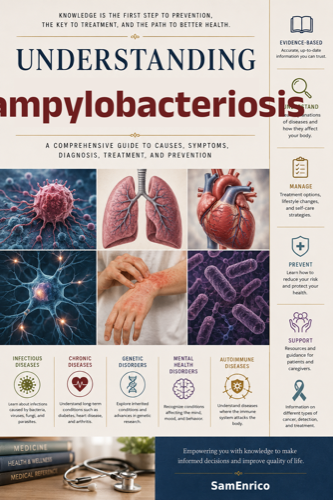 Understanding CampylobacteriosisBroome Wes$17.99
 How to Start a Construction of Industrial Facilities (except Buildings) Business (Beginners Guide)Broome Wes$11.99
 Greek University Master GuideBroome Wes$12.99
 Non Traditional PhD Application GuideBroome Wes$12.99
 Corporate ControllerBroome Wes$11.99
You may also like
 Insulin Resistance Exercise GuideOsgood Gertude$11.99
 Progressive Overload HandbookOhara Louie$11.99
 Physical Exercise NeuroprotectionFisk Marcelo$11.99
 Restless Leg Syndrome Exercise ProtocolJobe Jeffie$11.99
 Natural HGH Boost ExerciseSwisher Lacey$11.99
 HIIT Science ExplainedBarba Fausto$11.99
 Progressive Overload Weightlifting GuideForsyth Machelle$11.99
 PCOS High Intensity TrainingWeathers Lona$11.99
 Exercise HGH ResponseHandy Mahalia$11.99
 The Exercise HGH Release GuideVillasenor Catrina$11.99
 Exercise as Medicine for Cannabis DisorderPeeples Marica$11.99
 Daily Natural Movement IntegrationObrien Nina$11.99