
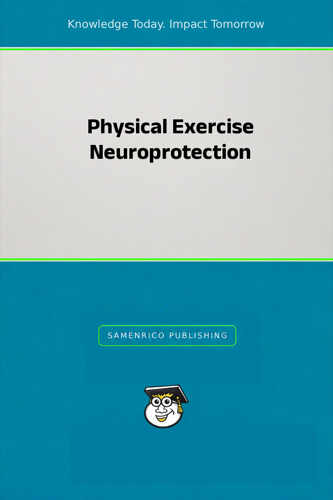
Non-FictionHealth & WellnessExercise Science
Physical Exercise Neuroprotection
Details how aerobic and resistance training stimul
by Fisk Marcelo
Details how aerobic and resistance training stimulate BDNF and delay cognitive decline at any age.
Formats
About this book
Free sample
Chapter 1: The Thinking Muscle–- The old woman arrived at the neurology clinic every six months like clockwork, accompanied by her daughter, who carried a thick folder of MRI scans. She was eighty-four years old, sharp as a tack, and had the hippocampal volume of a woman twenty years younger. Her daughter, age sixty-two, had the hippocampal volume of a woman ten years older than her mother. Same genetics. Same household.
Same diet. The only difference? The mother had walked four miles every morning since 1972. The daughter had driven to work.This is not an anecdote. It is a data point from the Nun Study, one of the most famous longitudinal investigations in neuroscience, which followed 678 Catholic sisters over three decades and found that physical activity levels in early and mid-life predicted cognitive function in late life more powerfully than education, income, or even genetics.
The sisters who moved more aged differently. Their brains literally looked younger on autopsy, with fewer neurofibrillary tangles and less amyloid plaque, despite some of them having the genetic markers for Alzheimer's disease.This chapter opens with a deceptively simple question: Why does movement protect the brain? Not how—that will occupy the next eleven chapters—but why at the deepest evolutionary level did our brains become dependent on physical activity? The answer changes everything about how you will understand exercise from this point forward.The Three-Million-Year Debt Let us travel back three million years to the Pliocene epoch in East Africa. Our ancestor, Australopithecus afarensis, the famous Lucy species, has just done something radical: she has stood up.
Bipedalism is not merely a postural adjustment; it is an energetic revolution. Walking on two legs uses one-quarter the energy of knuckle-walking quadrupedalism. This energy surplus needed to go somewhere. Evolution, being ruthlessly efficient, redirected it to the most expensive organ in the body: the brain.Consider this astonishing sequence. Over the next two million years, from Australopithecus to Homo erectus, brain volume tripled from approximately 400 cubic centimeters to 1,200 cubic centimeters.
Yet during that same period, the human gut shrank by 40 percent. The standard evolutionary explanation—that cooking allowed for smaller…
This is the end of the free sample. Get the eBook to keep going. Buy now
Contents
- Chapter 1
- Chapter 2
- Chapter 3
- Chapter 4
- Chapter 5
- Chapter 6
- Chapter 7
- Chapter 8
- Chapter 9
- Chapter 10
- Chapter 11
- Chapter 12
Details
- Author
- Fisk Marcelo
- Publisher
- SamEnrico
- Language
- English
- Genre
- Non-Fiction, Health & Wellness, Exercise Science
- Released
- 2026-06-10
- Pages (approx.)
- 140
- Available as
- eBook, Audiobook

Read better in the ZLOADR app
Your eBooks on your phone or tablet. Sign in with your SamEnrico account and start reading.
More by Fisk Marcelo
 Sleep Meditation for InfantsFisk Marcelo$11.99
 Public Speaking Assertiveness GuideFisk Marcelo$11.99
 Lonely Expat Connection GuideFisk Marcelo$11.99
 The Social Creative AccountabilityFisk Marcelo$11.99
 Verdict of the Sphinx: How an Ancient Judge Solved a Murder That Stumped Modern ForensicsFisk Marcelo$11.99
 How to Start a First Aid Boxes (wholesale) Business (Beginners Guide)Fisk Marcelo$11.99
 Learn to Play the BawuFisk Marcelo$11.99
 Category Based Express EntryFisk Marcelo$12.99
 Pre Launch Community ToolsFisk Marcelo$12.99
 Asynchronous Advantage Actor-Critic OperatorFisk Marcelo$11.99
You may also like
 Hong Kong Handover 1997Dunn Johnnie$11.99
 Zumba For Postnatal Recovery CourseNeal Christian$11.99
 Zumba for BeginnersLadner Nikia$11.99
 YouTube Comment Mining GuideHumes Pandora$12.99
 Worry Box MeditationCarlin Rudy$11.99
 Workplace Stress MeditationNguyen Lynn$11.99
 Workplace Stress and Sleep RepairHawley Ivory$11.99
 Workplace Perfectionism CureDelaney Jeffry$11.99
 Workplace Injustice Anger GuideWallen Isabelle$11.99
 Work Addiction and Burnout LinkGreenwood Ester$11.99
 Women in Yoga and WellnessBeattie Galina$11.99
 Women in Stand Up ComedyChun Evangeline$11.99