
Non-FictionInformativeEducational
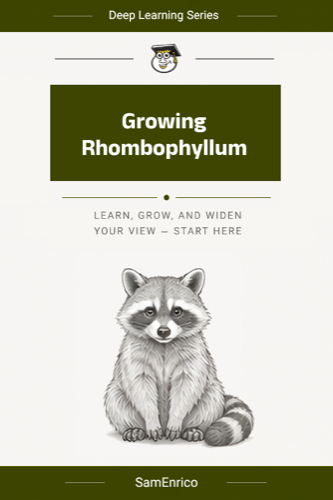
Growing Rhombophyllum eBook
This publication, published by SamEnrico, covers G
This publication, published by SamEnrico, covers Growing Rhombophyllum
Formats
Free sample
Chapter 1: The Living Geometry...--The first time you hold a mature Rhombophyllum in your hands, you are not holding a plant in any ordinary sense. You are holding a living expression of geometric principles that mathematicians spend lifetimes studying—angles that optimize light capture, curves that minimize water loss, and a structural logic that has been refined through millions of years of evolutionary pressure. This is not a succulent that simply tolerates difficult conditions. It is a masterwork of adaptation, a botanical survival machine whose unusual shape is not ornamental but functional, and understanding that function is the first step toward successful cultivation.For the uninitiated eye, a Rhombophyllum might appear as nothing more than an oddity—a cluster of fleshy, angular leaves that seem to have been carved by an unsteady hand. But look closer.
Each leaf is a study in precision: flattened into a distinct hatchet or axe-head shape, tapering to a point, and arranged in opposite pairs along branching stems that rise just a few inches above the soil. The leaves of Rhombophyllum dolabriforme, the most common species in cultivation, resemble the antlers of an elk—hence its common name, the Elkhorn plant. Rhombophyllum rhomboideum takes the geometry a step further, its leaves forming perfect diamond-shaped cross-sections that give the genus its name (from the Greek rhombos, meaning rhombus or spinning top). And Rhombophyllum nelii remains smaller and more compact, a miniature version of its cousins that fits comfortably in the smallest of succulent collections.But these are not mere botanical curiosities. They are survivors.
The genus Rhombophyllum belongs to the Aizoaceae family, a vast and diverse group of succulents known colloquially as "mesembs"—a name derived from Mesembryanthemum, the family's former classification. This family includes some of the most specialized succulents on Earth: Lithops (living stones), Conophytum (button plants), Fenestraria (baby toes), and dozens of other genera that have evolved extraordinary strategies for enduring some of the harshest environments on the planet. Within this family of specialists, Rhombophyllum occupies a unique niche, combining the leaf succulence of its relatives with a shrubby growth habit that allows it to colonize rocky crevices where few other plants can gain a foothold.The natural range of Rhombophyllum is remarkably restricted. All three species are endemic to South Africa, specifically the Eastern Cape and Karoo regions—an area known to botanists as a biodiversity hotspot for succulent plants. The Eastern Cape is a land of extremes: summer temperatures that routinely exceed 40°C (104°F), winter nights that can dip below freezing, and rainfall that is not only scarce but also unpredictably distributed across the year.
In this landscape, plants cannot afford to be picky. They must take water when it comes and survive without it when it does not.This is where the living geometry of Rhombophyllum reveals its genius. The flattened, hatchet-shaped leaves are not flat in the way a pancake is flat. They are wedge-shaped, with a narrow edge facing the sun and a broader, fleshy interior facing away. This orientation minimizes the surface area directly exposed to solar radiation during the hottest part of the day, reducing transpiration—the loss of water vapor through leaf surfaces.
At the same time, the leaves are thick enough to store substantial water reserves, allowing the plant to survive weeks or even months without rainfall. The diamond-shaped cross-section of R. rhomboideum takes this principle even further, creating a structure that is both maximally strong (resisting collapse under water stress) and minimally exposed to sun.But the geometry is only half the story. The color of Rhombophyllum leaves is equally strategic. Most cultivated specimens display a range of green hues, from pale lime to deep jade, often suffused with reddish or purplish tones along the leaf margins and tips.
This red pigmentation is not a sign of stress or disease, as novice growers sometimes fear. It is a built-in sunscreen—anthocyanin pigments that absorb excess light energy and dissipate it as heat, preventing damage to the photosynthetic machinery within the leaf cells. In their native habitat, Rhombophyllum plants growing in full, unrelenting sun will develop deep purple-red coloration on their exposed surfaces, while plants growing in partial shade remain mostly green. This plasticity—the ability to adjust coloration in response to light conditions—is a valuable clue for growers, as we will explore in later chapters.The flowers of Rhombophyllum are another marvel of adaptation. Blooming primarily in late spring and early summer (November through January in the Southern Hemisphere, which corresponds to May through July for Northern Hemisphere growers), the flowers are daisy-like in form, with numerous narrow petals radiating from a central disk of stamens.
The color is almost always a brilliant, saturated yellow—a hue that stands out vividly against the muted greens and browns of the Karoo landscape. This is no accident. In a habitat where pollinators are scarce, yellow is one of the most visible colors to insects, particularly bees and beetles, which serve as the plant's primary pollinators. The flowers open fully only under bright sunlight, a strategy that ensures pollinators are active when the flower is receptive.Yet for all its sophistication, Rhombophyllum has a reputation among succulent enthusiasts as a challenging plant. This reputation is not entirely undeserved, but it is also largely misunderstood.
The difficulty does not lie in any particular fragility of the plant itself—Rhombophyllum is, in fact, remarkably tough when its basic needs are met. The difficulty lies in the fact that those basic needs are opposite to what most succulent growers expect. The vast majority of popular succulents—Echeveria, Sedum, Crassula, and yes, Lithops—follow a familiar seasonal pattern: they grow actively during the warm summer months, when sunlight is abundant and temperatures are high, and they enter a period of dormancy during the cool, dark winter. This is the pattern that most succulent care guides are built around. Water generously in summer, they advise.
Reduce watering in winter. Provide bright light year-round. This is excellent advice for summer-growing succulents. For Rhombophyllum, it is a recipe for disaster.Rhombophyllum is a winter grower. Its active growth phase begins with the autumn rains (March through May in its native habitat, September through November in the Northern Hemisphere) and continues through the mild winter months, when temperatures are cool but not freezing and sunlight is less intense.
Then, just as summer-growing succulents are hitting their stride, Rhombophyllum does the opposite: it shuts down. Dormancy begins when temperatures consistently exceed 30°C (86°F), typically in late spring or early summer. During this period, the plant's metabolic activity slows to a crawl. It stops producing new leaves. It stops expanding existing ones.
It essentially goes to sleep, waiting out the heat and drought until more favorable conditions return in autumn.This reversed seasonal rhythm is the source of most cultivation failures. A grower accustomed to summer-active succulents will look at their Rhombophyllum in July and see a plant that has stopped growing. Their instinct—reinforced by years of experience with other succulents—is to water more, thinking the plant is thirsty. But a dormant Rhombophyllum does not want water. It cannot use water.
Water applied during deep dormancy will sit in the soil, unable to be absorbed by roots that have largely ceased…
This is the end of the free sample. Get the eBook to keep going. Buy now
About this book
Details
- Author
- Oleary Remona
- Publisher
- SamEnrico
- Language
- English
- Genre
- Non-Fiction, Informative, Educational
- Released
- 2026-06-02
- Pages (approx.)
- 150
- Available as
- eBook, Audiobook

Read better in the ZLOADR app
Your eBooks on your phone or tablet. Sign in with your SamEnrico account and start reading.
More by Oleary Remona
 Spiritual Dream JournalingOleary Remona$11.99
 PMS Irritability SolutionsOleary Remona$11.99
 Offensive Line Work EthicOleary Remona$11.99
 Music Theory Memory PalaceOleary Remona$11.99
 Study Life Balance WorkbookOleary Remona$11.99
 Growth Hormone Deficiency SymptomsOleary Remona$11.99
 Managing Emotions During ConflictOleary Remona$11.99
 Retirement Assets Disclaimer TrustOleary Remona$11.99
 Colombian KidnappingOleary Remona$11.99
 The Phantom Fleet: The Vanished Ships of the Bermuda TriangleOleary Remona$11.99
 The Academy of Plato: Birth of Western ThoughtOleary Remona$11.99
 AI Prompts for Public Data InterpretationOleary Remona$11.99
You may also like
 Hong Kong Handover 1997Dunn Johnnie$11.99
 Zumba For Postnatal Recovery CourseNeal Christian$11.99
 Zumba for BeginnersLadner Nikia$11.99
 YouTube Comment Mining GuideHumes Pandora$12.99
 Worry Box MeditationCarlin Rudy$11.99
 Workplace Stress MeditationNguyen Lynn$11.99
 Workplace Stress and Sleep RepairHawley Ivory$11.99
 Workplace Perfectionism CureDelaney Jeffry$11.99
 Workplace Injustice Anger GuideWallen Isabelle$11.99
 Work Addiction and Burnout LinkGreenwood Ester$11.99
 Women in Yoga and WellnessBeattie Galina$11.99
 Women in Stand Up ComedyChun Evangeline$11.99