
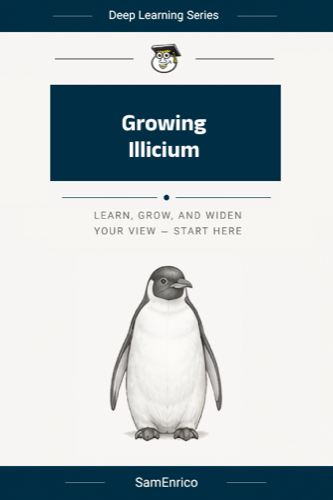
Non-FictionInformativeEducational
Growing Illicium eBook
This publication, published by SamEnrico, covers G
This publication, published by SamEnrico, covers Growing Illicium
Formats
Free sample
Chapter 1: The Scent of Secrets...--Walking through a garden, you learn to trust your nose. The sweet, familiar fragrance of licorice or anise drifting from an evergreen shrub suggests comfort, perhaps even a cup of tea waiting to be brewed. But in the world of Illicium, that assumption could be your last. This is a genus built on deception—beautiful, fragrant, and deeply dangerous. The very compounds that perfume the air with promises of warmth and spice are, in many species, the chemical signatures of a potent neurotoxin.
This chapter is your introduction to that paradox, and to a family of plants that have been cherished, feared, and misunderstood for millennia.The Ancient Lineage of a Modern Mystery To understand Illicium, we must first travel back in time. These plants are living fossils, members of the Schisandraceae family, an ancient lineage of flowering plants (angiosperms) that split from the main evolutionary tree over 100 million years ago. While dinosaurs roamed the earth, the ancestors of today's star anise were already evolving their unique characteristics. They belong to the Austrobaileyales order, a small but significant group that sits near the very base of the angiosperm family tree. This means Illicium retains traits from the dawn of flowering plants—primitive floral structures, aromatic oils for defense, and a resilience that has allowed them to survive ice ages, continental drift, and the rise and fall of countless other species.Today, the genus Illicium (pronounced ill-ISS-ee-um) comprises over 40 accepted species, with new ones still being discovered in the remote cloud forests of Southeast Asia and the limestone karsts of southern China.
Their distribution is a botanical mystery: a classic "disjunct" pattern, meaning the same genus is found in two widely separated parts of the world with no apparent connection. You will find Illicium species thriving in the humid, subtropical forests of southeastern North America—from the Florida Panhandle to the bayous of Louisiana—and across a vast arc of East Asia, from the Himalayas to Japan, the Philippines, and Sumatra. How did this split occur? Most botanists believe the genus was once widespread across the ancient supercontinent of Laurasia. As the climate cooled and the continents drifted apart, Illicium retreated to two main refugia: the warm, moist southeastern United States and the equally hospitable forests of eastern Asia.The Four Pillars: Key Species You Need to Know While dozens of species exist, the world of gardening, cooking, and commerce revolves around four key players.
Throughout this book, we will refer to them constantly, so it is essential to learn their names, their faces, and most importantly, their natures.1. Illicium verum – The Ally (Chinese Star Anise)This is the plant of your spice rack. Native to the forests of southern China and northern Vietnam, I. verum is an understory tree that can reach 20-30 feet (6-9 meters) in its native habitat. Its name, "verum," is Latin for "true," distinguishing it as the authentic source of the culinary spice.
The tree produces the familiar eight-pointed, star-shaped fruit that is harvested just before ripening and dried to a rich, reddish-brown. The fruit and its essential oil are rich in anethole, the same compound that gives anise and fennel their characteristic flavor. I. verum is almost entirely safe for human consumption, containing only trace amounts of the toxins found in its cousins, well below harmful levels. Throughout this book, we will treat I.
verum as the exception—the one member of its family that welcomes you into your kitchen.2. Illicium anisatum – The Assassin (Japanese Star Anise)This is the plant that gives Illicium its dark reputation. Native to Japan, Korea, and parts of China, I. anisatum is called shikimi in Japan, where it has been used for centuries as a sacred incense, placed on graves and burned in Buddhist temples. It is also a popular ornamental in East Asia and the American South for its glossy, dark green, lance-shaped leaves and upright, pyramidal growth habit, reaching 15-20 feet (4.5-6 meters).
But unlike its culinary cousin, I. anisatum is a potent neurotoxin. Its fruit, leaves, and wood are rich in anisatin, a sesquiterpene lactone that blocks GABA receptors in the human nervous system. Eating even a small amount of the fruit—mistaking it for the culinary spice—can cause severe vomiting, seizures, and death. Even the smoke from burning its wood can trigger neurological symptoms.
This is the villain of our story, yet it remains a common plant in gardens, often sold without warning labels. A core mission of this book is to ensure you never confuse the two.3. Illicium floridanum – The Southern Belle (Purple Anise)Native to the Florida Panhandle, southern Alabama, and the swamps of Louisiana, this is the classic American ornamental anise. It is a medium-sized evergreen shrub, typically 6-10 feet (1.8-3 meters) tall and wide, though it can reach 15 feet in ideal conditions. Its leaves are glossy, lime-green to dark green, and emit that classic anise scent when crushed.
The flowers are its most distinctive feature: unusual, strap-like, maroon to deep purple petals (technically sepals, as the plant has no true petals) that give the plant a slightly alien, otherworldly appearance. They bloom in abundance in early spring. But here is the critical warning that many books omit: Illicium floridanum is toxic. It contains moderate levels of anisatin. While not as potent as I.
anisatum, eating any part of this plant—the leaves, the flowers, the small, star-shaped fruit—can cause nausea, vomiting, dizziness, and in large quantities, neurological symptoms. This chapter will be the first of many safety warnings: just because it smells like a tea ingredient does not mean you should put it in your cup.4. Illicium parviflorum – The Survivor (Yellow Anise)If you live in the warmer parts of the southeastern US, you have likely seen this plant. I. parviflorum is the most adaptable of the American species, growing wild in swampy, shaded habitats from central Florida up the coast to South Carolina.
It can also survive in drier, sunnier conditions than its cousins. This is a larger plant, often growing as a small tree or large shrub reaching 15-20 feet (4.5-6 meters). Its leaves are a distinctive olive-yellow to yellow-green (hence the name "yellow anise"), and its flowers are small, pale yellow to greenish-white, and less showy than the purple anise. I. parviflorum contains the lowest levels of anisatin among the toxic species—but it is still toxic.
Ingestion can cause gastrointestinal distress. The good news is that its lower toxicity profile makes it a slightly safer choice for gardens where children or pets might occasionally brush against it, but it should never be considered edible. On the conservation front, I. parviflorum is a critical species, listed as state-endangered in Florida (wild populations only; cultivated plants are widely available and not restricted). Its wetland habitats are disappearing, and this chapter introduces its plight—a theme we will explore in depth in Chapter 12.The Licorice Connection: Chemistry of Desire and Danger Why do all these plants—the safe and the deadly—smell so similar?
The answer lies in biochemistry. The characteristic anise or licorice aroma of Illicium leaves and bark comes from a group of compounds called phenylpropanoids, primarily anethole. Anethole is a…
This is the end of the free sample. Get the eBook to keep going. Buy now
About this book
Details
- Author
- Richey Lynwood
- Publisher
- SamEnrico
- Language
- English
- Genre
- Non-Fiction, Informative, Educational
- Released
- 2026-05-09
- Pages (approx.)
- 155
- Available as
- eBook, Audiobook

Read better in the ZLOADR app
Your eBooks on your phone or tablet. Sign in with your SamEnrico account and start reading.
More by Richey Lynwood
 Needle Phobia Breath SupportRichey Lynwood$11.99
 Tension Headache Self Care HandbookRichey Lynwood$11.99
 The Fairness ComplaintRichey Lynwood$11.99
 Twitch Streamer MemoirRichey Lynwood$11.99
 School CPR AED GuideRichey Lynwood$11.99
 Joyful Learning Gratitude GuideRichey Lynwood$11.99
 Sally Jessy RaphaelRichey Lynwood$11.99
 Radio Silence for MonthsRichey Lynwood$11.99
 Frederick Maytag Blue CheeseRichey Lynwood$11.99
 Whispers Across the Wire: The Secret Love Letters of WWII's CodebreakersRichey Lynwood$11.99
 The Silent Guardians of the Congo: The Naturalist Warriors of the Bateke KingdomRichey Lynwood$11.99
 The Ghost of the Kremlin: How a Soviet Defector Exposed the Cold War’s Deepest SecretRichey Lynwood$11.99
You may also like
 Hong Kong Handover 1997Dunn Johnnie$11.99
 Zumba For Postnatal Recovery CourseNeal Christian$11.99
 Zumba for BeginnersLadner Nikia$11.99
 YouTube Comment Mining GuideHumes Pandora$12.99
 Worry Box MeditationCarlin Rudy$11.99
 Workplace Stress MeditationNguyen Lynn$11.99
 Workplace Stress and Sleep RepairHawley Ivory$11.99
 Workplace Perfectionism CureDelaney Jeffry$11.99
 Workplace Injustice Anger GuideWallen Isabelle$11.99
 Work Addiction and Burnout LinkGreenwood Ester$11.99
 Women in Yoga and WellnessBeattie Galina$11.99
 Women in Stand Up ComedyChun Evangeline$11.99