
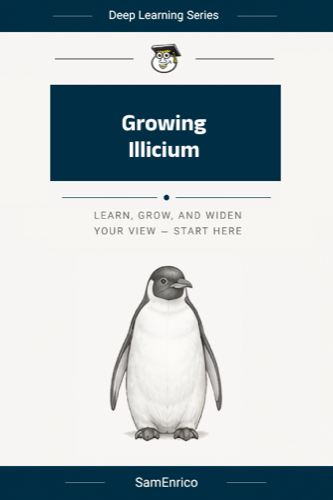
Non-FictionInformativeEducational
Growing Illicium Audiobook
This publication, published by SamEnrico, covers G
This publication, published by SamEnrico, covers Growing Illicium
Formats
Free sample
Chapter 1: The Scent of Secrets...--Walking through a garden, you learn to trust your nose. The sweet, familiar fragrance of licorice or anise drifting from an evergreen shrub suggests comfort, perhaps even a cup of tea waiting to be brewed. But in the world of Illicium, that assumption could be your last. This is a genus built on deception—beautiful, fragrant, and deeply dangerous. The very compounds that perfume the air with promises of warmth and spice are, in many species, the chemical signatures of a potent neurotoxin.
This chapter is your introduction to that paradox, and to a family of plants that have been cherished, feared, and misunderstood for millennia.The Ancient Lineage of a Modern Mystery To understand Illicium, we must first travel back in time. These plants are living fossils, members of the Schisandraceae family, an ancient lineage of flowering plants (angiosperms) that split from the main evolutionary tree over 100 million years ago. While dinosaurs roamed the earth, the ancestors of today's star anise were already evolving their unique characteristics. They belong to the Austrobaileyales order, a small but significant group that sits near the very base of the angiosperm family tree. This means Illicium retains traits from the dawn of flowering plants—primitive floral structures, aromatic oils for defense, and a resilience that has allowed them to survive ice ages, continental drift, and the rise and fall of countless other species.Today, the genus Illicium (pronounced ill-ISS-ee-um) comprises over 40 accepted species, with new ones still being discovered in the remote cloud forests of Southeast Asia and the limestone karsts of southern China.
Their distribution is a botanical mystery: a classic "disjunct" pattern, meaning the same genus is found in two widely separated parts of the world with no apparent connection. You will find Illicium species thriving in the humid, subtropical forests of southeastern North America—from the Florida Panhandle to the bayous of Louisiana—and across a vast arc of East Asia, from the Himalayas to Japan, the Philippines, and Sumatra. How did this split occur? Most botanists believe the genus was once widespread across the ancient supercontinent of Laurasia. As the climate cooled and the continents drifted apart, Illicium retreated to two main refugia: the warm, moist southeastern United States and the equally hospitable forests of eastern Asia.The Four Pillars: Key Species You Need to Know While dozens of species exist, the world of gardening, cooking, and…
This is the end of the free sample. Get the Audiobook to keep going. Buy now
About this book
Details
- Author
- Richey Lynwood
- Publisher
- SamEnrico
- Language
- English
- Genre
- Non-Fiction, Informative, Educational
- Released
- 2026-05-09
- Pages (approx.)
- 155
- Available as
- eBook, Audiobook

Listen in the VoxFlicks app
Audiobooks and audio dramas wherever you go. Sign in with your SamEnrico account and press play.
More by Richey Lynwood
 Needle Phobia Breath SupportRichey Lynwood$11.99
 Tension Headache Self Care HandbookRichey Lynwood$11.99
 The Fairness ComplaintRichey Lynwood$11.99
 Twitch Streamer MemoirRichey Lynwood$11.99
 School CPR AED GuideRichey Lynwood$11.99
 Joyful Learning Gratitude GuideRichey Lynwood$11.99
 Sally Jessy RaphaelRichey Lynwood$11.99
 Radio Silence for MonthsRichey Lynwood$11.99
 Frederick Maytag Blue CheeseRichey Lynwood$11.99
 Whispers Across the Wire: The Secret Love Letters of WWII's CodebreakersRichey Lynwood$11.99
 The Silent Guardians of the Congo: The Naturalist Warriors of the Bateke KingdomRichey Lynwood$11.99
 The Ghost of the Kremlin: How a Soviet Defector Exposed the Cold War’s Deepest SecretRichey Lynwood$11.99
You may also like
 Hong Kong Handover 1997Dunn Johnnie$11.99
 Zumba For Postnatal Recovery CourseNeal Christian$11.99
 Zumba for BeginnersLadner Nikia$11.99
 YouTube Comment Mining GuideHumes Pandora$12.99
 Worry Box MeditationCarlin Rudy$11.99
 Workplace Stress MeditationNguyen Lynn$11.99
 Workplace Stress and Sleep RepairHawley Ivory$11.99
 Workplace Perfectionism CureDelaney Jeffry$11.99
 Workplace Injustice Anger GuideWallen Isabelle$11.99
 Work Addiction and Burnout LinkGreenwood Ester$11.99
 Women in Yoga and WellnessBeattie Galina$11.99
 Women in Stand Up ComedyChun Evangeline$11.99