
Non-FictionInformativeEducational
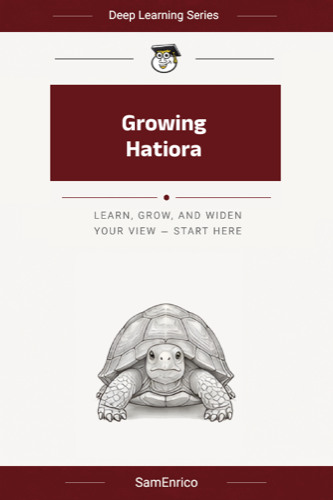
Growing Hatiora eBook
This publication, published by SamEnrico, covers G
by Lai Velva
This publication, published by SamEnrico, covers Growing Hatiora
Formats
Free sample
Chapter 1: The Dancing Bones Mystery...–- It begins, as so many botanical obsessions do, with a misidentification. You likely picked up this book because you own a plant you call a "Christmas cactus" that stubbornly refuses to bloom in December. Or perhaps you inherited a strange, cascading specimen with stems that look like nothing you have ever seen—bottle-shaped segments stacked end to end, or flat scalloped leaves that seem too delicate to be a cactus at all. You have watered it, talked to it, moved it from window to window, and still it sits there, green and silent, offering no hint of the spectacular floral display you were promised. Let me tell you a secret: your plant is not confused.
You are. And that is not an insult—it is the first step toward becoming a true Hatiora grower.The name Hatiora does not roll off the tongue. It lacks the marketing punch of "Christmas cactus" or "Easter cactus," names coined by nurserymen in the 1950s to sell plants alongside seasonal candy displays. But those commercial labels have caused more horticultural heartache than any other naming convention in the houseplant world. The plant you have been treating like a desert dweller, letting its soil go bone-dry for weeks, then drowning it in panic when its stems shriveled—that plant was never meant to live in those conditions.
You have been trying to teach a rainforest creature to love the desert, and the fact that it survived at all is a testament to the remarkable resilience of the genus Hatiora.Let me introduce you properly. Hatiora is a genus of epiphytic cacti native to the Brazilian Atlantic Forest, a biodiversity hotspot that stretches along the country's eastern coast. Unlike their desert cousins—the saguaros and prickly pears that conjure images of Arizona sunsets—Hatioras spend their entire lives suspended in the crooks of tree branches, never touching soil. Their roots dangle in humid air, drinking mist and rain that trickles down bark. Their stems have evolved not to store water for months-long droughts but to capture fleeting moisture in a forest that receives rain nearly every afternoon.
This single fact—that your Hatiora is an epiphyte, not a terrestrial cactus—explains almost everything about how to grow it successfully.The Taxonomy Trap: Why Names Matter Before we dive into care, we must understand what a Hatiora actually is—and, equally important, what it is not. The genus Hatiora belongs to the tribe Rhipsalideae, a group of cacti that abandoned desert life for the canopy approximately 20 million years ago. This tribe includes four genera: Hatiora, Schlumbergera, Rhipsalis, and Lepismium. They are often called "jungle cacti" or "epiphytic cacti," and they share common ancestors but have since diverged into distinct forms with different care requirements.The confusion begins with Schlumbergera, the true holiday cactus. These plants—Schlumbergera truncata (Thanksgiving cactus) and Schlumbergera russelliana (Christmas cactus)—have serrated stem segments that end in claw-like projections.
They bloom in late autumn to early winter, triggered by shortening day length. Hatiora, in contrast, has smooth, rounded stem segments that never develop those sharp teeth. And crucially, Hatiora blooms in response to temperature, not light. This is not a minor botanical quibble. A grower who places their Hatiora in a dark closet for six weeks to force blooms, as they would with a Schlumbergera, will be disappointed.
A grower who keeps their Hatiora in a warm living room all winter will never see flowers at all.Within the genus Hatiora, taxonomists currently recognize five to seven species, depending on which classification system you consult. For the home grower, only four species matter, and they fall into two distinct morphological groups. The first group, sometimes called the "bottle cacti," includes Hatiora salicornioides and its close relatives. These plants produce cylindrical stems that resemble Dr. Seuss characters—thin, jointed, and whimsical.
The second group, often labeled "Easter cacti" in the nursery trade, includes Hatiora gaertneri, Hatiora herminiae, and Hatiora rosea. These species produce flattened, leaf-like stems that closely resemble those of Schlumbergera, leading to endless misidentification at garden centers.The Four Species Every Grower Should Know Let us take a closer look at each of these species, because your success depends on matching the right plant to your growing conditions. Not all Hatioras are created equal, and a species that thrives in a dry apartment will perish in a terrarium.Hatiora salicornioides (Drunkard's Dream, Dancing Bones)This is the gateway drug of the Hatiora world. Native to the coastal forests of southeastern Brazil, from Rio de Janeiro south to Santa Catarina, H. salicornioides grows as an epiphyte on trees in the understory and canopy margins.
Its stems are composed of tiny, bottle-shaped segments that branch prolifically, creating a dense, cascading mound that can reach three feet in length. The segments are typically bright green, though they may flush purple or red under high light conditions. Small, yellow flowers emerge from the tips of segments in spring, each bloom about half an inch across, resembling miniature daffodils. The plant's common names reflect its appearance: "Dancing Bones" for the way the jointed stems seem to move, and "Drunkard's Dream" for the bottle-shaped segments that might appeal to a certain type of imagination.Of all Hatiora species, H. salicornioides is the most forgiving.
It tolerates average home humidity, occasional missed waterings, and a wider temperature range than its cousins. This hardiness has made it the most common Hatiora in cultivation, though it is still far less prevalent than Schlumbergera. If you are new to the genus, start here.Hatiora gaertneri (Easter Cactus)The star of the spring garden, H. gaertneri produces the largest flowers in the genus—up to three inches across in shades of brilliant red, orange-red, or pink. Native to the mountains of São Paulo and Paraná states, this species grows at higher elevations than H.
salicornioides, typically between 2,000 and 3,500 feet above sea level. The stems are flattened, segmented, and smooth-edged, with distinct midribs and occasional small bristles at the areoles. From a distance, an unflowered H. gaertneri can easily be mistaken for a Schlumbergera. Up close, the absence of serrations on the stem margins reveals its true identity.H.
gaertneri is the most demanding of the commonly cultivated Hatioras. It requires a cool winter rest period with temperatures between 50 and 60 degrees Fahrenheit for six to eight weeks to initiate flower buds. It prefers higher humidity than H. salicornioides and is more sensitive to root rot if overwatered. But the payoff is spectacular: a mature plant in full bloom produces dozens of flowers simultaneously, creating a burst of color that lasts two to three weeks.
For many growers, the challenge of meeting H. gaertneri's needs is part of its appeal.Hatiora herminiae (Pink Easter Cactus)The jewel of the genus, H. herminiae is the smallest and most delicate of the four. Its stems are thin, pencil-like, and profusely branching, rarely exceeding a quarter-inch in diameter. The flowers are a deep, vivid pink—almost magenta—and about an inch across.
Native to the highest elevations of the Atlantic Forest, between 3,500 and 4,500 feet, this species grows in cloud forests where mist and fog are nearly constant. It is…
This is the end of the free sample. Get the eBook to keep going. Buy now
About this book
Details
- Author
- Lai Velva
- Publisher
- SamEnrico
- Language
- English
- Genre
- Non-Fiction, Informative, Educational
- Released
- 2026-06-02
- Pages (approx.)
- 141
- Available as
- eBook, Audiobook

Read better in the ZLOADR app
Your eBooks on your phone or tablet. Sign in with your SamEnrico account and start reading.
More by Lai Velva
 The Nap Journaling MethodLai Velva$11.99
 Study Schedule PlannerLai Velva$11.99
 Zumba for Stress ReliefLai Velva$11.99
 Parent Death and AdoptionLai Velva$11.99
 The Cruise Ship EnslavementLai Velva$11.99
 Google Calendar MemoryLai Velva$11.99
 Cessation For Mental Health PatientsLai Velva$11.99
 Child Loss And AdoptionLai Velva$11.99Child Loss And AdoptionLai Velva$11.99
 Assertiveness For The BedriddenLai Velva$11.99
 Seams of Time: The Unseen Threads of Dior’s New LookLai Velva$11.99
 The Silent Rebellion: The Forgotten Uprising of the Women of HollowayLai Velva$11.99
You may also like
 Hong Kong Handover 1997Dunn Johnnie$11.99
 Zumba For Postnatal Recovery CourseNeal Christian$11.99
 Zumba for BeginnersLadner Nikia$11.99
 YouTube Comment Mining GuideHumes Pandora$12.99
 Worry Box MeditationCarlin Rudy$11.99
 Workplace Stress MeditationNguyen Lynn$11.99
 Workplace Stress and Sleep RepairHawley Ivory$11.99
 Workplace Perfectionism CureDelaney Jeffry$11.99
 Workplace Injustice Anger GuideWallen Isabelle$11.99
 Work Addiction and Burnout LinkGreenwood Ester$11.99
 Women in Yoga and WellnessBeattie Galina$11.99
 Women in Stand Up ComedyChun Evangeline$11.99