
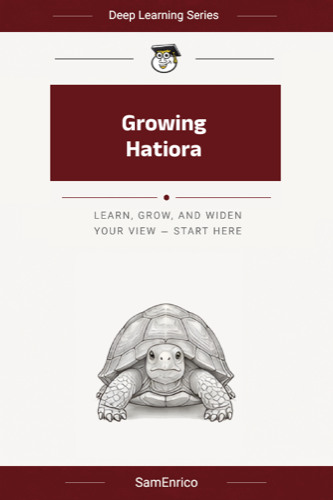
Non-FictionInformativeEducational
Growing Hatiora Audiobook
This publication, published by SamEnrico, covers G
by Lai Velva
This publication, published by SamEnrico, covers Growing Hatiora
Formats
Free sample
Chapter 1: The Dancing Bones Mystery...–- It begins, as so many botanical obsessions do, with a misidentification. You likely picked up this book because you own a plant you call a "Christmas cactus" that stubbornly refuses to bloom in December. Or perhaps you inherited a strange, cascading specimen with stems that look like nothing you have ever seen—bottle-shaped segments stacked end to end, or flat scalloped leaves that seem too delicate to be a cactus at all. You have watered it, talked to it, moved it from window to window, and still it sits there, green and silent, offering no hint of the spectacular floral display you were promised. Let me tell you a secret: your plant is not confused.
You are. And that is not an insult—it is the first step toward becoming a true Hatiora grower.The name Hatiora does not roll off the tongue. It lacks the marketing punch of "Christmas cactus" or "Easter cactus," names coined by nurserymen in the 1950s to sell plants alongside seasonal candy displays. But those commercial labels have caused more horticultural heartache than any other naming convention in the houseplant world. The plant you have been treating like a desert dweller, letting its soil go bone-dry for weeks, then drowning it in panic when its stems shriveled—that plant was never meant to live in those conditions.
You have been trying to teach a rainforest creature to love the desert, and the fact that it survived at all is a testament to the remarkable resilience of the genus Hatiora.Let me introduce you properly. Hatiora is a genus of epiphytic cacti native to the Brazilian Atlantic Forest, a biodiversity hotspot that stretches along the country's eastern coast. Unlike their desert cousins—the saguaros and prickly pears that conjure images of Arizona sunsets—Hatioras spend their entire lives suspended in the crooks of tree branches, never touching soil. Their roots dangle in humid air, drinking mist and rain that trickles down bark. Their stems have evolved not to store water for months-long droughts but to capture fleeting moisture in a forest that receives rain nearly every afternoon.
This single fact—that your Hatiora is an epiphyte, not a terrestrial cactus—explains almost everything about how to grow it successfully.The Taxonomy Trap: Why Names Matter Before we dive into care, we must understand what a Hatiora actually is—and, equally important, what it is…
This is the end of the free sample. Get the Audiobook to keep going. Buy now
About this book
Details
- Author
- Lai Velva
- Publisher
- SamEnrico
- Language
- English
- Genre
- Non-Fiction, Informative, Educational
- Released
- 2026-06-02
- Pages (approx.)
- 141
- Available as
- eBook, Audiobook

Listen in the VoxFlicks app
Audiobooks and audio dramas wherever you go. Sign in with your SamEnrico account and press play.
More by Lai Velva
 The Nap Journaling MethodLai Velva$11.99
 Study Schedule PlannerLai Velva$11.99
 Zumba for Stress ReliefLai Velva$11.99
 Parent Death and AdoptionLai Velva$11.99
 The Cruise Ship EnslavementLai Velva$11.99
 Google Calendar MemoryLai Velva$11.99
 Cessation For Mental Health PatientsLai Velva$11.99
 Child Loss And AdoptionLai Velva$11.99Child Loss And AdoptionLai Velva$11.99
 Assertiveness For The BedriddenLai Velva$11.99
 Seams of Time: The Unseen Threads of Dior’s New LookLai Velva$11.99
 The Silent Rebellion: The Forgotten Uprising of the Women of HollowayLai Velva$11.99
You may also like
 Hong Kong Handover 1997Dunn Johnnie$11.99
 Zumba For Postnatal Recovery CourseNeal Christian$11.99
 Zumba for BeginnersLadner Nikia$11.99
 YouTube Comment Mining GuideHumes Pandora$12.99
 Worry Box MeditationCarlin Rudy$11.99
 Workplace Stress MeditationNguyen Lynn$11.99
 Workplace Stress and Sleep RepairHawley Ivory$11.99
 Workplace Perfectionism CureDelaney Jeffry$11.99
 Workplace Injustice Anger GuideWallen Isabelle$11.99
 Work Addiction and Burnout LinkGreenwood Ester$11.99
 Women in Yoga and WellnessBeattie Galina$11.99
 Women in Stand Up ComedyChun Evangeline$11.99