
Non-FictionInformativeEducational
Growing Corynocarpus eBook
This publication, published by SamEnrico, covers G
by Woo Taisha
This publication, published by SamEnrico, covers Growing Corynocarpus
Formats
Free sample
Chapter 1: The Orange Menace...--The first time I held a Karaka fruit in my palm, I didn’t know whether to plant it or call a hazmat team.It was a humid February afternoon in coastal Oregon, and the tree stood thirty feet tall behind a retired botanist’s seaside cottage. The fruit was the color of a construction cone—impossible to ignore, luminous against the dark leathery leaves. My host, a woman named Margaret who had grown Karaka for twenty years, plucked one from a low branch and handed it to me without gloves.“Go on,” she said. “Taste the flesh. It won’t kill you.”I hesitated.
I had read the warnings. Every online source agreed: Corynocarpus contains a neurotoxin. Some forum posts called it “the poison tree.” A gardening blog mentioned convulsions. Another commenter claimed their dog had died after eating fallen fruit. And yet here was an eighty-year-old woman, still standing, offering me a bite.I bit into the orange pulp.
It was mild, slightly sweet, with a texture like a firm apricot. Not remarkable, but not unpleasant. I swallowed.“Now,” Margaret said, smiling, “don’t eat the seed.”That was the moment I understood why this genus needed a book. Not a dry botanical monograph, not a collection of internet warnings shouted into the void, but a real guide—one that could hold two truths in its hands at the same time: Corynocarpus is a plant of extraordinary danger and extraordinary value. The same tree that can kill you can also feed you, shelter you, connect you to an unbroken chain of Pacific horticulture stretching back a thousand years.
The difference between poison and porridge is not chemistry. It is knowledge.This chapter is the doorway to that knowledge.The Discovery That Demands Respect Every genus has its origin story, but Corynocarpus has a warning label written in human suffering. The first European accounts of Karaka poisoning date to the late eighteenth century, when British explorers and settlers encountered the tree in New Zealand. Captain James Cook’s botanist, Joseph Banks, noted that the local Māori population treated the fruit with “great respect and equal caution.” Banks recorded an incident in which a European sailor, curious about the bright orange drupes, cracked open a pit and ate the raw kernel. Within hours, the man was vomiting, shaking uncontrollably, and ultimately unconscious.
He survived, barely, but never fully recovered his coordination.That sailor was lucky. Later accounts were not so forgiving. In 1841, a missionary’s journal describes a family of five who, during a food shortage, ate raw Karaka kernels they had gathered from a grove near the Hutt River. All five died within forty-eight hours. The missionary wrote, with the moral clarity of his time, that “Nature has placed a lock upon this fruit, and only the heathen hold the key.”He was wrong about the “heathen” part, but right about the lock.
The key, it turned out, was not magic or superstition. It was patient, precise processing—a technology developed over centuries by people who could not afford to waste a reliable food source. The Māori called this process haukaro, and it involved washing the kernels in running water, steaming them in earth ovens, and roasting them until the poison leached away. The result was a bland, starchy paste that could sustain a family through winter or fuel a war party on a long march.This book will teach you that process. But first, you must understand what you are dealing with.
Corynocarpus is not a gentle houseplant or a casual addition to a suburban backyard. It is a plant that demands respect, rewards patience, and punishes ignorance. If you are looking for instant gratification, turn back now. If you are willing to learn—really learn—then read on.The Genus at a Glance: Three Faces of Corynocarpus Before we dive into cultivation, safety, and processing, let us meet the players. The genus Corynocarpus contains only a handful of species, but the three you are most likely to encounter are distinct in habit, range, and usability.Corynocarpus laevigatus (Karaka / New Zealand Laurel)This is the heavyweight.
In its native New Zealand, C. laevigatus grows into a magnificent spreading tree up to twenty meters tall, with a trunk that can exceed a meter in diameter. The leaves are its calling card: thick, glossy, and so waxy they feel almost artificial—like something a prop department would build for a jungle movie. The fruit appears in late summer, clusters of bright orange drupes that stain the ground beneath the tree like fallen suns.Among Māori, C. laevigatus was more than a food source.
Karaka groves marked ancient settlements, served as boundary markers between tribal territories, and provided emergency provisions during famine. The trees were often protected by tapu—sacred restrictions that prohibited unauthorized harvesting. To cut down a Karaka without permission was an act of war. To know how to process its kernels was to hold a survival advantage over those who did not.For the modern grower, C. laevigatus offers the most utility: the largest fruit, the most abundant harvest, and the widest climate tolerance (USDA zones 7-10 with protection).
But it also presents the greatest challenges: managing its size, containing its spread, and processing its dangerous kernels. This species is the focus of most of this book.Corynocarpus rupestris (Glenugie Karaka)If C. laevigatus is the oak of the genus, C. rupestris is the holly. This Australian native is smaller—rarely exceeding ten meters—and comes with a botanical party trick: juvenile leaves that are spiny, prickly, and entirely unlike the smooth, elongated leaves of the adult plant.
This dimorphism is thought to be an evolutionary holdover from the days when giant moa birds browsed the New Zealand and Australian forests. The spines said, “Don’t eat me,” to creatures that no longer exist. The adult leaves, freed from the threat of megafauna, relaxed into smoothness.C. rupestris is rarer in cultivation than its New Zealand cousin, partly because of its restricted natural range (Queensland and New South Wales) and partly because of its conservation status. In Australia, it is classified as 2VCt under the ROTAP system—rare, vulnerable in part of its range, and worthy of protection.
For the ethical grower, this species offers an opportunity to participate in conservation while still enjoying the rewards of the genus.The fruit of C. rupestris is smaller than that of C. laevigatus, and the processing requirements are similar, though the toxicity profile may differ slightly (research is ongoing). Its smaller stature makes it the better choice for home gardens with limited space.Corynocarpus dissimilis (The Enigma)The least known of the three, C. dissimilis is endemic to New Caledonia and remains poorly documented even in botanical literature.
Its fruit, leaves, and growth habit are described in only a handful of scientific papers. For the average grower, this species is not realistically available. I mention it here for completeness and to honor the biodiversity of the genus, but unless you are a specialist collector with access to New Caledonian germplasm (and the appropriate permits), you will likely never encounter it.For the remainder of…
This is the end of the free sample. Get the eBook to keep going. Buy now
About this book
Details
- Author
- Woo Taisha
- Publisher
- SamEnrico
- Language
- English
- Genre
- Non-Fiction, Informative, Educational
- Released
- 2026-05-11
- Pages (approx.)
- 153
- Available as
- eBook, Audiobook

Read better in the ZLOADR app
Your eBooks on your phone or tablet. Sign in with your SamEnrico account and start reading.
More by Woo Taisha
 Nobel Laureates In GPS TechnologyWoo Taisha$11.99
 The Nobel Laureate LifespansWoo Taisha$11.99
 The No Spend Anniversary GuideWoo Taisha$11.99
 Body Scan For Trauma SafetyWoo Taisha$11.99
 Arm Crossing as BarrierWoo Taisha$11.99
 Meditation For Panic BeginnersWoo Taisha$11.99
 Sleeping Bear Dunes VanishedWoo Taisha$11.99
 Reid Hoffman LinkedInWoo Taisha$11.99
 Love Letters from the Front: The Secret Plays of Sarah Bernhardt and Victorien SardouWoo Taisha$11.99
 The Harmonies of the Nile: Egypt's Forgotten Maestros of the Pharaonic CourtWoo Taisha$11.99
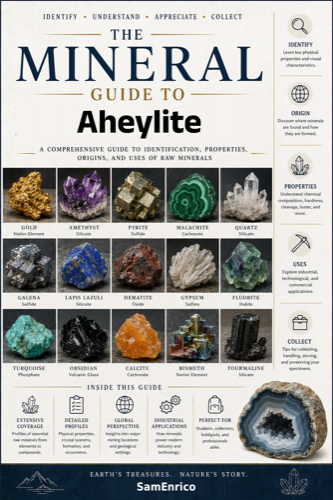 The Mineral Guide to AheyliteWoo Taisha$11.99
 How to Become a Briquette-machine OperatorWoo Taisha$11.99
You may also like
 Hong Kong Handover 1997Dunn Johnnie$11.99
 Zumba For Postnatal Recovery CourseNeal Christian$11.99
 Zumba for BeginnersLadner Nikia$11.99
 YouTube Comment Mining GuideHumes Pandora$12.99
 Worry Box MeditationCarlin Rudy$11.99
 Workplace Stress MeditationNguyen Lynn$11.99
 Workplace Stress and Sleep RepairHawley Ivory$11.99
 Workplace Perfectionism CureDelaney Jeffry$11.99
 Workplace Injustice Anger GuideWallen Isabelle$11.99
 Work Addiction and Burnout LinkGreenwood Ester$11.99
 Women in Yoga and WellnessBeattie Galina$11.99
 Women in Stand Up ComedyChun Evangeline$11.99