
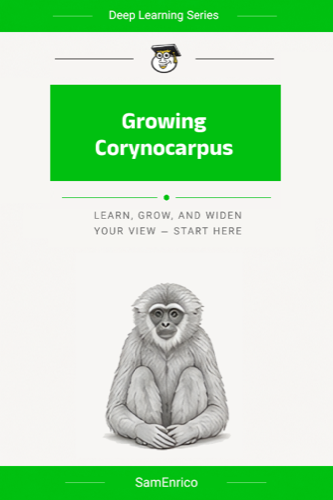
Non-FictionInformativeEducational
Growing Corynocarpus Audiobook
This publication, published by SamEnrico, covers G
by Woo Taisha
This publication, published by SamEnrico, covers Growing Corynocarpus
Formats
Free sample
Chapter 1: The Orange Menace...--The first time I held a Karaka fruit in my palm, I didn’t know whether to plant it or call a hazmat team.It was a humid February afternoon in coastal Oregon, and the tree stood thirty feet tall behind a retired botanist’s seaside cottage. The fruit was the color of a construction cone—impossible to ignore, luminous against the dark leathery leaves. My host, a woman named Margaret who had grown Karaka for twenty years, plucked one from a low branch and handed it to me without gloves.“Go on,” she said. “Taste the flesh. It won’t kill you.”I hesitated.
I had read the warnings. Every online source agreed: Corynocarpus contains a neurotoxin. Some forum posts called it “the poison tree.” A gardening blog mentioned convulsions. Another commenter claimed their dog had died after eating fallen fruit. And yet here was an eighty-year-old woman, still standing, offering me a bite.I bit into the orange pulp.
It was mild, slightly sweet, with a texture like a firm apricot. Not remarkable, but not unpleasant. I swallowed.“Now,” Margaret said, smiling, “don’t eat the seed.”That was the moment I understood why this genus needed a book. Not a dry botanical monograph, not a collection of internet warnings shouted into the void, but a real guide—one that could hold two truths in its hands at the same time: Corynocarpus is a plant of extraordinary danger and extraordinary value. The same tree that can kill you can also feed you, shelter you, connect you to an unbroken chain of Pacific horticulture stretching back a thousand years.
The difference between poison and porridge is not chemistry. It is knowledge.This chapter is the doorway to that knowledge.The Discovery That Demands Respect Every genus has its origin story, but Corynocarpus has a warning label written in human suffering. The first European accounts of Karaka poisoning date to the late eighteenth century, when British explorers and settlers encountered the tree in New Zealand. Captain James Cook’s botanist, Joseph Banks, noted that the local Māori population treated the fruit with “great respect and equal caution.” Banks recorded an incident in which a European sailor, curious about the bright orange drupes, cracked open a pit and ate the raw kernel. Within hours, the man was vomiting, shaking uncontrollably, and ultimately unconscious.
He survived, barely, but never fully recovered his coordination.That sailor was lucky. Later accounts were not so forgiving. In 1841…
This is the end of the free sample. Get the Audiobook to keep going. Buy now
About this book
Details
- Author
- Woo Taisha
- Publisher
- SamEnrico
- Language
- English
- Genre
- Non-Fiction, Informative, Educational
- Released
- 2026-05-11
- Pages (approx.)
- 153
- Available as
- eBook, Audiobook

Listen in the VoxFlicks app
Audiobooks and audio dramas wherever you go. Sign in with your SamEnrico account and press play.
More by Woo Taisha
 Nobel Laureates In GPS TechnologyWoo Taisha$11.99
 The Nobel Laureate LifespansWoo Taisha$11.99
 The No Spend Anniversary GuideWoo Taisha$11.99
 Body Scan For Trauma SafetyWoo Taisha$11.99
 Arm Crossing as BarrierWoo Taisha$11.99
 Meditation For Panic BeginnersWoo Taisha$11.99
 Sleeping Bear Dunes VanishedWoo Taisha$11.99
 Reid Hoffman LinkedInWoo Taisha$11.99
 Love Letters from the Front: The Secret Plays of Sarah Bernhardt and Victorien SardouWoo Taisha$11.99
 The Harmonies of the Nile: Egypt's Forgotten Maestros of the Pharaonic CourtWoo Taisha$11.99
 The Mineral Guide to AheyliteWoo Taisha$11.99
 How to Become a Briquette-machine OperatorWoo Taisha$11.99
You may also like
 Hong Kong Handover 1997Dunn Johnnie$11.99
 Zumba For Postnatal Recovery CourseNeal Christian$11.99
 Zumba for BeginnersLadner Nikia$11.99
 YouTube Comment Mining GuideHumes Pandora$12.99
 Worry Box MeditationCarlin Rudy$11.99
 Workplace Stress MeditationNguyen Lynn$11.99
 Workplace Stress and Sleep RepairHawley Ivory$11.99
 Workplace Perfectionism CureDelaney Jeffry$11.99
 Workplace Injustice Anger GuideWallen Isabelle$11.99
 Work Addiction and Burnout LinkGreenwood Ester$11.99
 Women in Yoga and WellnessBeattie Galina$11.99
 Women in Stand Up ComedyChun Evangeline$11.99