
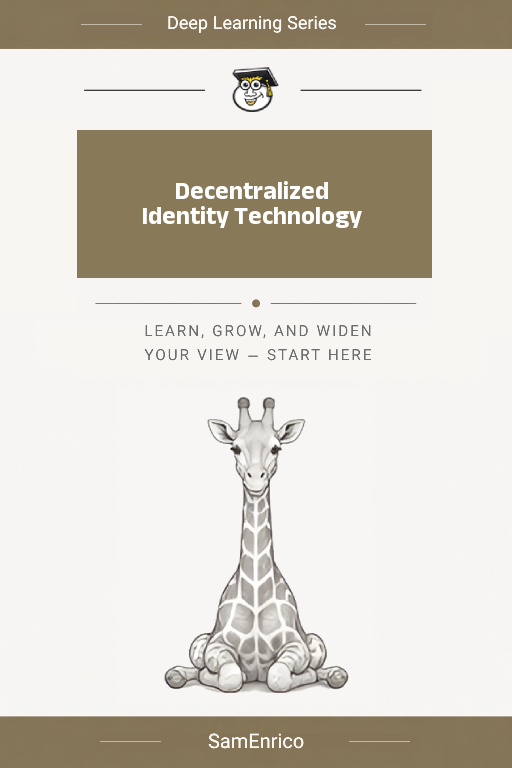
Non-FictionForecast & OutlookSSI
Decentralized Identity Technology Audiobook
Explore blockchain-based digital IDs giving users
Explore blockchain-based digital IDs giving users control over their personal data while enabling frictionless KYC across institutions.
Formats
Free sample
Chapter 1: The Orphaned Self...--–- You do not own your digital identity. You rent it from institutions that see you as a liability, and the lease can be revoked at any time.This is not a philosophical statement. It is a technical fact. Every time you log into a website, every time you swipe a loyalty card, every time you submit a driver's license scan to a car rental counter, you are surrendering fragments of yourself to databases you cannot see, controlled by people you have never met, secured by measures you are not allowed to audit. And when those databases are breached—not if, but when—you are the one who suffers the consequences.
The institution will issue a press release, offer two years of credit monitoring, and move on. You will spend the next decade untangling identity theft, explaining to collections agencies that you did not take out that loan, and wondering why the digital world treats you like a stranger in your own life.This chapter traces the history of how we arrived at this broken model, explains why the username and password is mathematically doomed, and lays the foundation for everything that follows. Because before we can build something better, we must understand exactly how the current system failed—and why it was designed to fail from the very beginning.The Mainframe Era: When You Were Just a Record in Someone Else's File The story of digital identity begins in the 1970s, not with the internet but with mainframe computers. In that era, a computer was a room-sized machine kept behind locked doors, accessible only to trained operators. If you were a bank customer, your identity existed as a record in that mainframe's database.
If you were a hospital patient, your medical history was a file on a tape reel. If you were a university student, your grades lived on a disk pack that no student could ever touch.This model worked because the scale was small. A single mainframe served a single organization. The users of that system were employees, not customers. Access Control Lists (ACLs)—simple tables that said "User X can read File Y"—were sufficient because the number of users was measured in hundreds, not billions.
The database was a silo, and that was fine because the silo did not need to talk to any other silo.Then came the personal computer…
This is the end of the free sample. Get the Audiobook to keep going. Buy now
About this book
Details
- Author
- Wooden Catrina
- Publisher
- SamEnrico
- Language
- English
- Genre
- Non-Fiction, Forecast & Outlook, SSI
- Released
- 2026-05-29
- Pages (approx.)
- 129
- Available as
- eBook, Audiobook

Listen in the VoxFlicks app
Audiobooks and audio dramas wherever you go. Sign in with your SamEnrico account and press play.
More by Wooden Catrina
 Pain Neuroscience Podcast GuideWooden Catrina$11.99
 Brand Value Assortment OptimizationWooden Catrina$11.99
 The Fourth Step Inventory WorkbookWooden Catrina$11.99
 Exercise Time Blocking GuideWooden Catrina$11.99
 Nefertiti's Lost Hymn: The Sun Queen's Forgotten MelodyWooden Catrina$11.99Nefertiti's Lost Hymn: The Sun Queen's Forgotten MelodyWooden Catrina$11.99
 Ashes of the Sky: The Day Mount Pinatubo Blew Up the WorldWooden Catrina$11.99
 Slash Career Builder HandbookWooden Catrina$12.99
 Understanding Hyperostosis Cortical InfantileWooden Catrina$17.99
 Territory RepresentativeWooden Catrina$11.99
You may also like
 Hong Kong Handover 1997Dunn Johnnie$11.99
 Zumba For Postnatal Recovery CourseNeal Christian$11.99
 Zumba for BeginnersLadner Nikia$11.99
 YouTube Comment Mining GuideHumes Pandora$12.99
 Worry Box MeditationCarlin Rudy$11.99
 Workplace Stress MeditationNguyen Lynn$11.99
 Workplace Stress and Sleep RepairHawley Ivory$11.99
 Workplace Perfectionism CureDelaney Jeffry$11.99
 Workplace Injustice Anger GuideWallen Isabelle$11.99
 Work Addiction and Burnout LinkGreenwood Ester$11.99
 Women in Yoga and WellnessBeattie Galina$11.99
 Women in Stand Up ComedyChun Evangeline$11.99