
Cooperative Business Plan Template
Write cooperative-specific business plans that add
Draft feasibility study with member contributions and projected surplus.
Formats
About this book
Free sample
Chapter 1: The Patronage Trap--–- The first meeting of the River Valley Food Co-op’s organizing committee took place in a church basement on a rainy Tuesday evening. Thirteen people sat on folding chairs, clutching printouts of a business plan template they had downloaded from a government website. The template asked for standard things: market analysis, competitive strategy, management resumes, five-year financial projections, and an exit strategy. One committee member, a retired accountant named Harold, pointed to the word "exit" on page twenty-three. "What does this mean for a co-op?" he asked.
Nobody had a good answer. They filled in the blanks anyway, using language borrowed from for-profit business plans: "maximize shareholder value," "achieve market dominance," "target 15% net profit margin by year three." Six months later, they took this plan to a bank. The loan officer nodded at the profit projections and asked, "What happens to these margins when you return surplus to members?" The committee looked at each other blankly. They had written a plan for a business they did not intend to build. They had fallen into the Patronage Trap.This chapter diagnoses the single most common fatal error made by aspiring cooperative founders: copying the structure, assumptions, and language of investor-owned business plans.
It then provides the complete foundation for writing a cooperative business plan that prioritizes member ownership and shared surplus. By the end of this chapter, you will understand why a high-profit-margin goal is destructive to a consumer co-op, why the seven cooperative principles are not ethical ornaments but competitive weapons, and why you need a "patronage strategy" instead of an "exit strategy." Most importantly, you will learn that the trap is not writing for banks—it is writing for banks without translating member value into lender language. The rest of this book will teach you that translation.The Critical Distinction: Investor-Owned vs. Member-Owned Models Every business plan begins with a fundamental question: who owns the enterprise, and what do they want from it? The answer determines everything that follows—pricing strategy, capital structure, governance, risk tolerance, and the definition of success itself.In an investor-owned model (IOM), shareholders…
This is the end of the free sample. Get the eBook to keep going. Buy now
Contents
- Chapter 1
- Chapter 2
- Chapter 3
- Chapter 4
- Chapter 5
- Chapter 6
- Chapter 7
- Chapter 8
- Chapter 9
- Chapter 10
- Chapter 11
- Chapter 12
Details
- Author
- Council Shaunte
- Publisher
- SamEnrico
- Language
- English
- Genre
- Non-Fiction, Business Brief, Business Brief, Planning
- Released
- 2026-05-30
- Pages (approx.)
- 147
- Available as
- eBook, Audiobook

Read better in the ZLOADR app
Your eBooks on your phone or tablet. Sign in with your SamEnrico account and start reading.
More by Council Shaunte
 Progressive Muscle RelaxationCouncil Shaunte$11.99
 Bipolar And Light TherapyCouncil Shaunte$11.99
 Stress and Gratitude Practice CouplesCouncil Shaunte$11.99
 The Long Way HomeCouncil Shaunte$11.99
 Pregnancy Breath PreparationCouncil Shaunte$11.99
 Listening In Oil Gas GuideCouncil Shaunte$11.99Progressive Muscle RelaxationCouncil Shaunte$11.99
 Joyful Commute TransformationCouncil Shaunte$11.99
 Dave Thomas Square BurgersCouncil Shaunte$11.99
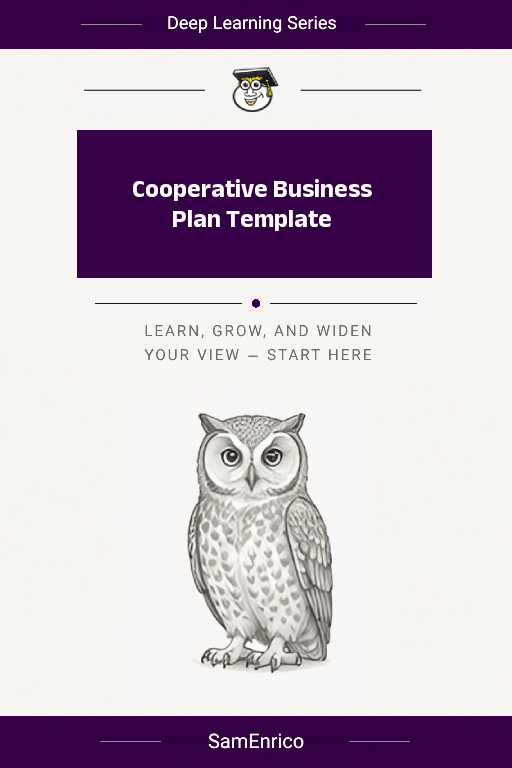 Cooperative Business Plan TemplateCouncil Shaunte$12.99
 Coffee Nap Timing HandbookCouncil Shaunte$11.99
 The Deep Thinkers of the Nile: How Ancient Egyptian Scholars Charted the CosmosCouncil Shaunte$11.99