
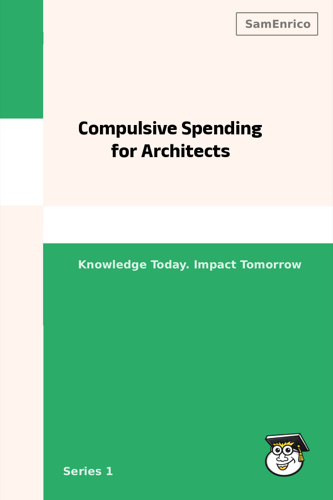
Non-FictionSelf-HelpArchitecture
Compulsive Spending for Architects
Design purchases and lifestyle inflation.
Design purchases and lifestyle inflation.
Formats
About this book
Free sample
Chapter 1: The Vitruvian Trap--–- You are sitting in a coffee shop, third-wave espresso in hand, the ceramic cup so perfectly weighted that you find yourself admiring its handle geometry instead of reviewing the redlines spread across your laptop. Across from you, a colleague from the firm is describing their weekend visit to a design museum. You nod along, but your mind is elsewhere—specifically, on the $1,200 drafting stool you just ordered. You told yourself it was an investment in your back health, a necessary tool for the profession, and besides, it held its resale value. But as you take another sip of coffee, a quiet voice whispers: What if I just spent a month's grocery budget on a chair I could have tested for free in a showroom?Welcome to the Vitruvian Trap.This chapter is not about budgeting spreadsheets or debt consolidation plans.
Those tools come later. This chapter is about something more fundamental and far more dangerous: the peculiar way architectural training rewires your brain to confuse aesthetic recognition with financial entitlement. You have spent years learning to see the world differently—to notice the joint where two materials meet, to feel the weight of a door handle, to distinguish between a genuine Eames and a well-executed replica. These skills make you an excellent designer. They also make you a marketer’s dream and your own worst enemy when it comes to personal finance.The trap works like this: because you can recognize quality, you feel entitled to own it.
Not someday, when you have built wealth. Not in a carefully planned way that aligns with your actual income. Right now. The logic feels unassailable. How can you, a trained architect, sit in a mass-produced chair from an office supply store?
Would that not be a betrayal of everything you believe about design, about craft, about the dignity of well-made things?Yes, it would. And that is precisely the problem.Let us be clear about what this chapter does and does not claim. It does not claim that architects should abandon their appreciation for good design. It does not…
This is the end of the free sample. Get the eBook to keep going. Buy now
Contents
- Chapter 1
- Chapter 2
- Chapter 3
- Chapter 4
- Chapter 5
- Chapter 6
- Chapter 7
- Chapter 8
- Chapter 9
- Chapter 10
- Chapter 11
- Chapter 12
Details
- Author
- Sager Madeleine
- Publisher
- SamEnrico
- Language
- English
- Genre
- Non-Fiction, Self-Help, Architecture
- Released
- 2026-06-05
- Pages (approx.)
- 137
- Available as
- eBook, Audiobook

Read better in the ZLOADR app
Your eBooks on your phone or tablet. Sign in with your SamEnrico account and start reading.
More by Sager Madeleine
 The Binge Eating Journal MethodSager Madeleine$11.99
 IBS Guided Imagery GuideSager Madeleine$11.99
 Steel and Aluminum Tariff GuideSager Madeleine$11.99
 Silent Justice: The Trial of the Last MimeSager Madeleine$11.99
 Utilization Review SpecialistSager Madeleine$11.99
 De Facto Relationship Evidence ManualSager Madeleine$12.99
 How to Produce Apparel and AccessoriesSager Madeleine$11.99
 How to Become a Radio-message RouterSager Madeleine$11.99
You may also like
 Hong Kong Handover 1997Dunn Johnnie$11.99
 Zumba For Postnatal Recovery CourseNeal Christian$11.99
 Zumba for BeginnersLadner Nikia$11.99
 YouTube Comment Mining GuideHumes Pandora$12.99
 Worry Box MeditationCarlin Rudy$11.99
 Workplace Stress MeditationNguyen Lynn$11.99
 Workplace Stress and Sleep RepairHawley Ivory$11.99
 Workplace Perfectionism CureDelaney Jeffry$11.99
 Workplace Injustice Anger GuideWallen Isabelle$11.99
 Work Addiction and Burnout LinkGreenwood Ester$11.99
 Women in Yoga and WellnessBeattie Galina$11.99
 Women in Stand Up ComedyChun Evangeline$11.99