
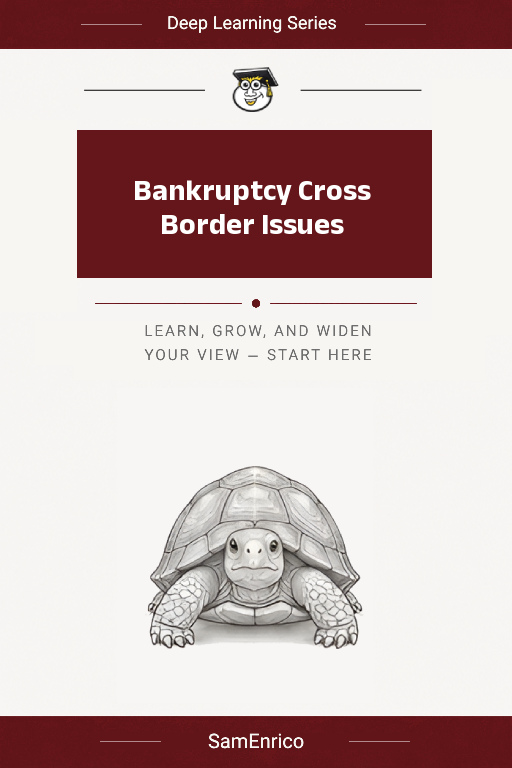
Non-FictionCrisis ManagementCross Border
Bankruptcy Cross Border Issues
Handle multinational client bankruptcy with assets
Handle multinational client bankruptcy with assets in multiple countries under Chapter 15 recognition.
Formats
About this book
Free sample
Chapter 1: The Comity Paradox...--–- It was 3:00 PM on a Friday when the phone rang. The client on the line was a court-appointed liquidator from the Cayman Islands. He had just seized control of a multinational holding company with forty-seven subsidiaries across fourteen countries. The crown jewel—a Miami-based real estate portfolio worth $340 million—was sitting in a U.S. bank account, and a New York judgment creditor was preparing to levy it on Monday morning.
The liquidator had one question: "Can you stop them before the weekend ends?"The answer, as every seasoned bankruptcy practitioner eventually learns, is both yes and no. Yes, the United States has a robust legal framework for recognizing foreign insolvency proceedings and protecting multinational assets. No, that framework does not work the way most foreign representatives expect. And the difference between success and failure often comes down to understanding what this book calls the Comity Paradox: the more aggressively a foreign representative relies on American courts to protect assets, the more those courts will scrutinize whether the foreign proceeding deserves protection in the first place.This chapter introduces the philosophical and practical foundations of cross-border insolvency in the United States. It explains why domestic bankruptcy is no longer sufficient in a globalized economy, how the law shifted dramatically in 2005, and what that shift means for the foreign representative sitting with a ticking clock and a Miami bank account.
Most importantly, it establishes the core thesis of this entire book: Chapter 15 is not merely a recognition statute—it is a strategic chessboard, and success requires mastering the rules of engagement before the first move is made.The Territorialist Era: Every Nation for Itself Before 2005, cross-border insolvency in the United States operated under a framework that might generously be described as chaos. The old Section 304 of the Bankruptcy Code (repealed when Chapter 15 was adopted) gave U.S. courts broad, discretionary power to grant comity to foreign proceedings. The statute provided minimal guidance: a court "may" enjoin actions against the debtor's assets "as is appropriate" based on a list of vague factors including comity, fairness…
This is the end of the free sample. Get the eBook to keep going. Buy now
Contents
- Chapter 1
- Chapter 2
- Chapter 3
- Chapter 4
- Chapter 5
- Chapter 6
- Chapter 7
- Chapter 8
- Chapter 9
- Chapter 10
- Chapter 11
- Chapter 12
Details
- Author
- Orozco Deidra
- Publisher
- SamEnrico
- Language
- English
- Genre
- Non-Fiction, Crisis Management, Cross Border
- Released
- 2026-06-01
- Pages (approx.)
- 138
- Available as
- eBook, Audiobook

Read better in the ZLOADR app
Your eBooks on your phone or tablet. Sign in with your SamEnrico account and start reading.
More by Orozco Deidra
 CEO Stress and Decision FatigueOrozco Deidra$11.99
 Taganrog Criminal SyndicateOrozco Deidra$11.99
 Benzodiazepine DetoxOrozco Deidra$11.99
 Restaurant Kitchen Anger GuideOrozco Deidra$11.99
 Cross Industry AnalogiesOrozco Deidra$11.99
 TM History and OriginsOrozco Deidra$11.99
 Senior Sexuality EsteemOrozco Deidra$11.99
 Sigrid Undset: The Nobel Laureate Who Defied the NazisOrozco Deidra$11.99
 Goal Setting for StudentsOrozco Deidra$11.99
 Whispers of the Forgotten: The Lost Library of AlexandriaOrozco Deidra$11.99
 The Photographer's Guide to Street PhotographyOrozco Deidra$11.99
 How to Produce Prepared Appetizers and Side DishesOrozco Deidra$11.99
You may also like
 Hong Kong Handover 1997Dunn Johnnie$11.99
 Zumba For Postnatal Recovery CourseNeal Christian$11.99
 Zumba for BeginnersLadner Nikia$11.99
 YouTube Comment Mining GuideHumes Pandora$12.99
 Worry Box MeditationCarlin Rudy$11.99
 Workplace Stress MeditationNguyen Lynn$11.99
 Workplace Stress and Sleep RepairHawley Ivory$11.99
 Workplace Perfectionism CureDelaney Jeffry$11.99
 Workplace Injustice Anger GuideWallen Isabelle$11.99
 Work Addiction and Burnout LinkGreenwood Ester$11.99
 Women in Yoga and WellnessBeattie Galina$11.99
 Women in Stand Up ComedyChun Evangeline$11.99