
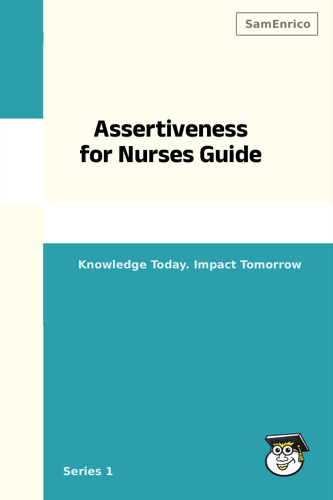
Assertiveness for Nurses Guide Audiobook
Advocate for patients and speak up to doctors usin
Advocate for patients and speak up to doctors using this practical healthcare guide.
Formats
Free sample
Chapter 1: The Hidden Epidemic--–- The moment that changed everything for me came during a night shift in the cardiac intensive care unit, three years into my nursing career. I was caring for a sixty-eight-year-old retired teacher named Eleanor who had undergone a routine coronary artery bypass grafting procedure earlier that day. Her vitals had been stable for hours. Her family had gone home to sleep. The plan was to extubate her in the morning.At two seventeen in the morning, I noticed something wrong.
Eleanor's heart rate had increased from eighty-eight to one hundred twenty-four over thirty minutes. Her blood pressure had dropped from one hundred thirty-two over seventy-eight to ninety-six over fifty-two. Her urine output had slowed to a trickle. These were subtle signs individually, but together they painted a picture I recognized from nursing school lectures and board exam questions: early septic shock.I called the surgical resident. He was post-call, exhausted, and visibly annoyed when he answered.
"What's the white count?" he asked. I told him her most recent lab work was three hours old and showed a normal white count. "Then she's not septic," he said. "Give her a fluid bolus and call me if she drops below ninety systolic."I hung up. And then I did something that still shames me when I remember it: I gave the fluid bolus, I charted the call, and I waited.
I did not call back. I did not escalate to the attending. I did not use the chain of command. I was a good nurse, a competent nurse, a nurse who had passed every certification and impressed every preceptor. And I stood at that bedside for the next ninety minutes watching Eleanor's blood pressure fall, knowing something was wrong, and doing nothing but monitoring and waiting.At three forty-five, Eleanor coded.
We got her back after twenty-two minutes of CPR, but the hypoxia had caused an anoxic brain injury. She spent the next eight weeks in a long-term acute care hospital, trached and pegged, her family rotating through a vigil that should never have been necessary. She died on a Wednesday. Her family never looked at me the same way again. I do not blame them.
I cannot look at myself the same way either.I tell you this story not because it makes me look good. It makes me look like exactly what I was in that…
This is the end of the free sample. Get the Audiobook to keep going. Buy now
About this book
Details
- Author
- Redding George
- Publisher
- SamEnrico
- Language
- English
- Genre
- Non-Fiction, Self-Help, Healthcare Communication
- Released
- 2026-06-06
- Pages (approx.)
- 131
- Available as
- eBook, Audiobook

Listen in the VoxFlicks app
Audiobooks and audio dramas wherever you go. Sign in with your SamEnrico account and press play.
More by Redding George
 HIIT For Weight Loss GuideRedding George$11.99
 Progressive Muscle SleepRedding George$11.99
 Cello Secrets of a SoloistRedding George$11.99
 The Exercise Timing GuideRedding George$11.99
 Silk and Scandal: The Fall of the First Lady of FashionRedding George$11.99
 The Breeder's Guide to Gotland HorsesRedding George$11.99
 Insurance Retention PlaybookRedding George$12.99
 Community Free to PaidRedding George$12.99
 A Beginners Guide to Haxey Hood (Volume 1)Redding George$11.99
 Framing CarpenterRedding George$11.99
You may also like
 Medical Error DisclosureCavazos Shantae$11.99
 Medical Assertive GuideStern Dorthy$11.99
 NVC For Medical ConversationsAbbott Craig$11.99
 Listening For Medical ProfessionalsGladden Jayna$11.99
 NVC In Healthcare HandbookGoebel Candida$11.99
 Medical Patient Nonverbal GuideParsons Joshua$11.99
 NVC for Healthcare ProfessionalsGroves Loreen$11.99
 Nurse Patient ConversationCecil Hee$11.99