

Non-FictionAI OperatorData Standardization
AI Financial Data Standardization eBook
Transform disparate financial data into common for
Transform disparate financial data into common formats, units, and taxonomies using AI mapping rules.
Formats
Free sample
Chapter 1: The Data Trap--The email arrived at 4:47 PM on a Friday, and Alex Chen knew immediately that her weekend was over.The subject line read: “URGENT - Board Meeting Monday - Margin Discrepancy.” The body was worse: three sentences from the CFO informing her that Q3 margins showed 8% in the board deck prepared by her team but 14% in the investor update prepared by the sales finance group. The difference was $47 million. The board would ask why. The CFO expected an answer by Sunday night.Alex closed her laptop, stared at the ceiling of her cubicle, and did something she rarely did: she laughed. Not because anything was funny.
Because she had been warning about this exact problem for eighteen months, and now, in the worst possible way, she had been proven right.She was the corporate controller at Omni Global Manufacturing, a mid-sized industrial firm with twelve legal entities across North America, Europe, and Asia. The company made precision components for automotive and aerospace customers—boring, profitable, stable work. But beneath the surface of respectable financial results, Omni Global’s data infrastructure was a house of cards built on spreadsheets, and the slightest breeze was about to knock it down.The Nightmare Before Monday The margin discrepancy, Alex discovered over the next six hours of frantic investigation, had nothing to do with accounting errors, fraud, or operational problems. It had everything to do with data.The sales finance group, responsible for the investor update, had defined “Net Sales” as total contract value minus returns and allowances—the standard GAAP definition. Alex’s own team, responsible for the board deck, had defined “Net Sales” as total contract value minus returns, allowances, and cooperative marketing deductions (a common practice in automotive where manufacturers share advertising costs with suppliers).
Both definitions were correct according to their respective reporting frameworks. Neither definition was wrong. But the 6-percentage-point gap between them had just cost Alex her weekend and, potentially, her credibility.This was not a one-time mistake. It was the inevitable consequence of a system that had been rotting for years.The Twelve Formats of Chaos As Alex dug deeper into the data pipeline—a word she used generously—she mapped the true scale of the problem. Omni Global’s monthly close required reconciling data from twelve subsidiaries, each using different systems, different formats, and different definitions.The German subsidiary, acquired three years ago, still ran on a legacy ERP system that exported data only as CSV files with semicolon delimiters (because Germans use commas as decimal separators, so semicolons are necessary to avoid confusion).
The file encoding was ISO-8859-1, not UTF-8, which meant that any system expecting modern Unicode would mangle the umlauts in vendor names.The Japanese subsidiary used a cloud-based Saa S platform that produced JSON payloads through a REST API. The JSON was beautifully structured—nested objects, clear field names, consistent data types—but the field names were in Japanese characters, and the API rate limits meant Alex’s team could only pull 10,000 records per hour.The Brazilian subsidiary, inexplicably, still used EDI X12, a standard from the 1980s that transmitted data as fixed-length strings of codes and delimiters. Every EDI file required a 72-page mapping document just to understand which position corresponded to which field. The document was written in Portuguese and had not been updated since 2019.The French subsidiary sent password-protected PDF invoices. Not as an export option—as the only option.
The accounting system could not produce machine-readable files. Every month, someone on Alex’s team manually opened 3,000 PDFs, typed the passwords (which changed quarterly and were distributed by email), and copied the values into a master spreadsheet.The remaining eight subsidiaries were a museum of bad data practices: Excel exports with merged cells, Access databases from the Clinton administration, text files with pipe delimiters (|) that sometimes contained pipes within the data fields, and one particularly creative team in Australia that sent screenshots of their ERP system pasted into Word documents.The Gap Between Finance and ITAlex had tried to fix this problem before. Eighteen months ago, she had gone to the IT department with a proposal: standardize the data ingestion pipeline, implement a common schema, and reduce the monthly close from fifteen days to five. The IT director, a well-meaning man named Raj, had listened patiently, nodded at the right moments, and then explained why it was impossible.“Finance wants speed,” Raj had said. “You need totals by Friday.
I get it. But IT needs consistency. If we change the schema, every downstream system breaks. The data warehouse, the BI dashboards, the audit logs—they all expect a specific format. We can’t just change it because one subsidiary decided to use a different date format.”Alex had argued that they could build a translation layer—an ETL pipeline that transformed disparate formats into a common schema before the data reached downstream systems.
Raj had agreed that this was technically feasible but had pointed out the political problem: every time a subsidiary changed its system (which happened frequently), the translation layer would break, and IT would be blamed for the delay.“So what do we do?” Alex had asked.“We keep doing what we’re doing,” Raj had replied. “Manual review. Spreadsheets. It’s not elegant, but it works.”It worked in the sense that a leaky boat works if everyone bails water fast enough. But Alex was tired of bailing.
And now, with the margin discrepancy threatening to embarrass the company in front of the board, she was determined to find a better way.The 80% Problem What Alex did not know at the time—but would learn over the next six months—was that her experience was not unusual. Across industries, financial analysts spend approximately 80% of their data-related time on reformatting, cleaning, and harmonizing, leaving only 20% for actual analysis.Consider what that means for a moment. For every hour a financial analyst works, 48 minutes are spent on tasks that add no strategic value whatsoever. They are not identifying trends, not evaluating risks, not advising leadership, not finding opportunities. They are copying and pasting.
They are converting currencies. They are renaming columns. They are removing duplicates. They are reformatting dates. They are doing work that a machine could do, if only the machine understood the rules.The tragedy is that most of these analysts entered finance because they wanted to understand how businesses work, not because they loved spreadsheet formatting.
But the data trap—the accumulation of incompatible formats, inconsistent definitions, and manual workarounds—has turned their careers into exercises in frustration.A 2023 survey of finance professionals found that 67% considered data preparation their single largest source of workplace stress. Another 54% reported making at least one material error in the past year due to manual data entry or transformation errors. And 41% said they had considered leaving their jobs specifically because of the data chaos they faced every month.These are not lazy or incompetent people. They are skilled professionals trapped in broken systems.Dark Data: The Buried Treasure One of the most insidious aspects of the data trap is what data scientists call “dark data.” The term refers to information that exists somewhere in the organization—it has been…
This is the end of the free sample. Get the eBook to keep going. Buy now
About this book
Details
- Author
- Mccarty Brianne
- Publisher
- SamEnrico
- Language
- English
- Genre
- Non-Fiction, AI Operator, Data Standardization
- Released
- 2026-05-29
- Pages (approx.)
- 130
- Available as
- eBook, Audiobook

Read better in the ZLOADR app
Your eBooks on your phone or tablet. Sign in with your SamEnrico account and start reading.
More by Mccarty Brianne
 Overcoming Loneliness Self Help GuideMccarty Brianne$11.99
 Earnout Structure DatabaseMccarty Brianne$11.99
 One That Got AwayMccarty Brianne$11.99
 FODMAP Symptom Journal WorkbookMccarty Brianne$11.99
 Bariatric Surgery Coffee Caffeine GuideMccarty Brianne$11.99
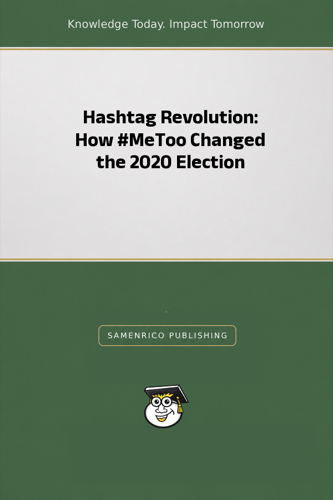 Hashtag Revolution: How #MeToo Changed the 2020 ElectionMccarty Brianne$11.99
 The Reef Beneath the Ash: How a Soviet Scientist Uncovered the Great Barrier Reef’s Secret PastMccarty Brianne$11.99
 Understanding Cdg Syndrome Type 1cMccarty Brianne$17.99
 Java Chicken BreedingMccarty Brianne$11.99
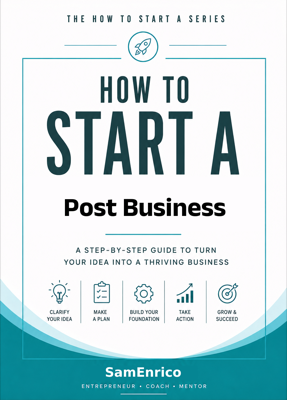 How to Start a Post Business (Beginners Guide)Mccarty Brianne$11.99
 Proposal Writer Block SolutionsMccarty Brianne$12.99
You may also like
 Hong Kong Handover 1997Dunn Johnnie$11.99
 Zumba For Postnatal Recovery CourseNeal Christian$11.99
 Zumba for BeginnersLadner Nikia$11.99
 YouTube Comment Mining GuideHumes Pandora$12.99
 Worry Box MeditationCarlin Rudy$11.99
 Workplace Stress MeditationNguyen Lynn$11.99
 Workplace Stress and Sleep RepairHawley Ivory$11.99
 Workplace Perfectionism CureDelaney Jeffry$11.99
 Workplace Injustice Anger GuideWallen Isabelle$11.99
 Work Addiction and Burnout LinkGreenwood Ester$11.99
 Women in Yoga and WellnessBeattie Galina$11.99
 Women in Stand Up ComedyChun Evangeline$11.99