
Non-FictionStudent's ShortcutVideo
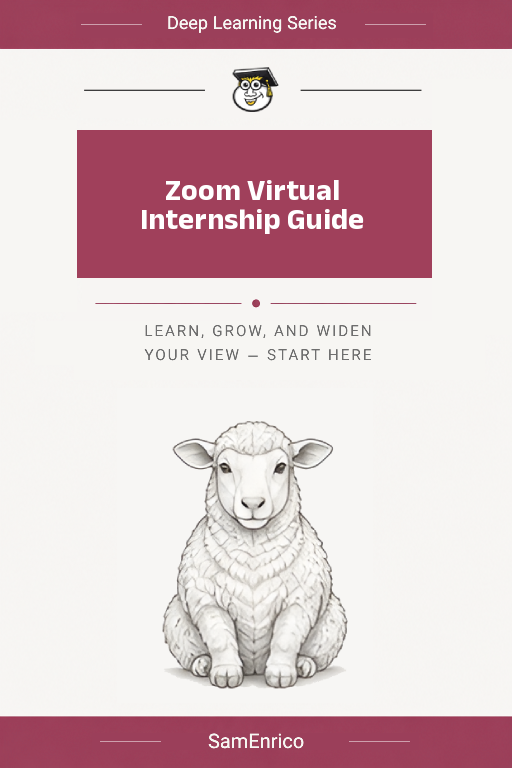
Zoom Virtual Internship Guide eBook
Apply for remote internships at Zoom in video conf
by Dill Simonne
Apply for remote internships at Zoom in video conferencing, engineering, or customer success.
Formats
Free sample
Chapter 1: The Grid, Not the Grind...–- Every summer, thousands of ambitious students pack their bags for New York, San Francisco, or Seattle. They rent overpriced sublets, buy business casual blazers that will hang unworn in their closets, and prepare for the sacred rituals of the traditional internship: fetching coffee for senior managers, lingering near the ping-pong table hoping to be noticed, and mastering the art of the awkward hallway conversation with a vice president who is already late to their next meeting. They believe that proximity to power is the path to a full-time offer. They believe that being seen is the same as being valued. They believe that the old rules still apply.That world is dead.
And Zoom—the company, not just the software—buried it.Not because Zoom is cruel or heartless. Quite the opposite. Zoom has perfected a way of working that is more humane, more flexible, and more productive than the office-centric model of the twentieth century. But in doing so, they have rendered the old internship playbook not just obsolete, but actively harmful. The student who shows up to a remote internship at Zoom expecting to "network" their way to success will fail spectacularly.
The student who waits passively to be assigned tasks will be forgotten before the second week begins. The student who treats their webcam as an afterthought—a grainy window into a messy bedroom—will be passed over for the candidate who understands that in the remote economy, your camera is your desk, your status indicator is your body language, and your async update is your handshake.This chapter dismantles the traditional internship fantasy piece by piece. You will learn why Zoom specifically looks for candidates who thrive in what I call "digital asynchronous environments." You will understand what "Delivering Happiness" means in a screen-only world—and why it is not a fluffy HR slogan but a ruthless business strategy. And most importantly, you will discover how to pass the test that most applicants do not even know exists: the No-Ping-Pong-Table Test, which separates the interns who fade into digital oblivion from those who receive return offers before their final presentation even ends.Welcome to the grid. The grind is over.
Let us begin.The Three Funerals of the Traditional Internship Before we can build the new model for success at Zoom, we must first bury the old one. The traditional in-person internship relied on three sacred rituals that simply do not exist in Zoom's remote-first culture. Understanding why these rituals died is not an academic exercise. It is the first step toward reprogramming your instincts for the digital workplace.Funeral #1: The Coffee Run In the legacy internship playbook—the one still being taught in university career centers that have not updated their curricula since 2019—fetching coffee was a metaphor for "paying your dues." The intern who volunteered to run to Starbucks for the team was seen as eager, helpful, humble, and coachable. More importantly, the coffee run created a low-stakes social interaction.
The intern walked with a senior colleague to the café, exchanged small talk about the weather or the weekend, and became a human being rather than a resume. By the time they returned with the oat milk latte and the double espresso, they had established rapport that no email could replicate.In Zoom's remote environment, there is no coffee to fetch. There is no break room. There is no shared kitchen where you might "accidentally" run into the head of product while filling your water bottle. There is no café around the corner where you can offer to buy someone a pastry in exchange for fifteen minutes of their attention.
The absence of these physical spaces means that old-school "face time" is impossible. You cannot be seen if there is nowhere to be seen.But here is what most applicants get wrong: Zoom does not mourn the loss of the coffee run. They have actively designed it out of their culture because they believe that proximity to caffeine should not determine proximity to opportunity. In fact, they see the coffee run as a form of inefficiency—a tax on productivity that rewards extroversion and physical presence rather than skill and output.What replaces it at Zoom: The async check-in. Instead of hoping to bump into someone in a shared physical space, you must deliberately engineer digital contact.
This means sending a well-timed Zoom Chat message that adds value rather than asking for it. It means recording a two-minute video update that your manager can watch while walking their dog or waiting for their own child's soccer practice to end. It means booking a fifteen-minute "virtual coffee" with a teammate you admire—but only after you have identified a specific question that demonstrates you have done your homework. The key difference between the old model and the new one is this: the old model was passive and opportunistic ("I hope I run into you"). The new model is active and intentional ("I am creating a reason to connect with you").Funeral #2: Hallway Mingling The hallway conversation was the secret weapon of the ambitious intern at every traditional company.
The mechanics were simple. You would linger near the kitchen or the elevator bank, pretend to read a poster or check your phone, and wait for someone important to walk by. Then came the casual, almost accidental question: "Hey, quick question about that project you mentioned in the all-hands..." Thirty seconds later, you had established rapport, demonstrated curiosity about their work, and planted a memory in a decision-maker's mind. The hallway conversation was deniable. It was not scheduled.
It could not be refused without appearing rude. It was the perfect low-risk, high-reward social engineering move.Zoom has no hallways. They have chat threads, channels, recorded meetings, and asynchronous documents. You cannot linger. You cannot appear "accidentally." You cannot pretend to be reading something while waiting for a specific person to emerge from a specific door.
Every interaction requires a deliberate digital footprint—and that footprint is permanent, searchable, and shareable. This changes the calculus entirely. In the old world, a bad hallway impression faded from memory by lunchtime. In the new world, a poorly worded chat message can be screenshotted and circulated. But conversely, a brilliant async insight lives forever in the searchable archive.
It can be discovered by a manager six months later who is searching for a solution to a problem you already solved.What replaces it at Zoom: The visible contribution. Instead of hallway mingling, you must make your thinking visible in shared, persistent spaces. This means posting thoughtful, well-researched questions in team channels—questions that show you have already tried to find the answer yourself. It means sharing relevant articles or industry news with a short paragraph of analysis attached, explaining why this matters to your team's specific work. It means responding to others' questions with detailed, helpful answers that include links to documentation or examples.
Your "hallway" is now the public thread where everyone—managers, skip-level leaders, even the CTO—can see who is adding value and who is just taking up space. The intern who understands this becomes visible not through proximity but through contribution.Funeral #3…
This is the end of the free sample. Get the eBook to keep going. Buy now
About this book
Details
- Author
- Dill Simonne
- Publisher
- SamEnrico
- Language
- English
- Genre
- Non-Fiction, Student's Shortcut, Video
- Released
- 2026-06-01
- Pages (approx.)
- 154
- Available as
- eBook, Audiobook

Read better in the ZLOADR app
Your eBooks on your phone or tablet. Sign in with your SamEnrico account and start reading.
More by Dill Simonne
 Ayurvedic Ear HealthDill Simonne$11.99
 Sugar Cravings and Thyroid DisordersDill Simonne$11.99Sugar Cravings and Thyroid DisordersDill Simonne$11.99
 Alcoholism Stages RecognitionDill Simonne$11.99
 Fintech Transaction Multiples GuideDill Simonne$11.99
 Music Tempo InfluenceDill Simonne$11.99
 The Refugee Camp VictimDill Simonne$11.99
 Cross Racial Identification FailuresDill Simonne$11.99
 Vitamin D For SADDill Simonne$11.99
 The Magnificent Obsession: How Henrietta Tower-Richards Built a Museum from RuinDill Simonne$11.99
 The Golden Age of Supermodels: How Europe Redefined Beauty and PowerDill Simonne$11.99
 How to Produce Textile and Fabric CraftsDill Simonne$11.99
You may also like
 Hong Kong Handover 1997Dunn Johnnie$11.99
 Zumba For Postnatal Recovery CourseNeal Christian$11.99
 Zumba for BeginnersLadner Nikia$11.99
 YouTube Comment Mining GuideHumes Pandora$12.99
 Worry Box MeditationCarlin Rudy$11.99
 Workplace Stress MeditationNguyen Lynn$11.99
 Workplace Stress and Sleep RepairHawley Ivory$11.99
 Workplace Perfectionism CureDelaney Jeffry$11.99
 Workplace Injustice Anger GuideWallen Isabelle$11.99
 Work Addiction and Burnout LinkGreenwood Ester$11.99
 Women in Yoga and WellnessBeattie Galina$11.99
 Women in Stand Up ComedyChun Evangeline$11.99