
Non-FictionInformativeEducational
Understanding Trichothiodystrophy eBook
This disease publication, published by SamEnrico,
This disease publication, published by SamEnrico, covers Understanding Trichothiodystrophy
Formats
Free sample
Chapter 1: The Starvation Within...--The first time a parent notices something is wrong with their child’s hair, they rarely rush to a geneticist. They try a new shampoo. They switch to a soft-bristle brush. They ask Grandma if the baby’s fine, wispy strands look anything like Dad’s baby photos. For most families affected by Trichothiodystrophy (TTD), the hair is merely the first clue in a much larger mystery—a visible whisper of a cellular catastrophe unfolding silently inside every cell of the body.
The hair does not simply look different; it is different, fundamentally and structurally starved of the sulfur-rich proteins that give healthy hair its strength and elasticity. This "starvation" is not a dietary problem. It is a genetic problem, baked into the very blueprint of life. And once you understand why the hair breaks, you begin to understand why the skin scales, why the sun burns, why the brain develops differently, and why the body struggles to fight infections. The hair, it turns out, is not the disease.
The hair is the clue.This book is called Understanding Trichothiodystrophy because that is exactly what families, clinicians, and caregivers need to do: understand. Not merely recognize. Not merely manage. Understand. Trichothiodystrophy (pronounced TRICK-oh-THIGH-oh-dye-STRO-fee) is a rare, multisystem genetic disorder that affects approximately one in one to two million live births worldwide.
To put that number in perspective, your child is more likely to be struck by lightning twice than to be born with TTD. But rarity does not equal insignificance. For the families who live with this condition, the statistics are meaningless. The only number that matters is one: their one child, their one journey, their one daily reality of brittle hair, fragile skin, developmental delays, and endless medical appointments.The name itself comes from three Greek words: thrix (hair), thio (sulfur), and dystrophy (abnormal nutrition or starvation). Dr.
Vera Price, a dermatologist at the University of California, San Francisco, coined the term in 1980 when she recognized a pattern in patients whose hair showed a unique banding pattern under polarized light microscopy. That pattern—alternating light and dark bands resembling tiger stripes—became the diagnostic hallmark of the condition. But what Dr. Price and the researchers who followed her discovered was that the hair abnormality was merely the surface manifestation of a much deeper problem: a failure in the cellular machinery that reads genes and produces proteins.For decades, TTD was described using a confusing collection of acronyms that frustrated families and confusing clinicians. You may encounter these in old medical records or outdated online resources: PIBIDS (Photosensitivity, Ichthyosis, Brittle hair, Intellectual impairment, Decreased fertility, Short stature) and IBIDS (the same without the photosensitivity).
These acronyms were well-intentioned attempts to capture the most common features of the condition, but they suffered from a fatal flaw: they made TTD sound like a checklist of unrelated problems rather than a single unified disorder. A child with PIBIDS did not have six separate diseases. They had one disease with six manifestations. The modern classification has wisely abandoned these acronyms in favor of a simpler, more biologically meaningful two-part system: photosensitive TTD (PS-TTD) and non-photosensitive TTD (NPS-TTD).This classification is not merely a semantic preference. It carries profound implications for diagnosis, management, and prognosis.
In PS-TTD, the patient’s cells cannot repair damage caused by ultraviolet (UV) light from the sun. These patients burn severely with minimal exposure and require rigorous sun protection. In NPS-TTD, the DNA repair machinery functions normally, but other cellular processes—particularly protein synthesis—are disrupted. The distinction matters because a patient diagnosed with PS-TTD will need very different daily protections than a patient with NPS-TTD. And yet, both forms share the same hallmark of sulfur-deficient, brittle hair because both forms disrupt the production of sulfur-rich proteins in the hair shaft.The Great Paradigm Shift: From DNA Repair to Gene Expression If you take away only one concept from this entire book, let it be this: Trichothiodystrophy is not primarily a DNA repair disorder.
It is a gene expression disorder.For nearly two decades after its discovery, TTD was grouped with other rare genetic conditions that impair the body’s ability to fix damaged DNA. The most famous of these is Xeroderma Pigmentosum (XP), a devastating condition in which patients develop hundreds of skin cancers beginning in early childhood. Because TTD and XP share mutations in some of the same genes—particularly *ERCC2/XPD* and *ERCC3/XPB*—researchers initially assumed TTD was simply a milder variant of XP. This assumption was wrong, and it led to years of confusion for families who were told their孩子 would develop skin cancer (they generally do not) or that their child had a progressive neurodegenerative disease (they generally do not).The truth, which emerged from decades of careful molecular biology, is far more interesting and far more useful for families to understand. The mutated genes in TTD do not merely break the DNA repair machinery.
They break the transcription machinery. Transcription is the process by which a cell reads the instructions encoded in DNA and produces messenger RNA (m RNA), which then guides the production of proteins. Think of DNA as a master library containing all the blueprints for every protein the body could ever need. Transcription is the process of checking out a specific blueprint and making a photocopy (the m RNA) that can be taken to the construction site (the ribosome). If the transcription machinery is broken, the cell cannot access its own blueprints.
Even if the blueprints are perfect, they are useless if they cannot be read.TTD, therefore, is fundamentally a failure of gene expression—the process by which genetic information is converted into functional products. This explains why TTD affects so many seemingly unrelated body systems. Hair requires sulfur-rich proteins to be strong. Skin requires proteins to form the barrier that keeps moisture in and bacteria out. The brain requires proteins to form myelin sheaths around nerves.
Bones require proteins to maintain density. The immune system requires proteins to fight infections. When the transcription machinery is impaired, every system that depends on rapid protein production suffers. The hair is merely the most visible and most easily tested manifestation.To understand why this distinction matters for your daily life, consider the difference between a broken library and a librarian who has lost their glasses. In XP, the library (the DNA) is intact, but the repair crew that fixes damaged books is missing.
Over time, damaged books accumulate, and the damaged instructions lead to cancer. In TTD, the library is also intact, but the librarian (the transcription machinery) has poor eyesight. They can still check out books, but slowly and with frequent errors. The books themselves are not damaged; the problem is in the reading process. This is why TTD patients do not develop the skin cancers seen in XP.
Their DNA is not accumulating unrepaired damage in the same way. Their problem is not damaged instructions; it is slow reading of otherwise perfect instructions.The Global Burden of TTD: More Than a Medical Diagnosis Before we dive deeper into the science, let us pause to acknowledge what TTD means for the humans who live with it. This…
This is the end of the free sample. Get the eBook to keep going. Buy now
About this book
Details
- Author
- Bratcher Shantay
- Publisher
- SamEnrico
- Language
- English
- Genre
- Non-Fiction, Informative, Educational
- Released
- 2026-05-06
- Pages (approx.)
- 153
- Available as
- eBook, Audiobook

Read better in the ZLOADR app
Your eBooks on your phone or tablet. Sign in with your SamEnrico account and start reading.
More by Bratcher Shantay
 Metaphor Influence TechniqueBratcher Shantay$11.99
 Values And Mission Alignment Value Audit And Refresh WorkbookBratcher Shantay$11.99
 The Merger and Acquisition StressBratcher Shantay$11.99
 Mediterranean for FamiliesBratcher Shantay$11.99
 The Distraction Creative BlockBratcher Shantay$11.99
 The Last Guardian of the Dead LettersBratcher Shantay$11.99
 Translating Franchise DocumentsBratcher Shantay$12.99
 Asana Business Plan GuideBratcher Shantay$12.99
 How to Start a Camshaft for Motor Vehicle Engine Business (Beginners Guide)Bratcher Shantay$11.99
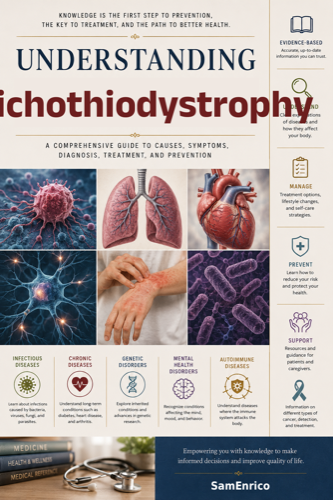 Understanding TrichothiodystrophyBratcher Shantay$17.99
 Behavior SpecialistBratcher Shantay$11.99
You may also like
 Hong Kong Handover 1997Dunn Johnnie$11.99
 Zumba For Postnatal Recovery CourseNeal Christian$11.99
 Zumba for BeginnersLadner Nikia$11.99
 YouTube Comment Mining GuideHumes Pandora$12.99
 Worry Box MeditationCarlin Rudy$11.99
 Workplace Stress MeditationNguyen Lynn$11.99
 Workplace Stress and Sleep RepairHawley Ivory$11.99
 Workplace Perfectionism CureDelaney Jeffry$11.99
 Workplace Injustice Anger GuideWallen Isabelle$11.99
 Work Addiction and Burnout LinkGreenwood Ester$11.99
 Women in Yoga and WellnessBeattie Galina$11.99
 Women in Stand Up ComedyChun Evangeline$11.99