
TM Checking Sessions eBook
Attend regular check-ins to correct practice and d
Attend regular check-ins to correct practice and deepen.
Formats
Free sample
Chapter 1: The Whisper You Ignore--–- You are sitting on a cushion. Or a chair. Maybe the edge of your bed. Your eyes are closed. Your phone is on silent, facedown, three feet away—because you read somewhere that distance matters.
You take a breath. Then another. And then it happens.The whisper.“Am I even doing this right?”It arrives softly, almost politely. It does not shout. It does not accuse.
It simply asks. And because you are an honest person—because you have tried, because you care, because you showed up—you hear the question and have no good answer.So you try harder. You focus more. You clamp down on your thoughts like a child grabbing at soap bubbles, only to watch them burst and scatter. Your jaw tightens.
Your shoulders inch toward your ears. The whisper grows louder: “See? You’re forcing it. You’re bad at this. Maybe meditation isn’t for you.”You open your eyes.
You check your phone. Eight minutes have passed. You tell yourself you will do better tomorrow.This is not your failure. This is a design flaw in how meditation is taught.Every year, millions of people learn to meditate. They attend courses, download apps, read books, and sit on cushions in living rooms across the world.
And within six months, the vast majority have stopped. Not because they are lazy. Not because meditation does not work. But because they heard the whisper, had no one to ask, and assumed the whisper meant they were broken.This book exists because that whisper is not a failure. It is an invitation.
And the answer is not another app, another technique, or another twenty minutes of trying harder. The answer is a twenty-minute conversation with someone who knows the map.That conversation is called a Checking session.If you have never heard of a Checking session, you are not alone. Among the millions who have learned the Transcendental Meditation technique—the specific practice this book centers on—most never attend a single Checking session after their initial instruction. They meditate alone, in silence, accumulating doubts like dust on a shelf. They assume that Checking is for people who are “doing it wrong.” They assume that asking for help would be admitting defeat.Those assumptions are wrong.
And they cost you everything.The Most Expensive Mistake Meditators Make Let us name the mistake plainly: Meditating alone, forever, without feedback.It sounds innocent. It sounds private. It sounds like the whole point—after all, meditation is an internal practice, is it not? Why would you need another person in the room?Here is why. Every skill worth acquiring requires a coach.
Michael Jordan had a coach. Yo-Yo Ma had a teacher. Your first-grade teacher did not hand you a box of letters and say, “Go figure out reading on your own.” You were guided. Corrected. Checked.
And only after hundreds of hours of feedback did you become literate.Meditation is no different. Yet most people learn it as if it were—a one-time instruction followed by a lifetime of solitary practice. They forget that the instruction itself included a promise: unlimited follow-up sessions, free for life, with a certified teacher. They just never use them.Why? Three reasons.Reason one: Pride.
You do not want to admit you are struggling. You learned the technique. You paid for the course. You told your friends you meditate now. To go back and say, “I think I forgot something” feels like a step backward.Reason two: Fear.
You are afraid of what the teacher might say. Will they judge you? Will they tell you that you have been doing it wrong for six months? Will they make you start over?Reason three: Misunderstanding. You simply do not know what a Checking session is.
You imagine a test. An interrogation. A spiritual performance review where you must prove your enlightenment. So you stay home.All three reasons are built on illusions. And this chapter will dismantle every one of them.What Checking Is (And Has Always Been)The word “Checking” sounds clinical.
It sounds like something you do to a smoke alarm or a bank balance. But in the context of the Transcendental Meditation technique, Checking has a specific, time-honored meaning.A Checking session is a brief, personalized conversation with a certified TM teacher designed to verify the correctness of your practice and refresh your understanding of the mechanics.That is the official definition. Let us unpack it.Brief: Usually fifteen to twenty minutes. Sometimes less. Never more than thirty.Personalized: The teacher does not follow a script.
They ask about your experience—not an ideal, not a textbook, not someone else’s breakthrough.Verify correctness: This is not about judgment. It is about alignment. You may be practicing perfectly. You may have drifted slightly. Either way, the teacher helps you see which.Refresh your understanding: Even perfect practice can become stale.
The Checking session reconnects you with the felt sense of the technique—the living experience beneath the habit.Here is what you need to understand most urgently: Checking is the fourth step of every TM course.Not an add-on. Not an emergency repair. Not a remedial class for struggling students. Step four. As fundamental as learning the mantra itself.When you learn TM, the instruction unfolds in four steps.
First, an introductory lecture. Second, a personal interview. Third, one-on-one instruction with the mantra. Fourth—Checking. It is built into the architecture of the teaching from the very beginning.This means that every person who has ever learned TM has been told, explicitly, that Checking is part of the deal.
Most simply forget. Or they remember but tell themselves, “I don’t need it yet.” Or they need it desperately but cannot bring themselves to ask.The Coach, Not the Mechanic The single most useful analogy in this entire book is also the simplest. Ready?Your TM teacher is a coach, not a mechanic.A mechanic fixes things that are broken. You bring your car to a mechanic when the engine makes a noise, the brakes fail, or the check-engine light comes on. The mechanic’s job is to identify the problem and repair it.
The relationship is reactive, corrective, and (let us be honest) slightly adversarial—you only go when something is wrong.A coach is different. A coach works with athletes who are already functional, already skilled, already capable. Michael Jordan did not go to his coach because his jump shot was broken. He went because his coach could see things Jordan could not see from inside his own body. A slight hitch in the release.
A fraction of a second of hesitation. A pattern of fatigue in the fourth quarter.The coach’s job is not to fix what is broken. The coach’s job is to refine what is already working—to make the good even better, the easy even easier, the unconscious even more effortless.Your TM teacher is a coach. They are not waiting for you to fail. They are waiting to help you see what you cannot see from inside your own head.And what you cannot see is almost everything.What You Miss When You…
This is the end of the free sample. Get the eBook to keep going. Buy now
About this book
Details
- Author
- Barnette Crysta
- Publisher
- SamEnrico
- Language
- English
- Genre
- Non-Fiction, Self-Help, Maintenance
- Released
- 2026-06-06
- Pages (approx.)
- 140
- Available as
- eBook, Audiobook

Read better in the ZLOADR app
Your eBooks on your phone or tablet. Sign in with your SamEnrico account and start reading.
More by Barnette Crysta
 Overcoming ExhibitionismBarnette Crysta$11.99
 LTC Insurance For Teachers GuideBarnette Crysta$11.99
 Alcohol Before Bed MemoryBarnette Crysta$11.99
 The Gacy Evidence RoomBarnette Crysta$11.99
 Cocaine Sobriety Nutrition PlanBarnette Crysta$11.99
 The Calvinist Consistory CourtsBarnette Crysta$11.99
 Pattern Recognition in ChessBarnette Crysta$11.99
 Parental Leave Return StressBarnette Crysta$11.99
 The Last Queen of Sheba: A Regency of ShadowsBarnette Crysta$11.99
 Trollheim’s Last Pillar: The Engineer of the Frost GiantsBarnette Crysta$11.99
 The Last Waltz: The Funeral of Emperor Franz Joseph IBarnette Crysta$11.99
 The Dancer's Guide to GigueBarnette Crysta$11.99
You may also like
 Recovery Maintenance ManualMunn Edelmira$11.99
 Recovery Maintenance for Long-Term SobrietyBruns Kelle$11.99
 Pattern Recognition in MaintenanceHerring Eleonor$11.99
 Long Term Tobacco Maintenance PlanAllred Katrice$11.99
 Step Ten Continuous InventoryStack Kasi$11.99
 Maintenance Innovation GuideGarland Marilu$11.99
 Emotional Regulation MaintenanceSerrano Luna$11.99
 Shopping Sobriety Second MonthTRUE Aiko$11.99
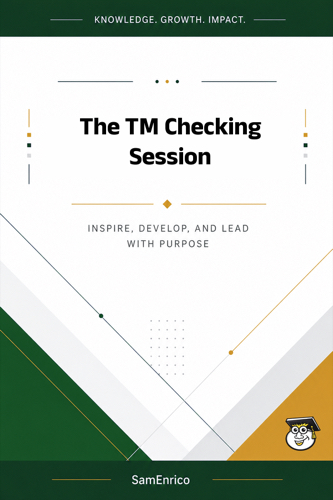 The TM Checking SessionSauer Pa$11.99
 Self Worth Maintenance GuideWinfield Kiera$11.99
 Food Freedom ForeverElliot Danica$11.99
 Resentment Recovery Daily GuidePina Keven$11.99