
Non-FictionBiographyLabor Relations
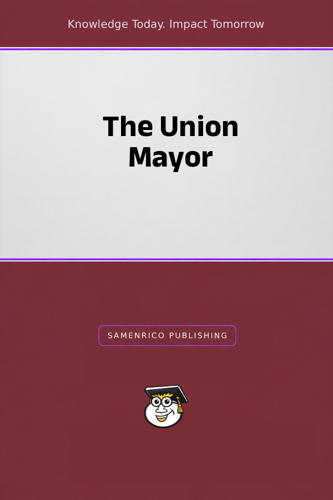
The Union Mayor
Labor strikes, police unions, and the delicate dan
Labor strikes, police unions, and the delicate dance of municipal workforces.
Formats
About this book
Free sample
Chapter 1: The Spoils of Disorder--–- On a humid September morning in 1919, Boston Police Commissioner Edwin U. Curtis made a decision that would echo through city halls for a century. He suspended nineteen police officers for attending union meetings. Within days, over 1,100 of the city’s 1,500 officers walked off the job. The resulting chaos—looting, rioting, a near-total collapse of public safety—killed nine people and injured hundreds.
Governor Calvin Coolidge called out the state guard and famously declared, “There is no right to strike against the public safety.” The strikers were fired, replaced, and blacklisted. By every legal measure, the mayor and governor had won.Yet within a decade, every major American city had granted its police officers the right to organize. Within a generation, police unions were among the most powerful political forces in municipal government. The 1919 strike did not crush public sector unionism; it birthed the modern era of municipal labor relations by teaching unions what mayors did not want them to learn: that the ability to shut down a city is the ability to reshape it.This is the paradox at the heart of The Union Mayor. Every newly elected municipal executive walks into office believing they are the boss.
They have the charter, the budget authority, the bully pulpit. They soon discover that the real power in city hall is distributed across bargaining tables, arbitration decisions, and strike contingency plans that were written decades before they took the oath of office. The history of municipal labor relations is not a story of steady progress toward professional governance. It is a story of mayors who thought they had won, only to discover that their victories had planted the seeds of the next generation’s constraints.The Spoils System and the Birth of Patronage To understand why municipal unions became so powerful, one must first understand the chaos that preceded them. In the nineteenth century, most American cities operated under a spoils system so naked that modern readers might mistake it for corruption—though at the time, it was simply governance.
When a new mayor was elected, particularly in cities like New York, Chicago, and Philadelphia, he (and they were uniformly…
This is the end of the free sample. Get the eBook to keep going. Buy now
Contents
- Chapter 1
- Chapter 2
- Chapter 3
- Chapter 4
- Chapter 5
- Chapter 6
- Chapter 7
- Chapter 8
- Chapter 9
- Chapter 10
- Chapter 11
- Chapter 12
Details
- Author
- Newsome Nickolas
- Publisher
- SamEnrico
- Language
- English
- Genre
- Non-Fiction, Biography, Labor Relations
- Released
- 2026-06-11
- Pages (approx.)
- 130
- Available as
- eBook, Audiobook

Read better in the ZLOADR app
Your eBooks on your phone or tablet. Sign in with your SamEnrico account and start reading.
More by Newsome Nickolas
 Brand Momentum Scorecard WorkbookNewsome Nickolas$11.99
 Financial Stress and Marriage GuideNewsome Nickolas$11.99
 Fibromyalgia Brain EducationNewsome Nickolas$11.99
 The Last Verdict: The Untold Story of Justice Sandra Day O'Connor's RetirementNewsome Nickolas$11.99
 The Day the Beatles Never Broke Up: A Parallel Universe PodcastNewsome Nickolas$11.99
 Understanding Hydrops Fetalis Anemia Immune Disorder Absent ThumbNewsome Nickolas$17.99
 SPAC vs Direct Listing PrimerNewsome Nickolas$12.99
 Payment Settlement Outlook 2026Newsome Nickolas$12.99
 ThoracentesisNewsome Nickolas$11.99
 How to Start a Cash Dispenser Business (Beginners Guide)Newsome Nickolas$11.99
You may also like
 Hong Kong Handover 1997Dunn Johnnie$11.99
 Zumba For Postnatal Recovery CourseNeal Christian$11.99
 Zumba for BeginnersLadner Nikia$11.99
 YouTube Comment Mining GuideHumes Pandora$12.99
 Worry Box MeditationCarlin Rudy$11.99
 Workplace Stress MeditationNguyen Lynn$11.99
 Workplace Stress and Sleep RepairHawley Ivory$11.99
 Workplace Perfectionism CureDelaney Jeffry$11.99
 Workplace Injustice Anger GuideWallen Isabelle$11.99
 Work Addiction and Burnout LinkGreenwood Ester$11.99
 Women in Yoga and WellnessBeattie Galina$11.99
 Women in Stand Up ComedyChun Evangeline$11.99