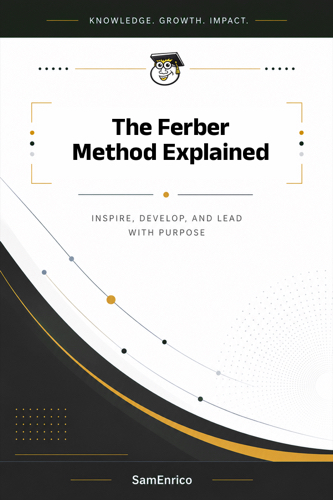
The Ferber Method Explained eBook
Implement graduated extinction with proper interva
by Snead Sondra
Implement graduated extinction with proper intervals and parent comfort checks.
Formats
Free sample
Chapter 1: The 2 AM Lie--You are reading this because something broke tonight. Maybe it was your spirit after the fourth wake-up in three hours. Maybe it was your marriage when you hissed at your partner for snoring through the crying. Maybe it was your sense of self when you realized you cannot remember the last time you felt like a human being instead of a milk-dispensing, sleep-deprived shell.Here is the first thing this book needs to tell you, before any science, before any interval charts, before any check-in scripts: The version of you reading this at 2 AM is not the real you. Sleep deprivation is a documented form of torture not because it causes physical pain but because it dismantles your ability to think clearly, regulate emotions, and remember why you wanted to be a parent in the first place.
The thoughts you are having right now — “I am failing,” “My baby hates me,” “Everyone else’s baby sleeps,” “I cannot do this for one more night” — are not objective truths. They are symptoms of a brain that has been starved of restorative sleep for weeks or months.This chapter will dismantle the single most damaging lie that keeps exhausted parents trapped in unsustainable sleep habits: the lie that “sleeping through the night” is a normal, expected milestone that all babies reach naturally by a certain age. The truth is more complicated, more liberating, and ultimately more actionable than any parenting forum or well-meaning grandparent has ever told you.The Lie That Keeps You Awake The cultural expectation that babies should sleep “like a log” from 7 PM to 7 AM is a relatively recent invention, historically speaking. For most of human history, and in most non-Western cultures today, infant sleep was understood to be fragmented, social, and responsive. Babies woke frequently to feed, to check that caregivers were nearby, and to regulate their immature nervous systems.
The idea that a baby should be placed in a separate room, alone, and expected to remain unconscious for eleven consecutive hours would have seemed bizarre to most of our ancestors.But somewhere between the rise of industrialization (which demanded productive, well-rested workers) and the explosion of parenting advice literature (which monetized parental anxiety), “sleeping through the night” became a benchmark of good parenting and normal development. The lie has three parts, and you have probably internalized all of them.The first part of the lie is that frequent night wakings mean something is wrong. When your baby wakes for the third time before midnight, your brain automatically searches for a cause: teething? hunger? a dirty diaper?
separation anxiety? a sleep regression? What if the cause is simply that babies wake frequently because that is what human infants do? Your baby is not broken. Your baby is not manipulating you.
Your baby is not “bad at sleeping.” Your baby is behaving exactly as evolution designed them to behave — and that design does not prioritize your need for eight uninterrupted hours.The second part of the lie is that other babies are sleeping through the night and yours is not. This comparison is toxic not only because it makes you feel inadequate but because it is statistically false. When researchers actually track infant sleep using objective measures (like ankle monitors or video recordings) rather than parent surveys, they find that “sleeping through the night” is far less common than parents believe. One large study found that at 6 months of age, only about 30 percent of babies regularly slept an eight-hour stretch. At 12 months, that number rises to only about 50 percent.
The parents who tell you their baby “has slept through since six weeks” are either lying, misremembering, or defining “through the night” as a four-hour stretch that happens to align with their own sleep schedule.The third part of the lie is that sleep training is optional — that “some babies just figure it out on their own” and that parents who intervene are impatient or cold. This is the most insidious part of the lie because it carries a moral judgment. It suggests that if you were a better, more attuned, more patient parent, your baby would naturally learn to sleep without any structured method. The evidence does not support this. While a small minority of babies do consolidate their sleep spontaneously by 6 to 8 months, the majority require some form of behavioral intervention to learn independent sleep initiation.
This is not because modern parents are worse than previous generations. It is because previous generations had lower expectations (they expected to be tired) and different living conditions (multigenerational households where caregiving was distributed). You are not failing because you need a method. You are a normal parent in an abnormal situation.What Is Actually Normal: The Biology of Infant Sleep To understand why your baby wakes so frequently, you need to understand how sleep works in the first year of life. This section provides the foundation that every subsequent chapter will build upon, so read it carefully even if you are exhausted.The first thing to know is that sleep is not a single state but a cycling pattern between different stages.
Adults cycle through these stages every 90 to 110 minutes, spending most of the night in deep, restorative sleep and only brief periods in lighter sleep. Babies, by contrast, cycle every 45 to 60 minutes. This means that babies transition between sleep stages roughly twice as often as adults do. Every 45 to 60 minutes, your baby enters a brief period of lighter sleep or partial wakefulness. For a baby who knows how to self-soothe, this period passes without incident — they shift positions, resettle, and continue sleeping.
For a baby who has learned that crying brings a parent, that brief light-sleep period becomes a full wake-up.The second thing to know is that newborn sleep is fundamentally different from older infant sleep, which is why sleep training is not appropriate before 4 months. Newborns spend most of their sleep time in active REM sleep, which is why they twitch, grunt, smile, and even open their eyes without actually waking up. This active sleep is crucial for brain development, and newborns genuinely need to wake every 2 to 3 hours to feed because their stomachs are tiny. Around 4 months of age, a permanent neurological shift occurs: the baby’s sleep architecture begins to resemble an adult’s, with longer periods of deep quiet sleep and more distinct cycling between stages. This is often called the “4-month sleep regression,” but that name is misleading because it implies a temporary setback.
In reality, it is a permanent advancement. Your baby’s brain is maturing exactly as it should. The “problem” is that this new, adult-like sleep architecture comes with more frequent opportunities to wake up.The third thing to know is that all sleep training methods, including the Ferber method described in this book, are built on a single biological fact: sleep is a learned behavior, not a reflex. Breathing is a reflex. Sucking is a reflex.
Sleeping through the night is not. Babies learn when, where, and how to sleep based on the associations they form. If every time your baby falls asleep they are in your arms, nursing or taking a bottle, they learn that sleep…
This is the end of the free sample. Get the eBook to keep going. Buy now
About this book
Details
- Author
- Snead Sondra
- Publisher
- SamEnrico
- Language
- English
- Genre
- Non-Fiction, Health & Wellness, Sleep Training
- Released
- 2026-06-08
- Pages (approx.)
- 143
- Available as
- eBook, Audiobook

Read better in the ZLOADR app
Your eBooks on your phone or tablet. Sign in with your SamEnrico account and start reading.
More by Snead Sondra
 South Korean Green Tax Credits GuideSnead Sondra$11.99
 Men's Cardiac MRI InterpretationSnead Sondra$11.99
 TM Health Insurance CoverageSnead Sondra$11.99
 Innocence Project Oklahoma CasesSnead Sondra$11.99
 The Vanishing of the D.B. Cooper Heist: A Cold Case UnlockedSnead Sondra$11.99
 Nefertiti's Urban Revolution: The Lost Blueprint of AmarnaSnead Sondra$11.99
 YoyoSnead Sondra$11.99
 Understanding Chromosome 17 TrisomySnead Sondra$17.99
 PDP For New ManagersSnead Sondra$12.99
 Federal Skilled Trades ProgramSnead Sondra$12.99
 How to Become a Camera RepairerSnead Sondra$11.99