
Non-FictionSelf-HelpMeasurement
The Anger Trigger Scale eBook
Quantifies trigger intensity from 1 to 10 for prio
Quantifies trigger intensity from 1 to 10 for priority treatment.
Formats
Free sample
Chapter 1: Beyond Mad or Not...–- The woman sitting across from me had destroyed three relationships in five years. She had been fired from two jobs. Her adult children had stopped returning her calls. Every anger management program she had tried—and she had tried four of them—had given her the same advice: count to ten, take a deep breath, think before you speak. She had done all of it.
None of it had worked.“I don't understand,” she said, her voice trembling with a mixture of frustration and genuine despair. “I follow the rules. I do the breathing. But when I get angry, it's like a switch flips. I'm fine one second and then I'm not.
And by the time I realize what's happening, I've already said something I can't take back.”Her name was Michelle, and she was forty-two years old. She was intelligent, articulate, and deeply motivated to change. She had read every bestselling anger management book on the market. She could recite the cognitive restructuring techniques from memory. And yet here she was, sitting in my office, tears streaming down her face, because the gap between knowing what to do and actually doing it in the moment had swallowed her whole.I asked her a question that no previous therapist or book had ever asked her.“Michelle, on a scale from one to ten, how angry were you when your daughter hung up on you last week?”She stared at me.
“What do you mean?”“I mean,” I said, “was it a two—mild annoyance that passed in a few minutes? Was it a five—strong frustration that lingered for an hour? Or was it a nine—overwhelming rage where you felt completely out of control?”Michelle was silent for a long moment. Then she said something that would become the thesis statement for this entire book: “I don't know. I just know I was angry.”That was the problem.
That had always been the problem. Michelle had spent twenty years trying to manage a feeling she could not measure. She had been given breathing techniques, counting techniques, visualization techniques, and communication scripts—all of which assumed she could distinguish between a manageable irritation and a catastrophic explosion. But she could not. Because no one had ever taught her how.The Great Measurement Failure of Anger Management Let me state this as clearly as I can: the entire field of anger management has been built on a foundation of measurement failure.Think about how we measure other health conditions.
When you go to a doctor with chest pain, they do not hand you a pamphlet that says “think positive thoughts and avoid stress.” They take your blood pressure. They run an EKG. They measure your cholesterol. They give you a number—120 over 80, 200 milligrams per deciliter—that tells them exactly how serious your condition is and exactly what treatment you need.When you go to a therapist with depression, they do not say “just try to be happier.” They administer the Beck Depression Inventory or the PHQ-9. They give you a score from zero to twenty-seven.
They track that score over time. They know that a score of five is mild, fifteen is moderate, and twenty-five is severe. They know that different scores require different interventions.But when you go to a therapist with anger? All too often, you get a binary assessment: are you angry or are you not angry? Maybe you fill out a checklist that asks how often you “feel angry” or “lose your temper.” But these checklists collapse all anger into a single category, ignoring the single most important variable: intensity.This is not a small oversight.
It is a catastrophic failure of clinical imagination.Consider two people. Person A experiences a two-out-of-ten irritation twenty times per day. Person B experiences a nine-out-of-ten rage once per month. By most binary measures, Person A appears to have a more severe anger problem—more frequent episodes, more daily disruption. But ask anyone who has lived with a person who has nine-out-of-ten rages which is worse.
Ask the spouse who has been screamed at, the child who has hidden in their room, the coworker who has called security. The nine is not twenty times worse than the two. It is a thousand times worse. It is categorically different.This is why the Anger Trigger Scale begins with a simple but revolutionary premise: you cannot manage what you cannot measure.The Danger of the Binary Brain Human beings are pattern-seeking animals. Our brains evolved to make rapid categorical judgments because those judgments kept us alive.
Is that rustling in the bushes a predator or the wind? Is that person a friend or an enemy? Should I fight or flee? These binary decisions happen in milliseconds, driven by our amygdala and other ancient brain structures that prioritize speed over accuracy.This binary bias serves us well in life-threatening situations. It serves us disastrously poorly when we try to understand complex emotional experiences like anger.When your brain categorizes every angry feeling as “ANGER” in all-caps, it treats a two-out-of-ten irritation the same way it treats a nine-out-of-ten rage.
The same neural circuits activate. The same stress hormones release. The same behavioral impulses arise. Your body does not know that the trigger is just a slow driver or a forgotten phone call. Your body knows only that the alarm bells are ringing.This is why Michelle felt like a switch was flipping.
Her brain had learned that “anger” means emergency. Every time she felt the slightest irritation, her amygdala interpreted it as a threat and launched a full-scale physiological response. She was not actually out of control most of the time—her actual intensity was usually a three or a four. But her brain was responding as if every three were a nine. By the time she consciously realized what was happening, her body was already flooded with adrenaline, her prefrontal cortex was already offline, and her impulse control was already gone.The binary brain is a liar.
It tells you that all anger is the same. It tells you that you are either calm or enraged, with nothing in between. It tells you that a three is a nine because your nervous system cannot tell the difference. But your nervous system can learn. And the first step in that learning is to give it a better map.The Anatomy of a Number: What One to Ten Really Means The Anger Trigger Scale is not arbitrary.
Each number corresponds to a distinct constellation of physiological, cognitive, and behavioral markers. Learning these markers is like learning to read a thermometer: once you know what the numbers mean, you can never go back to the vague language of “hot” or “cold.”Let me walk you through the scale from bottom to top. As you read, notice where you spend most of your time. Notice which numbers feel familiar. Notice which numbers you have never experienced or cannot imagine experiencing.Zero: Complete Calm.
This is the absence of anger. Your heart rate is at baseline—typically sixty to eighty beats per minute for most adults. Your breathing is regular and diaphragmatic. Your…
This is the end of the free sample. Get the eBook to keep going. Buy now
About this book
Details
- Author
- Halverson Fay
- Publisher
- SamEnrico
- Language
- English
- Genre
- Non-Fiction, Self-Help, Measurement
- Released
- 2026-06-11
- Pages (approx.)
- 144
- Available as
- eBook, Audiobook

Read better in the ZLOADR app
Your eBooks on your phone or tablet. Sign in with your SamEnrico account and start reading.
More by Halverson Fay
 World Cafe Conversation MethodHalverson Fay$11.99
 Dorm Study Environment GuideHalverson Fay$11.99
 The Workaholic's Art Therapy RecoveryHalverson Fay$11.99
 SAS Selection Test SecretsHalverson Fay$11.99
 The Golden Leviathan: How a Billionaire’s Yacht Became a Floating Art HeistHalverson Fay$11.99
 Iron and Independence: The Secret Mineral Wealth of the American RevolutionHalverson Fay$11.99
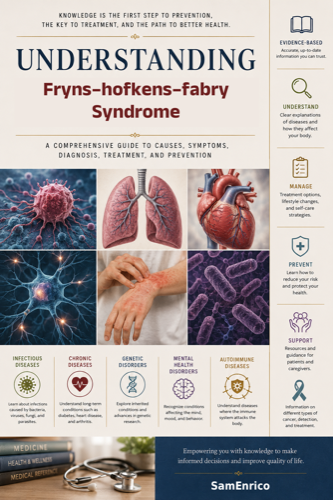 Understanding Fryns–hofkens–fabry SyndromeHalverson Fay$17.99
 Role Based Equity HandbookHalverson Fay$12.99
 Chinese English Learner GuideHalverson Fay$12.99
 Backpacking TravelHalverson Fay$11.99
 How to Become a Music LibrarianHalverson Fay$11.99
You may also like
 Hong Kong Handover 1997Dunn Johnnie$11.99
 Zumba For Postnatal Recovery CourseNeal Christian$11.99
 Zumba for BeginnersLadner Nikia$11.99
 YouTube Comment Mining GuideHumes Pandora$12.99
 Worry Box MeditationCarlin Rudy$11.99
 Workplace Stress MeditationNguyen Lynn$11.99
 Workplace Stress and Sleep RepairHawley Ivory$11.99
 Workplace Perfectionism CureDelaney Jeffry$11.99
 Workplace Injustice Anger GuideWallen Isabelle$11.99
 Work Addiction and Burnout LinkGreenwood Ester$11.99
 Women in Yoga and WellnessBeattie Galina$11.99
 Women in Stand Up ComedyChun Evangeline$11.99