
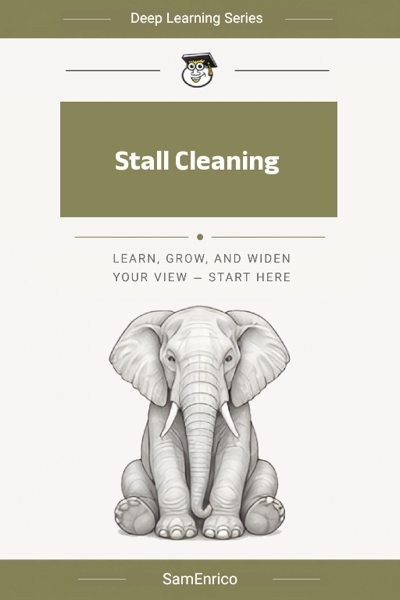
Non-FictionInformativeEducational
Stall Cleaning eBook
A Coursebook on Stall Cleaning
by Canada Elvia
A Coursebook on Stall Cleaning
Formats
Free sample
Chapter 1: Beyond the Pitchfork--The first time a horse dies from ammonia poisoning, the barn goes quiet. Not the peaceful quiet of a resting stable, but the hollow, accusatory silence of a preventable tragedy. The second time it happens, someone goes to jail. This is not hyperbole—it is the documented reality of modern equine care, buried in veterinary coroner reports and court transcripts that most barn owners never read. The typical stall cleaner, armed with a pitchfork and good intentions, believes they are removing manure.
They are not. They are performing a respiratory intervention, a behavioral modification therapy, and a financial hedging strategy all at once, whether they know it or not. The difference between a clean stall and a truly clean stall is measured not in visible manure—anyone can remove droppings—but in parts per million of ammonia, in hours of REM sleep achieved, in the absence of stereotypies that shave years off a horse's working life. This chapter dismantles the myth that stall cleaning is manual labor and rebuilds it as the single most influential variable in equine welfare after feed and water.The Philosophy of Clean: Cleaning as Preventative Medicine The horse industry suffers from a peculiar cognitive dissonance. Owners will spend thousands of dollars on veterinary ultrasounds, joint injections, and specialized farriery while tolerating stable conditions that slowly suffocate the very animals they aim to protect.
This is not malice; it is ignorance disguised as tradition. The top ten stable management books of the past forty years—from Cherry Hill's seminal Stablekeeping to the British Horse Society's Complete Manual of Stable Management—converge on one uncomfortable truth: the most cost-effective veterinary intervention is a clean stall. Not a tidy stall. Not a stall that smells acceptable. A scientifically clean stall.Consider the financial arithmetic.
A single course of antibiotics for recurrent airway obstruction (RAO)—commonly called heaves—runs between 300and300 and 300and800, not including the veterinary examination fee, the follow-up bronchoscopy, or the days of lost training. A bag of pelleted bedding costs 12.Adeepcleaningsessiontakestwentyminutesoflaborvaluedat12. A deep cleaning session takes twenty minutes of labor valued at 12.Adeepcleaningsessiontakestwentyminutesoflaborvaluedat8–15. For the price of one veterinary respiratory visit, a barn owner could purchase forty bags of premium bedding or fund sixty deep cleaning sessions. Which intervention prevents the disease, and which treats the symptom?
The answer reveals everything about priorities.The stall is not a holding pen. It is the horse's bedroom, dining room, and bathroom combined—a multi-functional space where the animal spends ten to sixteen hours daily in most boarding situations. If a human being were confined to a windowless room where they ate, slept, and relieved themselves, with no ability to open a window or leave, the cleanliness standards would be surgical. Horses deserve no less. The philosophy underpinning this book is deceptively simple: cleaning is medicine, hygiene is therapy, and the pitchfork is the most underutilized diagnostic tool in equine practice.The Ammonia Issue: The Invisible Killer Ammonia is not merely unpleasant.
It is a corrosive, volatile alkaline gas that attacks living tissue on contact. When a horse urinates, urea in the urine is broken down by bacterial enzymes called ureases into ammonia and carbon dioxide. This process begins within minutes of voiding and accelerates as temperature rises. At 70 degrees Fahrenheit, ammonia concentrations in a poorly ventilated stall can reach 50 parts per million within four hours—well above the 25 ppm threshold where equine respiratory damage begins.The pathology is straightforward. Ammonia dissolves in the moisture lining the horse's respiratory tract, forming ammonium hydroxide, a caustic alkali.
This burns the cilia—microscopic hair-like structures that sweep mucus, debris, and pathogens out of the lungs. Once cilia are paralyzed or destroyed, mucus accumulates, bacteria proliferate, and inflammation becomes chronic. The horse develops a cough that owners dismiss as "stable cough," a condition so normalized that many barns advertise "heaves-free" as a selling point, as though respiratory disease were an inevitable cost of boarding.But the damage extends beyond the lungs. Ammonia absorbed through the respiratory epithelium enters the bloodstream, where it must be converted to urea by the liver—placing a continuous metabolic burden on an organ already challenged by high-protein forage diets. In foals and geriatric horses with immature or declining hepatic function, chronic low-level ammonia exposure can contribute to hepatic encephalopathy, a neurological condition characterized by head-pressing, ataxia, and behavioral changes that mimic epilepsy.The research is unambiguous.
A 2018 study in the Journal of Equine Veterinary Science measured ammonia levels in 47 commercial boarding stables. Twenty-one percent exceeded 100 ppm during morning cleaning—four times the threshold for respiratory damage. Stalls cleaned twice daily had average ammonia concentrations of 12 ppm. Stalls cleaned once daily averaged 34 ppm. Stalls cleaned every other day—still common in budget facilities—averaged 78 ppm, with spikes exceeding 150 ppm immediately following mucking when trapped gases were released.
The difference between health and disease is not a new drug or a miracle supplement. It is the frequency of the cleaning schedule.Recognizing ammonia toxicity requires sense, not technology. The human nose detects ammonia at approximately 5 ppm—well below the danger threshold. If you smell ammonia when you enter the stable, the horse has been breathing damaging concentrations for hours. If you smell ammonia at the stall door, the horse is in acute respiratory distress.
If you smell ammonia from the aisle, you are running a chemical hazard facility, not a barn. The rule is brutal but true: when you smell it, the damage is already done.Equine Psychology: Cleanliness as Behavioral Medicine Horses are not messy by nature. They are messy by captivity. In free-range conditions, a horse will defecate far from its grazing area, typically in designated "latrine zones" that shift with the herd's movement. The equid digestive system produces approximately 35 to 50 pounds of manure daily—eight to twelve piles—spread across the animal's home range.
Urination is similarly dispersed, with stallions and geldings often targeting specific trees or rocks as marking sites. The horse in its natural state is a clean animal, not a filthy one.The stable environment disrupts every instinct. Confined to a 12x12 or 10x10 space, the horse cannot separate its living from its elimination areas. It must lie down in proximity to its own waste, eat hay that may fall onto soiled bedding, and breathe air tainted by its own urine. The psychological toll of this confinement is invisible but measurable.
Cortisol levels rise. Heart rate variability decreases. Stereotypies—repetitive, functionless behaviors—emerge as coping mechanisms.Stereotypies are not habits. They are neurological injuries. Cribbing, where the horse grasps a solid object with its incisors, arches its neck, and gulps air, releases endorphins that temporarily relieve stress.
Weaving, where the horse sways its head and neck rhythmically from side to side, provides vestibular stimulation that drowns out environmental stressors. Stall walking, pacing the same circular path for hours, burns calories the horse cannot afford and wears joints unevenly. Each of these behaviors is a symptom of an environment that fails to meet the horse's psychological needs—and the single greatest environmental variable is cleanliness.A clean stall reduces the stress of confinement in three ways. First, it removes the olfactory cues of urine and manure, which in the wild would signal…
This is the end of the free sample. Get the eBook to keep going. Buy now
About this book
Details
- Author
- Canada Elvia
- Publisher
- SamEnrico
- Language
- English
- Genre
- Non-Fiction, Informative, Educational
- Released
- 2026-05-11
- Pages (approx.)
- 132
- Available as
- eBook, Audiobook

Read better in the ZLOADR app
Your eBooks on your phone or tablet. Sign in with your SamEnrico account and start reading.
More by Canada Elvia
 Nonprofit Burnout Survival GuideCanada Elvia$11.99
 Mediterranean Low Carb GuideCanada Elvia$11.99
 Validation for InfertilityCanada Elvia$11.99
 Nightmare Prevention MeditationCanada Elvia$11.99
 The Website Citation GuideCanada Elvia$11.99
 The Siege of the American Legation: Beijing's Forgotten Crisis (1900)Canada Elvia$11.99
 Learn to Play the Veekku ChendaCanada Elvia$11.99
 Climate Insurance for EventsCanada Elvia$12.99
 Backlog Grooming GuideCanada Elvia$12.99
 How to Become a Stemhole BorerCanada Elvia$11.99
You may also like
 Hong Kong Handover 1997Dunn Johnnie$11.99
 Zumba For Postnatal Recovery CourseNeal Christian$11.99
 Zumba for BeginnersLadner Nikia$11.99
 YouTube Comment Mining GuideHumes Pandora$12.99
 Worry Box MeditationCarlin Rudy$11.99
 Workplace Stress MeditationNguyen Lynn$11.99
 Workplace Stress and Sleep RepairHawley Ivory$11.99
 Workplace Perfectionism CureDelaney Jeffry$11.99
 Workplace Injustice Anger GuideWallen Isabelle$11.99
 Work Addiction and Burnout LinkGreenwood Ester$11.99
 Women in Yoga and WellnessBeattie Galina$11.99
 Women in Stand Up ComedyChun Evangeline$11.99