
researchStudent's ShortcutHumanities Writing
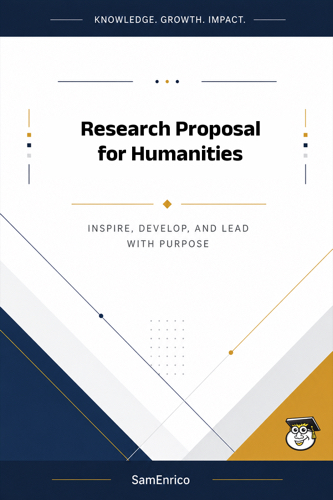
Research Proposal for Humanities
Craft proposals for history, literature, philosoph
Craft proposals for history, literature, philosophy, or art history.
Formats
About this book
Free sample
Chapter 1: The Archive of Anxiety...--–- The first thing you should know about writing a humanities research proposal is that the fear you are feeling right now is not a sign of inadequacy. It is a sign that you understand the stakes. You have read the books. You have wandered the stacks. You have a topic—something about Victorian mourning practices, perhaps, or Hegel’s theory of recognition, or the iconography of medieval reliquaries—but when you sit down to write the proposal, the words turn to cotton.
The committee wants to know your “research question,” but your question keeps changing. The form asks for a “methodology,” but you were trained in close reading, not laboratory protocols. And somewhere in the back of your mind, a small, cruel voice whispers: Maybe the humanities aren’t real research after all.That voice is wrong. But it is also useful. This chapter exists to dismantle it—not by pretending that humanities research looks like chemistry, but by showing you exactly why it doesn’t have to.
The humanities proposal is not a failed scientific document. It is a different genre altogether, with its own logic, its own standards of evidence, and its own unique power to change how we understand the world. By the end of this chapter, you will understand why your anxiety is actually an accurate reading of the genre’s demands, and you will have the conceptual tools to transform that anxiety into a compelling, fundable proposal.The Misrecognition Problem: Why Humanities Research Looks Like Opinion (But Isn’t)The most destructive myth about the humanities is also the most common: that humanistic inquiry is merely “subjective,” a matter of personal taste dressed up in academic language. A chemist runs an experiment. A historian reads a book.
One produces data; the other produces an interpretation. And interpretations, the argument goes, can’t be wrong—just more or less interesting.This myth persists because it contains a grain of truth. Unlike a chemical reaction, a Jane Austen novel does not yield a single correct reading. Reasonable scholars can disagree about whether Emma…
This is the end of the free sample. Get the eBook to keep going. Buy now
Contents
- Chapter 1
- Chapter 2
- Chapter 3
- Chapter 4
- Chapter 5
- Chapter 6
- Chapter 7
- Chapter 8
- Chapter 9
- Chapter 10
- Chapter 11
- Chapter 12
Details
- Author
- Darnell Raven
- Publisher
- SamEnrico
- Language
- English
- Genre
- research, Student's Shortcut, Humanities Writing
- Released
- 2026-06-10
- Pages (approx.)
- 138
- Available as
- eBook, Audiobook

Read better in the ZLOADR app
Your eBooks on your phone or tablet. Sign in with your SamEnrico account and start reading.
More by Darnell Raven
 Italian American Roots ReunitedDarnell Raven$11.99
 Sector HandbookDarnell Raven$11.99
 Seated Body Scan Meditation GuideDarnell Raven$11.99
 Self Esteem for Retired ProfessionalsDarnell Raven$11.99
 Routine Lock In HypnosisDarnell Raven$11.99
 People Pleasing Childhood RootsDarnell Raven$11.99
 Cannabis Tapering GuideDarnell Raven$11.99
 The Visionary Grid: L'Enfant and the Birth of Washington, D.C.Darnell Raven$11.99
 The Silk and Gold Empire: The Visionary Entrepreneurs of the Swahili CoastDarnell Raven$11.99
 Crypto Wallet SecurityDarnell Raven$11.99
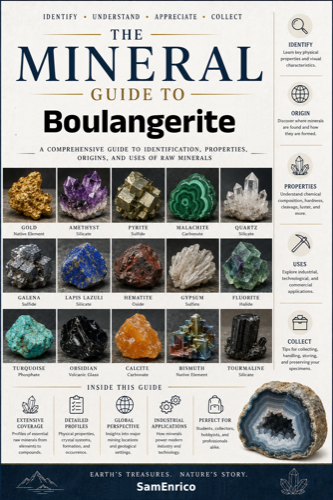 The Mineral Guide to BoulangeriteDarnell Raven$11.99
 Growing DichroaDarnell Raven$11.99
You may also like
 Scientific Research On TM GuideMartens Nathanial$11.99
 Research Proposal Methodology Section MasteryPauley Debroah$11.99
 Research Proposal Appendix CompilationRaines Tyisha$11.99
 Academic Researcher Distraction GuideFord Virgil$11.99
 TM Research and ScienceCovert Nicki$11.99
 Social Anxiety Research ReviewRoberge Cole$11.99
 Research Proposal Significance Section GuideBock Tory$12.99
 Research Proposal Reviewer PsychologyLugo Tawanda$11.99
 Research Proposal Research Questions DesignLara Robbi$11.99
 Research Proposal References and CitationsPatten Shanice$11.99
 Research Proposal Mixed Methods DesignCameron Omega$11.99
 Research Proposal Data Management PlanAnderson Roberto$12.99