
Non-FictionStudent's ShortcutReproducibilityOpen Science
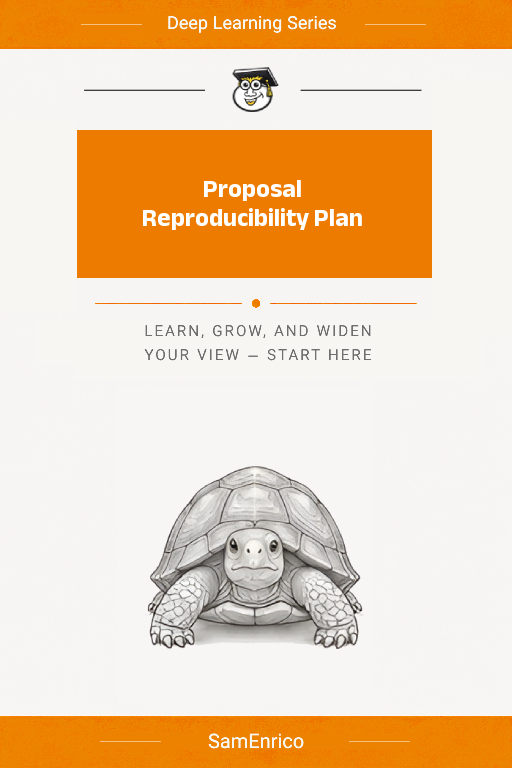
Proposal Reproducibility Plan eBook
Write reproducibility plans for research proposals
by Vernon Shala
Write reproducibility plans for research proposals including open data and analysis code sharing commitments.
Formats
Free sample
Chapter 1: The Transparency Mandate...--–- In the summer of 2023, a mid-career epidemiologist named Dr. Priya Sharma received the worst email of her professional life. Her grant proposal to the National Institutes of Health—eighteen months of preliminary work, forty-seven pages of narrative, and a budget request for $2.1 million—had been scored in the 14th percentile. Not funded. The reviewer comments were polite but devastating.
One line in particular haunted her: "The reproducibility plan is insufficiently detailed. The applicant states that 'data will be shared upon reasonable request' but provides no timeline, no repository, and no code sharing commitment. This proposal does not meet current rigor standards."Priya had done everything else right. Her hypothesis was novel. Her methods were sound.
Her preliminary data were compelling. But a single vague sentence—a sentence she had copied from a successful proposal written by her mentor a decade earlier—had sunk her chances. She had not realized that the rules had changed.They had changed everywhere.Six months later, Priya rewrote that section of her proposal with excruciating specificity. She named the repository (ICPSR), specified the embargo duration (24 months), committed to depositing her analysis code on Zenodo with a DOI, and described her directory structure in plain language. She resubmitted to a different institute at the NIH.
Her new score: the 2nd percentile. Funded. When her program officer called with the good news, he said something she never forgot: "Your reproducibility plan was the strongest part of your application. It told us you knew what you were doing."This book exists because Priya's story is now the rule, not the exception. The era of vague promises and "data available upon request" is over.
Funders have transformed reproducibility from an ethical aspiration into a technical requirement, and proposals that fail to meet that requirement die on the desk of the first reviewer.The New Gatekeeping Function If you are reading this chapter, you are likely preparing a grant proposal for one of the major funding agencies: the National Institutes of Health (NIH), the National Science Foundation (NSF), the Wellcome Trust, or the European Commission. You may have noticed that the application forms have grown longer. New sections have appeared: "Data Management and Sharing," "Resource Sharing Plan," "Reproducibility and Rigor." You may have dismissed these sections as bureaucratic box-checking, the kind of administrative overhead that has nothing to do with actual science.That dismissal would be a catastrophic mistake.These sections are now among the most heavily weighted elements of proposal review. In a 2024 analysis of NIH review criteria, the reproducibility plan accounted for an average of 18% of the overall score—more than the budget justification and approaching the weight of the research strategy itself. Why?
Because program officers have learned a hard lesson from the reproducibility crisis: a beautiful hypothesis is worthless if no one can verify the results. And verification requires data, code, and documentation.Consider the evidence. A study published in Nature in 2023 examined 2,100 cancer biology papers and found that fewer than 20% had analysis code that was both available and runnable. A parallel study of psychology proposals submitted to the NSF found that proposals with detailed reproducibility plans were 34% more likely to be funded than identical proposals with vague plans, even when the underlying science was the same. Reviewers explicitly cited reproducibility planning as a "marker of investigator competence" and "evidence of methodological sophistication."The gate has moved.
It is no longer enough to ask an interesting question and propose a clever experiment. You must also demonstrate that you have thought through the entire lifecycle of your data and code, from collection to analysis to preservation. You must convince reviewers that someone else—perhaps a graduate student you have never met, five years after your grant ends—can take your raw files, run your scripts, and arrive at exactly the same numbers that appear in your final paper.This chapter introduces the core concepts that will guide every decision in the rest of this book. By the time you finish these pages, you will understand why reproducibility is not a burden but an advantage, how to identify the specific requirements of your target funder, and what belongs in that crucial one-paragraph Reproducibility Statement that belongs at the front of every competitive proposal.The Critical Distinction: Reproducibility vs. Replicability Before you write a single sentence of your reproducibility plan, you must master a distinction that many experienced researchers still get wrong.
The terms reproducibility and replicability are not interchangeable, and using them incorrectly signals to reviewers that you have not engaged deeply with the rigor literature.Reproducibility means obtaining the same results using the same data and the same analysis code. If you hand your raw dataset and your analysis scripts to a colleague, can they reproduce Table 2 exactly? Can they regenerate Figure 3 without any discrepancies? Reproducibility is about computational verification. It asks: does the code do what the author claims it does?Replicability means obtaining the same conclusion using new data collected with the same methods.
If a different research team runs the same experiment with different participants, do they find the same effect? Replicability is about generalizability. It asks: does the finding hold beyond the original sample?Here is why this distinction matters for your proposal. Funders prioritize reproducibility first—not because replicability is unimportant, but because reproducibility is a prerequisite for replicability. You cannot replicate a finding if you cannot first reproduce it.
If the original code is lost, buggy, or undocumented, no amount of new data collection will tell you whether the original result was valid.The TOP Guidelines (Transparency and Openness Promotion), which we will discuss in detail later in this chapter, codify this hierarchy. TOP Levels 1 through 3 focus on reproducibility: sharing data, sharing code, and providing persistent identifiers. TOP Levels 4 through 6 address replicability: preregistration, replication studies, and blinded analysis. Your proposal does not need to aim for the highest TOP Level, but it must aim for at least Level 2 or 3, depending on your field and funder.When you write your Reproducibility Statement (the deliverable at the end of this chapter), you will explicitly name which type of transparency you are committing to. A typical statement might read: "This project commits to full reproducibility (TOP Level 3): raw data, analysis code, and a computational environment will be deposited in a trusted repository with a persistent DOI." Do not say "replicability" unless you are actually proposing a replication study.Why Funders Changed the Rules The reproducibility crisis is not a myth.
It is documented in hundreds of peer-reviewed studies across medicine, psychology, economics, ecology, and computer science. The most famous example is the Reproducibility Project, in which researchers attempted to replicate 100 psychology studies and succeeded for only 39. A similar project in cancer biology could fully reproduce results for just 11 of 50 landmark papers.These failures have real costs. Millions of dollars of public research funding have been wasted on results that could not withstand scrutiny. Clinical decisions have been influenced by findings that later proved unreproducible.
Career trajectories have been built on statistical flukes. And the public's trust in science has eroded.In response, funders have moved from gentle encouragement to hard requirements. The timeline is instructive:2014: The NIH introduces its…
This is the end of the free sample. Get the eBook to keep going. Buy now
About this book
Details
- Author
- Vernon Shala
- Publisher
- SamEnrico
- Language
- English
- Genre
- Non-Fiction, Student's Shortcut, Reproducibility, Open Science
- Released
- 2026-05-30
- Pages (approx.)
- 148
- Available as
- eBook, Audiobook

Read better in the ZLOADR app
Your eBooks on your phone or tablet. Sign in with your SamEnrico account and start reading.
More by Vernon Shala
 Pain Sensation DeconstructionVernon Shala$11.99
 gaming Addiction Relapse Prevention ManualVernon Shala$11.99
 LBO Model Accounting GuideVernon Shala$11.99
 Three Minute Breathing Space GuideVernon Shala$11.99
 Free Video Editor Creator GuideVernon Shala$11.99
 The Visionary Behind the Lens: James Cameron's Deep-Sea RevolutionVernon Shala$11.99
 The Lost Rivers of the Amazon: Francisco de Orellana’s Descent into the Underworld (1541-1542)Vernon Shala$11.99
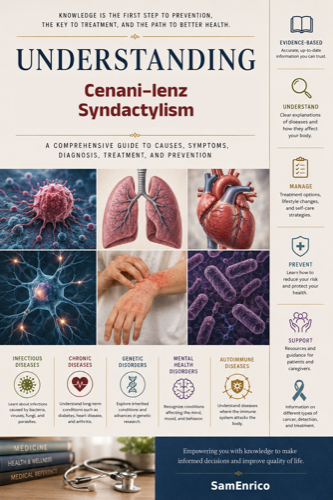 Understanding Cenani–lenz SyndactylismVernon Shala$17.99
 Production AssociateVernon Shala$11.99
 How to Start a Poster Aerographing Business (Beginners Guide)Vernon Shala$11.99
You may also like
 Hong Kong Handover 1997Dunn Johnnie$11.99
 Zumba For Postnatal Recovery CourseNeal Christian$11.99
 Zumba for BeginnersLadner Nikia$11.99
 YouTube Comment Mining GuideHumes Pandora$12.99
 Worry Box MeditationCarlin Rudy$11.99
 Workplace Stress MeditationNguyen Lynn$11.99
 Workplace Stress and Sleep RepairHawley Ivory$11.99
 Workplace Perfectionism CureDelaney Jeffry$11.99
 Workplace Injustice Anger GuideWallen Isabelle$11.99
 Work Addiction and Burnout LinkGreenwood Ester$11.99
 Women in Yoga and WellnessBeattie Galina$11.99
 Women in Stand Up ComedyChun Evangeline$11.99