
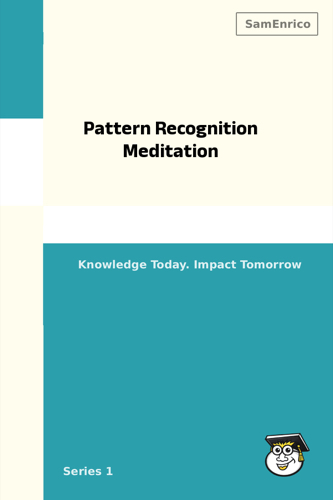
Non-FictionSelf-Help / Meditation
Pattern Recognition Meditation Audiobook
undefined
undefined
Formats
Free sample
Chapter 1: The Ghost Driver--The first time I realized I was not driving my own bus, I was screaming at a toaster.Not metaphorically. Actually screaming. The toast had popped up too dark—burnt, really—and I stood in my kitchen at 7:15 on a Tuesday morning, a grown adult with a graduate degree and a mortgage, yelling at a kitchen appliance as if it had personally betrayed me. My partner, still in pajamas, watched from the doorway with the kind of expression people reserve for televised disasters. The toaster, for its part, remained stoic.
It did not apologize. It did not change. It just sat there, glowing faintly, while I vibrated with rage over fifty cents worth of scorched carbohydrates.It took me three hours to figure out what had actually happened. Driving to work, I replayed the scene: the rage, the yelling, the absurdity. I was not angry at the toaster.
I was angry because my morning had been a cascade of small failures—spilled coffee, a missed alarm, a text from my boss that felt vaguely critical—and the burnt toast was simply the last domino. But even that was not the whole truth. The whole truth, the one I could not see in the moment, was that my father used to scream at the breakfast table. Not at toasters. At people.
And somewhere in my nervous system, decades later, the sound of my own raised voice had become indistinguishable from the sound of his. I was not angry. I was haunted.This book is about how to stop being haunted.The Haunted House You Call a Mind Let me ask you a question, and I want you to answer honestly. Have you ever done something—snapped at someone, procrastinated on something important, eaten something you knew would make you feel terrible, agreed to something you knew you would resent—and thought, while you were doing it, Why am I doing this? I do not want to be doing this.
And yet you did it anyway.That is a ghost driving your bus.Your brain is not a computer. It is a haunted house. It is filled with invisible programs—learned patterns of thought, emotion, and behavior—that were written by your past and are running automatically in your present. These patterns are the reason a text message notification can spike your heart rate. They are why a casual comment from your spouse…
This is the end of the free sample. Get the Audiobook to keep going. Buy now
About this book
Details
- Author
- Darnell Joselyn
- Publisher
- SamEnrico
- Language
- English
- Genre
- Non-Fiction, Self-Help / Meditation
- Released
- 2026-06-06
- Pages (approx.)
- 115
- Available as
- eBook, Audiobook

Listen in the VoxFlicks app
Audiobooks and audio dramas wherever you go. Sign in with your SamEnrico account and press play.
More by Darnell Joselyn
 Glycine and Sleep MemoryDarnell Joselyn$11.99
 Benzo Insomnia RecoveryDarnell Joselyn$11.99
 Stalin Red TerrorDarnell Joselyn$11.99
 Self Compassion for Fraud FeelingsDarnell Joselyn$11.99
 Bipolar Spectrum Recognition HandbookDarnell Joselyn$11.99
 Hangry Driving Anger GuideDarnell Joselyn$11.99
 Empowerment in HealthcareDarnell Joselyn$11.99
 TM For Heart DiseaseDarnell Joselyn$11.99
 Anansi's Web: The Spiderman of West African FolkloreDarnell Joselyn$11.99
 The Phantom of the Opera House: A Century of DeceptionDarnell Joselyn$11.99
 Rhapsody in Blue: Gershwin’s American DreamDarnell Joselyn$11.99
 The Dancer's Guide to Hokey PokeyDarnell Joselyn$11.99
You may also like
 Hong Kong Handover 1997Dunn Johnnie$11.99
 Zumba For Postnatal Recovery CourseNeal Christian$11.99
 Zumba for BeginnersLadner Nikia$11.99
 YouTube Comment Mining GuideHumes Pandora$12.99
 Worry Box MeditationCarlin Rudy$11.99
 Workplace Stress MeditationNguyen Lynn$11.99
 Workplace Stress and Sleep RepairHawley Ivory$11.99
 Workplace Perfectionism CureDelaney Jeffry$11.99
 Workplace Injustice Anger GuideWallen Isabelle$11.99
 Work Addiction and Burnout LinkGreenwood Ester$11.99
 Women in Yoga and WellnessBeattie Galina$11.99
 Women in Stand Up ComedyChun Evangeline$11.99