
Non-FictionSelf-HelpParenting Psychology
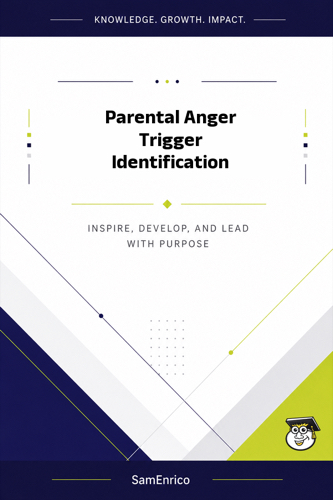
Parental Anger Trigger Identification eBook
Recognize specific situations and behaviors that s
Recognize specific situations and behaviors that spark reactive anger toward your children.
Formats
Free sample
Chapter 1: The Bad Kid Lie--–- You believe your child is giving you a hard time. That belief is the fuse. The explosion is yours to own, but the fuse was lit long before the tantrum began.Every angry parent has whispered the same verdict in the privacy of their own mind. He knows exactly what he is doing. She is trying to push my buttons.
He does not care how tired I am. She is doing this on purpose. These sentences feel like truth in the moment. They arrive with the force of certainty, as undeniable as gravity. Your child has just done something—whined, refused, spilled, hit, ignored, screamed—and within a fraction of a second, your brain has not only registered the behavior but also assigned motive, intent, and moral failure.
The verdict is swift and absolute: bad kid. Not a child who made a mistake, not a child who is struggling, not a child who lacks skills. A child who is being bad on purpose.This chapter dismantles that verdict. Not gently. Not with abstract theories about childhood development that sound nice on paper but crumble at 7:15 on a Tuesday morning when you are already late for work.
This chapter dismantles the Bad Kid Lie with evidence, with neuroscience, and with a reframe that will change everything if you let it. The reframe is simple enough to fit on a sticky note but profound enough to rewire how you see your child: The child is not giving you a hard time. They are having a hard time.Before you dismiss that as sentimental parenting rhetoric, understand what this sentence actually means. It does not mean your child is never responsible for their actions. It does not mean you should not set boundaries or enforce consequences.
It does not mean you must become a permissive pushover who accepts hitting, screaming, and destruction as inevitable. What it means is this: the cause of the behavior you are reacting to is almost never malicious intent. It is almost always a skill deficit, a developmental limitation, a physiological need, or an emotional flood that your child does not yet have the capacity to regulate. When you mistake a skill deficit for deliberate defiance, you become angry at a child who is already struggling. That anger is not discipline.
That anger is a misunderstanding dressed up as authority.The Neuroscience of Intent Let us begin with what your brain does in the seconds after your child misbehaves. Chapter 2 will walk you through the full anatomy of an explosion, but here we need to understand one specific piece: how your brain decides whether an action was intentional. This happens in the prefrontal cortex, specifically in a region associated with what psychologists call theory of mind—the ability to infer the mental states of others. Your brain automatically, instantly, and unconsciously asks: Did they mean to do that? And then your brain answers based on pattern recognition, past experience, current emotional state, and a hundred other variables you do not control.Here is the problem.
When you are already tired, stressed, rushed, or hungry (see Chapter 9 for the full physiological picture), your brain is far more likely to attribute negative intent to ambiguous behavior. A child who spills milk while reaching for the syrup is just a child who spilled milk. But a tired, stressed parent sees a child who was not careful enough, who does not listen, who does not respect the kitchen, who does this all the time. The same behavior. Two completely different interpretations.
And here is the cruelest part: the angrier you become, the more your brain locks onto the intentional interpretation and rejects evidence to the contrary. This is called hostile attribution bias, and it is one of the most well-replicated findings in developmental and clinical psychology. Parents who report high levels of anger toward their children consistently interpret neutral or even accidental child behaviors as deliberately provocative.The child looks at you. You look at the child. The child has no idea that you just assigned malice to a clumsy reach for syrup.
The child only sees your face changing, your voice rising, your body tensing. And now the child is afraid. And now the child is crying. And now you are angrier because crying feels like manipulation. And now the child is actually starting to act out because fear has flooded their nervous system and they have lost access to the very skills you are demanding.
You have created the very defiance you thought you were punishing. This is not parenting. This is a tragedy performed in slow motion, repeated in millions of homes every single day.The Secondary Emotion Revelation Anger feels primary. It arrives like a thunderclap, seemingly out of nowhere, demanding attention and action. But anger is almost never the first thing you feel.
Anger is what happens when a softer, more vulnerable feeling is too painful or too threatening to experience directly. This is not a metaphor. This is neurology. The amygdala—your brain's threat detection system—does not produce anger on its own. It produces a generalized alarm signal.
Your cortex then interprets that alarm. If the interpretation is I am being threatened, the emotion you experience is fear. If the interpretation is I am being wronged, the emotion you experience is anger. If the interpretation is I am failing, the emotion you experience is shame. The same alarm signal can become any of these emotions depending on the story you tell yourself.Here is what parents do not realize until they slow down and look: underneath most of your anger at your children is something else entirely.
Underneath the anger about bedtime resistance is exhaustion. Underneath the anger about public tantrums is shame. Underneath the anger about backtalk is helplessness. Underneath the anger about messes is a desperate need for control. Underneath the anger about defiance is fear—fear that you are raising a bad person, fear that you have already failed, fear that your child will grow up to be someone you cannot love.
Anger is the bodyguard for these softer feelings. It protects you from feeling them. But it also blinds you to the real problem.If you are exhausted, the real problem is not that your child said no one more time. The real problem is that you need rest. If you are ashamed, the real problem is not that your child screamed in the grocery store.
The real problem is that you care too much about the judgment of strangers and not enough about the distress of your child. If you are helpless, the real problem is not that your child talked back. The real problem is that you do not have a clear, calm discipline strategy that works without anger. Anger is a smoke alarm. You do not fix a fire by smashing the alarm.
You fix the fire. But first you have to stop screaming at the alarm long enough to look for the flames.The 90/10 Hierarchy Here is where many parenting books lose credibility. They tell you that your child is never, ever deliberately defiant. That every single misbehavior is a cry for…
This is the end of the free sample. Get the eBook to keep going. Buy now
About this book
Details
- Author
- Simmons George
- Publisher
- SamEnrico
- Language
- English
- Genre
- Non-Fiction, Self-Help, Parenting Psychology
- Released
- 2026-06-07
- Pages (approx.)
- 138
- Available as
- eBook, Audiobook

Read better in the ZLOADR app
Your eBooks on your phone or tablet. Sign in with your SamEnrico account and start reading.
More by Simmons George
 Driving Parents to AppointmentsSimmons George$11.99
 French Language Requirement LevelsSimmons George$11.99
 Remote Work Schedule BlueprintSimmons George$11.99
 Cross Functional Team SuccessSimmons George$11.99
 Dream Climate JournalSimmons George$11.99
 Blood Pressure GuideSimmons George$11.99
 Conversation Starters for ParentsSimmons George$11.99
 The Surrender of the Yamato: Japan's Last Samurai Spirit (1945)Simmons George$11.99
 Ghosts in the Wires: The Soviet-Afghan War's Digital Shadow WarSimmons George$11.99
 How to Start a Exercise Center BusinessSimmons George$11.99
 How to Produce Clothing AccessoriesSimmons George$11.99
 Hedging Commodity Export PricesSimmons George$12.99
You may also like
 Hong Kong Handover 1997Dunn Johnnie$11.99
 Zumba For Postnatal Recovery CourseNeal Christian$11.99
 Zumba for BeginnersLadner Nikia$11.99
 YouTube Comment Mining GuideHumes Pandora$12.99
 Worry Box MeditationCarlin Rudy$11.99
 Workplace Stress MeditationNguyen Lynn$11.99
 Workplace Stress and Sleep RepairHawley Ivory$11.99
 Workplace Perfectionism CureDelaney Jeffry$11.99
 Workplace Injustice Anger GuideWallen Isabelle$11.99
 Work Addiction and Burnout LinkGreenwood Ester$11.99
 Women in Yoga and WellnessBeattie Galina$11.99
 Women in Stand Up ComedyChun Evangeline$11.99