
Non-FictionSelf-HelpHealth Assessment
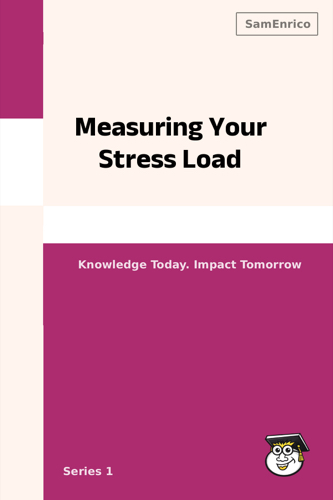
Measuring Your Stress Load
Practical biomarkers and assessments to quantify s
by Canales Anya
Practical biomarkers and assessments to quantify stress impact on body.
Formats
About this book
Free sample
Chapter 1: The Blindfolded Driver--–- Imagine driving a car at seventy miles per hour down a crowded highway with your eyes closed. You would feel the vibration of the engine, hear the rush of wind, and sense the occasional bump of the road. But you would have no idea whether you were about to crash. You might feel “fine” for ten, twenty, even thirty seconds before disaster struck. That is precisely how most people navigate their own stress response.
They rely on vague, subjective feelings—I feel anxious, I feel tired, I feel overwhelmed—while their internal physiology races toward collapse in complete silence.This book exists because that silence is avoidable. The human body is not a black box. It broadcasts its state continuously through measurable signals: the variability between heartbeats, the concentration of hormones in saliva, the rise and fall of blood pressure across the day. These signals are called biomarkers, and they form a hidden scorecard of your stress load. The purpose of this chapter is to fundamentally reframe how you think about stress—moving from the passenger seat to the driver’s seat, from guessing to knowing, from vague anxiety to objective data.The great tragedy of modern stress management is that most advice begins and ends with subjective experience.
Therapists ask, “How do you feel?” Wellness apps prompt, “Rate your stress from one to ten.” But decades of research in psychobiology have demonstrated that subjective stress ratings correlate only modestly with objective physiological measures. A person can report feeling “totally calm” while their cortisol levels remain elevated for hours. Another can report feeling “extremely stressed” while their heart rate variability sits in the healthy range. The gap between perception and physiology is not a failure of character. It is a feature of how human brains evolved.We are wired to adapt.
Chronic stressors that would have killed our ancestors—predators, famines, wars—are now replaced by mortgages, emails, deadlines, and social comparisons. But the same neural circuits that helped our ancestors survive acute threats now run continuously in the background, and the brain has a limited capacity…
This is the end of the free sample. Get the eBook to keep going. Buy now
Contents
- Chapter 1
- Chapter 2
- Chapter 3
- Chapter 4
- Chapter 5
- Chapter 6
- Chapter 7
- Chapter 8
- Chapter 9
- Chapter 10
- Chapter 11
- Chapter 12
Details
- Author
- Canales Anya
- Publisher
- SamEnrico
- Language
- English
- Genre
- Non-Fiction, Self-Help, Health Assessment
- Released
- 2026-06-08
- Pages (approx.)
- 151
- Available as
- eBook, Audiobook

Read better in the ZLOADR app
Your eBooks on your phone or tablet. Sign in with your SamEnrico account and start reading.
More by Canales Anya
 The Morning Metta RitualCanales Anya$11.99
 Rainbow Baby Pregnancy After Loss GuideCanales Anya$11.99
 Utilities ESG Benchmarking GuideCanales Anya$11.99
 The Letting Go of Control GuideCanales Anya$11.99
 The Fall of the Great Ethiopian Painter: The Lost Masterpiece of Aleqa Täklä HaymanotCanales Anya$11.99
 Understanding Satoyoshi SyndromeCanales Anya$17.99
 Pharmacy ClerkCanales Anya$11.99
 10 Ways to Use Desserts (Recipe Book)Canales Anya$11.99
 Digital Signature Setup GuideCanales Anya$12.99
 LLC Credit Building GuideCanales Anya$12.99
You may also like
 Hong Kong Handover 1997Dunn Johnnie$11.99
 Zumba For Postnatal Recovery CourseNeal Christian$11.99
 Zumba for BeginnersLadner Nikia$11.99
 YouTube Comment Mining GuideHumes Pandora$12.99
 Worry Box MeditationCarlin Rudy$11.99
 Workplace Stress MeditationNguyen Lynn$11.99
 Workplace Stress and Sleep RepairHawley Ivory$11.99
 Workplace Perfectionism CureDelaney Jeffry$11.99
 Workplace Injustice Anger GuideWallen Isabelle$11.99
 Work Addiction and Burnout LinkGreenwood Ester$11.99
 Women in Yoga and WellnessBeattie Galina$11.99
 Women in Stand Up ComedyChun Evangeline$11.99