
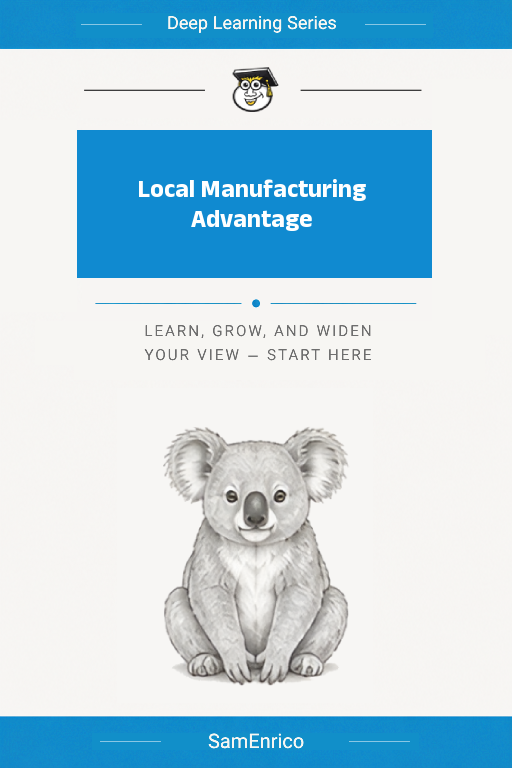
Non-FictionStartup GuideBOP StrategyManufacturing
Local Manufacturing Advantage
Manufacture products locally to reduce cost and na
Manufacture products locally to reduce cost and navigate import tariffs for low income markets.
Formats
About this book
Free sample
Chapter 1: The Container Lie--When the ship pulled into Mombasa on a humid Tuesday morning in April 2024, James Mwangi had already done the math twelve times. Each calculation ended in the same impossible number: negative 47,000.Hisforty−footcontaineroffinishedelectronics—smartphones,powerbanks,and Bluetoothspeakerssourcedfromafactoryin Shenzhen—hadcosthim47,000. His forty-foot container of finished electronics—smartphones, power banks, and Bluetooth speakers sourced from a factory in Shenzhen—had cost him 47,000.Hisforty−footcontaineroffinishedelectronics—smartphones,powerbanks,and Bluetoothspeakerssourcedfromafactoryin Shenzhen—hadcosthim92,000 to purchase, 18,500toshipacrossthe Indian Ocean,andanother18,500 to ship across the Indian Ocean, and another 18,500toshipacrossthe Indian Ocean,andanother14,000 in import duties and port fees. He expected to sell the contents for $185,000, a healthy 35 percent margin that had sustained his importing business for seven years.But the ship was late. It was always late these days, but this time the delay was six weeks, not six days.
While his container drifted somewhere off the coast of Oman, something changed. The Kenyan Shilling, which had been trading at 120 to the US dollar when he placed his order, suddenly weakened to 144. His cost basis in local currency terms had jumped by 20 percent before he even saw his inventory. Meanwhile, a competitor named Wanjiku had started assembling smartphones in a small workshop in Industrial Area, using imported kits that carried only a 5 percent duty instead of the 35 percent James paid on finished phones. She had undercut his wholesale price by 30 percent and was still making money.James sold his container at a loss, laid off six employees, and spent the next three months wondering how the rules of the game had changed so fast.
He is not alone. Across Lagos, Jakarta, Cairo, and Ho Chi Minh City, thousands of importers who built comfortable lives on a simple formula—buy cheap in China, sell higher at home—are discovering that the formula has broken. The cheap import model, the backbone of informal sector retail for three decades, is dying.This book is the obituary. And also the resurrection.The Three Trends That Broke the Old Model To understand why local manufacturing is no longer a romantic ideal but a cold financial necessity, you must first understand what killed…
This is the end of the free sample. Get the eBook to keep going. Buy now
Contents
- Chapter 1
- Chapter 2
- Chapter 3
- Chapter 4
- Chapter 5
- Chapter 6
- Chapter 7
- Chapter 8
- Chapter 9
- Chapter 10
- Chapter 11
- Chapter 12
Details
- Author
- Okeefe Jeraldine
- Publisher
- SamEnrico
- Language
- English
- Genre
- Non-Fiction, Startup Guide, BOP Strategy, Manufacturing
- Released
- 2026-06-01
- Pages (approx.)
- 147
- Available as
- eBook, Audiobook

Read better in the ZLOADR app
Your eBooks on your phone or tablet. Sign in with your SamEnrico account and start reading.
More by Okeefe Jeraldine
 Mindful Listening PracticeOkeefe Jeraldine$11.99
 Solntsevskaya Bratva GuideOkeefe Jeraldine$11.99
 One Month Spending Fast CourseOkeefe Jeraldine$11.99
 Sugar Addiction in Recovery from AlcoholOkeefe Jeraldine$11.99
 Dream Career Guidance JournalOkeefe Jeraldine$11.99
 The Last Waltz: A Love Story in the Shadows of WarOkeefe Jeraldine$11.99
 The Kite That Soared: Ancient Southeast Asia's First Flight PioneersOkeefe Jeraldine$11.99
 Assessment Method CompareOkeefe Jeraldine$12.99
 JourneymanOkeefe Jeraldine$11.99
 Understanding Congenital Adrenal Hyperplasia, LipoidOkeefe Jeraldine$17.99
 How to Start a Motors for Aircraft Business (Beginners Guide)Okeefe Jeraldine$11.99
You may also like
 Hong Kong Handover 1997Dunn Johnnie$11.99
 Zumba For Postnatal Recovery CourseNeal Christian$11.99
 Zumba for BeginnersLadner Nikia$11.99
 YouTube Comment Mining GuideHumes Pandora$12.99
 Worry Box MeditationCarlin Rudy$11.99
 Workplace Stress MeditationNguyen Lynn$11.99
 Workplace Stress and Sleep RepairHawley Ivory$11.99
 Workplace Perfectionism CureDelaney Jeffry$11.99
 Workplace Injustice Anger GuideWallen Isabelle$11.99
 Work Addiction and Burnout LinkGreenwood Ester$11.99
 Women in Yoga and WellnessBeattie Galina$11.99
 Women in Stand Up ComedyChun Evangeline$11.99